

Starting a small food stand franchise could cost you anywhere between PHP 50,000 to PHP 2,500,000. If you’re thinking about a franchise from a big-name fast-food chain, this could cost even more, over PHP 3,000,000. That’s a lot of money, so it’s a big thing to consider when you’re looking at franchises.
If you’re lucky, or if the franchise you want isn’t too expensive, you might have enough of your own money to start the business. But in many cases, you might need to get a loan to fund your franchise, which is often a good option.
Choosing to start a franchise has a lot of benefits over starting your own business from scratch. The company that owns the franchise often gives you the tools and support you need to succeed, because they want you to do well. After all, your success is good for them too!
Various Methods to Finance Your Franchise
If you’re thinking about starting a franchise, you’re going to need some money to get it off the ground. Here are a few ways you can get that money:
1. Franchise Loans
Some banks and people who lend money have special loans just for franchises. These are often easier to get than other business loans because franchises usually have a good history of making money, so it’s less risky for the lender. This is good for you too because there’s a better chance of getting the loan without having to put up something valuable as a guarantee.
2. Using Your Own Money
The quickest way to fund your franchise is to use your own money, but this can be risky. If you don’t keep track of your spending, you might end up using money you need for other things like rent or groceries, which can cause problems at home.
But, using your own money gives you more control over your business and makes you keep a close eye on your spending. This could work if you have enough savings to cover the cost of the franchise and your other expenses.
3. Getting Money from Friends and Family
Another way to get money for your franchise is by asking family or friends to invest in your business or lend you money. This can be quicker and have better conditions than a loan from a bank. But, it can also cause problems in your relationships if you can’t pay back the loan or if your business fails.
To avoid this, make it a formal business deal. Write a contract that outlines the details and conditions of the loan, and make a clear business plan that explains the potential risks.
4. Other Business Loans
Banks and private lenders also offer other types of business loans. Bank loans often have lower interest rates and higher loan limits, and they don’t have hidden fees. But, they usually need more paperwork and have stricter conditions. Private lenders usually need less paperwork and have lower minimum loan conditions. They can be a quicker and easier way to get a loan, but they often have higher interest rates.
Latest Options for Franchise Loans in the Philippines
Here’s an updated list of available franchise loans in the Philippines:
1. Blend.ph Franchise Loan
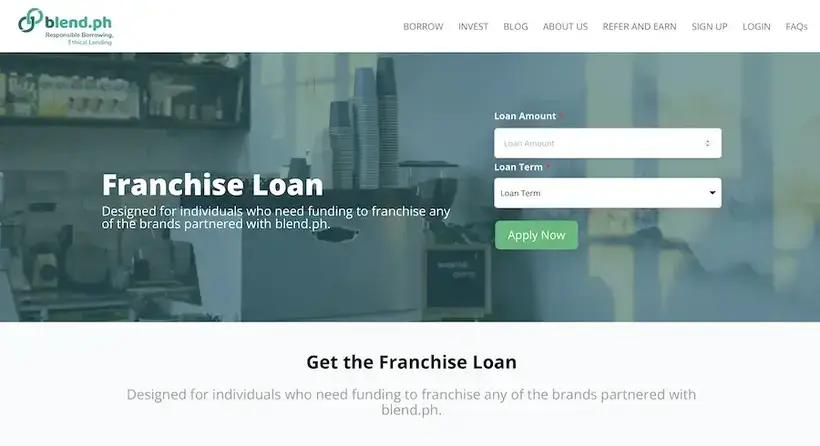
This loan is ideal for people who need extra funding and want to franchise any of the partner brands of Blend.ph. The loan amount ranges from PHP 50,000 to PHP 2,000,000, with a loan term of 12 to 36 months. The interest rate is 2%. To find out if you’re eligible, you can fill up their loan calculator on their website.
2. UCPB BizEasy Franchise Loan
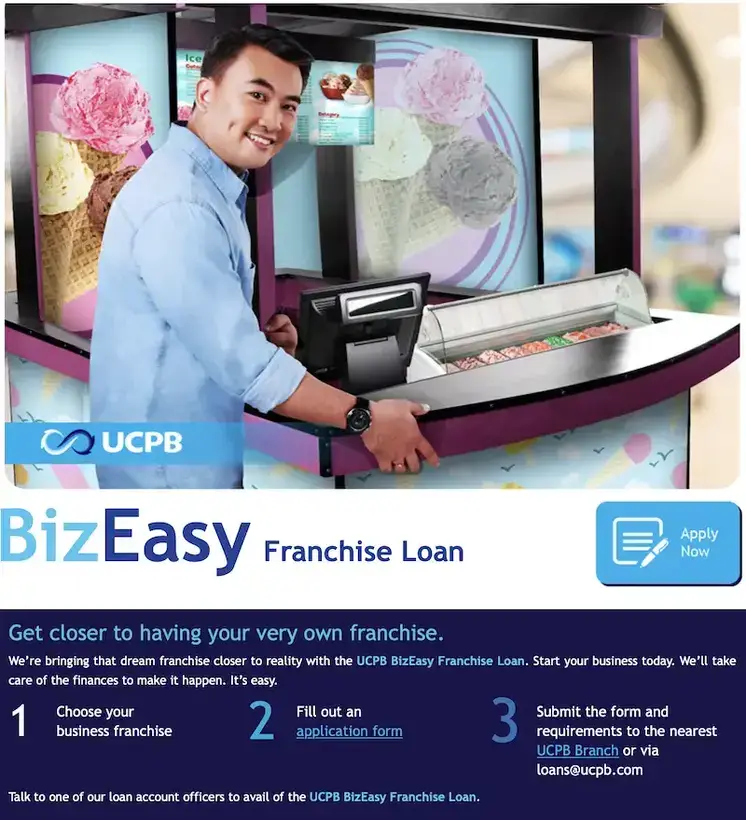
This loan is a great option for funding smaller franchises like food and beverage kiosks, water stations, ink stations, and financial service franchises. It offers a loan amount ranging from PHP 100,000 to PHP 1,000,000, which can cover up to 60% of the Total Investment Cost. You can choose from 12, 24, or 36 months loan terms. The interest rate can be calculated using their online calculator.
To be eligible, you need to be a small or medium enterprise that’s Filipino-owned, registered with SEC or DTI, and has at least 3 years of experience as a franchise operator.
3. Security Bank Franchise Loan
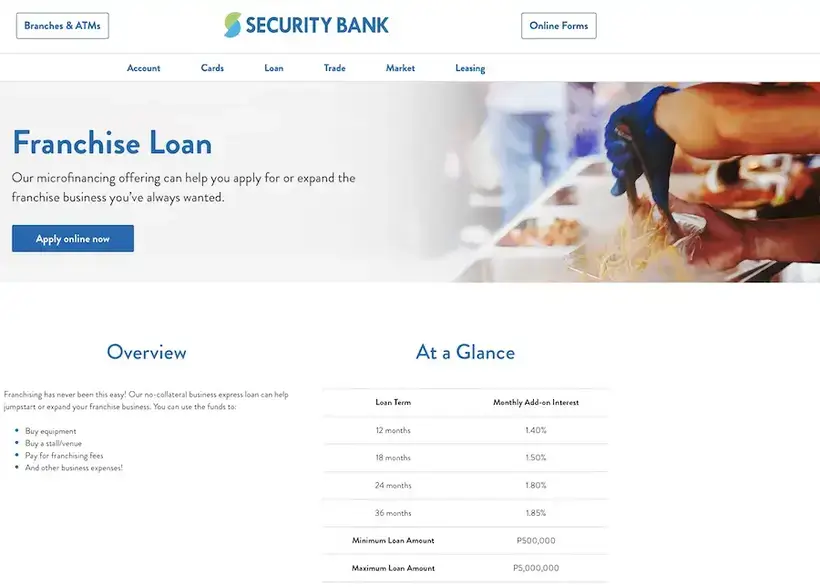
This loan is best for funding medium-scale franchises like small bakeries, cafes, pharmacies, meat shops, and more. The loan amount ranges from PHP 500,000 to PHP 5,000,000, with loan term options of 12, 18, 24, & 36 months. The interest rate varies from 1.40% to 1.85% depending on the loan term.
To qualify, the business must be registered in the Philippines, have been operating for at least 3 years, and have no outstanding debt that exceeds 40% of the company’s monthly income.
Alternative Business Loan Options for Your Franchise
1. Loans that let you borrow PHP 500,000 or less
- Radiowealth Finance Co. Business Loan lets you borrow anywhere from PHP 10,000 to PHP 3,000,000. This is good for buying things you need for your business, like appliances or trucks.
- Vidalia Small Business Term Loan lets you borrow from PHP 10,000 to PHP 100,000. It’s great for buying smaller equipment or starting small franchises, and you have flexibility in how you pay it back.
- Citibank Personal Loan lets you borrow from PHP 100,000 to PHP 2,000,000. You can get approved in as little as 24 hours.
- Esquire Non-Collateral Business Loan lets you borrow between PHP 100,000 to PHP 10,000,000 without needing to put up something valuable as a guarantee.
- First Circle Revolving Credit Line lets you borrow from PHP 250,000 to PHP 5,000,000. This is good for businesses that get purchase orders and send out invoices.
- CTBC SME Business Loan and CTBC SME Revolving Credit Line Loan both let you borrow from PHP 500,000 to PHP 70,000,000. These are good for bigger franchises.
2. Loans that let you borrow more than PHP 500,000
- BDO SME Term Loan and BDO SME Ready Check let you borrow from PHP 1,000,000 to PHP 20,000,000. These are good for businesses that want to grow or need to buy expensive equipment.
- PSBank SME Term Loan With Prime Rebate lets you borrow at least PHP 500,000 or PHP 2,000,000, depending on your guarantee. What’s unique about this loan is that you can get a discount on your loan interest if you pay more than you need to or pay early.
Five Steps to Securing a Loan for Your Franchise Business
If you’re thinking about getting a loan for your franchise business, here are 5 simple steps to follow:
1. Figure Out What You Need
First, figure out exactly what you’ll use the loan for and how urgently you need the money. This will help you decide how much to borrow and what type of loan is right for you.
2. Pick the Right Lender and Loan
There are different types of loans. Some, called term loans, give you a big chunk of money all at once. Others, called credit line loans, can help pay for things you need regularly, like inventory or employee salaries. The best choice will depend on your situation, so take your time, do your research, and find the best fit for you.
3. Get Your Documents Ready
Different lenders (like banks or private companies) will ask for different documents to see if you’re eligible for a loan. Make sure to talk to any lenders you’re considering to find out what you’ll need to provide.
4. Apply for the Loan
Usually, you can find out how to apply for a loan on the lender’s website. But, sometimes the information might be old. If you’re not sure about something, it’s always a good idea to contact the lender directly. They can give you the most accurate information.
5. What to Do After You’re Approved?
Once you get the thumbs up for your loan, check with your lender to find out exactly when you’ll get your money. You often get the funds a few days after your loan gets approved. And remember, the money you borrow should go into your business, not your personal expenses.
Guidelines and Cautions
Here are some handy tips and red flags to remember when you’re dealing with loans:
1. Keep Track of Your Debt
The saying “prevention is better than cure” applies to handling debt too. Make sure you know all the debts you owe and plan a budget for paying back your loan. Stay on top of your payment plan and keep in touch with your lender. Some business loans might give you a discount if you pay early, but others might charge you more.
One of the smartest ways to handle debt is to use the money you borrow to make more money. This can help you pay back your loan and grow your business.
2. Keep Your Credit Score High
Creditworthiness is what lenders look at to see if you’re a good person to lend money to. It’s based on things like how you’ve managed your money and paid back loans before. Your creditworthiness can affect if you get a loan, how much you can borrow, and the interest rates you get. You can boost your creditworthiness by managing your money well and making sure to pay back your debts on time.
3. Make Sure a P2P Lender is Legit
When you’re dealing with lenders who lend money to each other (known as peer-to-peer or P2P lenders), always check if they have a license from the Securities and Exchange Commission (SEC). It’s important that the actual lender has the license, not just the person who introduces you to the lender.
The SEC has a list of authorized lenders on its website, but it’s always a good idea to check directly with the SEC to make sure any lender you’re considering is legit.
Frequently Asked Questions
1. What will occur if I’m unable to repay my loan?
When you take a loan, you sign an agreement that tells you what will happen if you don’t pay it back. If you don’t pay, the loan might be cancelled, you might have to pay the whole amount right away, you might have to pay extra fees, and the lender might take whatever you put up as collateral (like a car or house).
2. What’s the acceptable amount of debt for a franchise or a small business?
There are two common ways to figure out how much debt is okay:
- A Debt Ratio of 0.4 or Lower is Best: One way is to look at your debt ratio. This is what you get when you divide your total debt by your total assets (like money, property, etc.). As a general rule, it’s best if this number is 0.4 or less.
3. If I don’t have a good credit record, is it still possible to secure a loan for a franchise?
If you have bad credit or no credit history, you could consider getting a secured loan. This is a loan where you put something valuable, like a car or house, as collateral. If you can’t pay back the loan, the lender can take the collateral. This can be a first step to improving your creditworthiness (how likely you are to pay back a loan) and getting better loan rates in the future.
4. What steps should I take if my loan application has been denied?
If your loan application was rejected, the first thing you should do is ask the lender why. Knowing why you were rejected can help you figure out what you need to fix before you apply again. If you’re still not approved, you could try applying for a different loan or go to a different lender.