

Embarking on the journey from high school to college is an exciting and transformative phase in one’s life. With the aspiration to secure a college diploma, the realization of the considerable expenses involved in pursuing higher education can be daunting. From the cost of textbooks to transportation, living expenses, and even uniforms, it becomes apparent that these financial burdens can pose significant challenges.
Fortunately, the Philippines offers the opportunity of tuition-free education in State Universities and Colleges (SUCs), providing a glimmer of hope for those seeking affordable higher education options. Beyond this, there’s the potential for CHED scholarship grants to alleviate the financial strain and make academic dreams a reality.
In this guide, we’ll explore the path to becoming a CHED scholar and uncover the means to access this vital support system for your educational journey.
CHED Scholarship Opportunities for Incoming Freshman Students
The Commission on Higher Education (CHED) plays a vital role in making higher education accessible to Filipino students by offering scholarship grants to incoming freshman students. These scholarships are designed to ease the financial burden of pursuing a college education and provide opportunities for talented individuals. To take full advantage of these programs, it’s essential to understand the following key points:
Choosing the Right Institution and Program
Before diving into the world of CHED scholarships, prospective scholars must first decide where they want to study and which program they wish to pursue. CHED scholarships are available for students enrolling in recognized priority programs at various types of educational institutions, including:
- Private Higher Education Institutions (HEIs): These institutions cater to a wide range of degree programs, offering diverse options to students seeking specialized education.
- State Universities and Colleges (SUCs): Public institutions that provide quality education at a lower cost, making them a popular choice for many students.
- Local Universities and Colleges (LUCs) with Certificate of Program Compliance: Specific local institutions that meet certain criteria and offer accredited programs.
Exploring Scholarship Programs
CHED offers scholarship opportunities through two primary programs, each tailored to different types of educational institutions:
- State Scholarship Program (SSP): SSP is designed for students who plan to enroll in State Universities and Colleges (SUCs) or accredited Local Universities and Colleges (LUCs). This program provides comprehensive financial support, including tuition and stipends, to eligible scholars.
- Private Education Student Financial Assistance (PESFA): PESFA is intended for students enrolling in Private Higher Education Institutions (HEIs), offering financial assistance to those who choose private colleges and universities.
Understanding Scholarship Types
Both the State Scholarship Program (SSP) and the Private Education Student Financial Assistance (PESFA) offer two categories of scholarships:
- Full Scholarships: Under this category, CHED covers the entire cost of tuition and other related educational expenses. Full scholarships ensure that students can concentrate on their studies without the added burden of financial constraints.
- Half-Scholarships: For students who secure half-scholarships, CHED subsidizes 50% of the tuition and related costs, significantly alleviating the financial burden while requiring scholars to cover the remaining expenses.
Qualifications for CHED Scholarship Programs
To qualify for the Commission on Higher Education (CHED) Scholarship Programs in the Philippines, certain qualifications and criteria must be met. These qualifications are designed to ensure that the scholarships are awarded to deserving individuals who need financial assistance to pursue their higher education. The key qualifications include:
- Filipino Citizenship: To be eligible for CHED scholarships, applicants must be Filipino citizens.
- Graduating Senior High School Student: Applicants should be graduating Senior High School students who are about to embark on their college journey.
- General Weighted Average (GWA): The applicant’s General Weighted Average (GWA) is a critical factor. A GWA of at least 93% to 95% is required for a Half Scholarship, while a GWA of 96% and above is necessary for a Full Scholarship.
- Family’s Maximum Annual Gross Income: The annual gross income of the applicant’s family should not exceed Php 400,000.
- Special Conditions for Income Exceeding Php 400,000: If the family’s income exceeds the Php 400,000 threshold, applicants may still qualify under the following conditions:
- Certification of a Family Member’s Medical Illness: If a family member has a documented medical illness, this can be considered as a valid condition for eligibility.
- Certification of Two or More Dependents Being College Students: Alternatively, if there are two or more dependents in the family who are currently college students, this condition can also make an applicant eligible for CHED scholarships.
These qualifications ensure that CHED scholarships are awarded to those in genuine need of financial assistance to pursue their higher education, promoting access to quality education for deserving Filipino students.
Priority Courses for CHED Scholarship Programs
In order to access the benefits of the CHED Scholarship Program, it’s imperative to select a program of study aligned with either a CHED National Priority Program or a Regional Priority Program designated by your respective CHEDRO. Below, you’ll find the latest list of CHED Scholarship Priority Courses:
CHED Scholarship Program’s National Priority Programs
Science and Mathematics
- Applied Physics / Physics
- Applied Mathematics / Mathematics
- Applied Statistics / Statistics
- Biochemistry
- Biology
- Botany
- Chemistry
- Environmental Science
- Geology
- Human Biology
- Marine Biology
- Marine Science
- Meteorology
- Molecular Biology and Biotechnology
Information Technology Education
- Computer Science
- Cyber Security
- Entertainment and Multimedia Computing / Game Development and Animation
- Information System
- Information Technology
- Library and Information Science
Engineering and Technology
- Agriculture and Biosystems Engineering
- Ceramic Engineering
- Chemical Engineering
- Civil Engineering
- Computer Engineering
- Electrical Engineering
- Electronics Engineering / Electronics and Communications Engineering
- Food Engineering
- Geodetic Engineering
- Industrial Engineering
- Manufacturing / Production Engineering
- Materials Engineering
- Mechanical Engineering
- Mechatronics Engineering
- Metallurgical Engineering
- Mining Engineering
- Petroleum Engineering
- Robotics Engineering
- Sanitary Engineering
- Structural Engineering
- Aircraft Maintenance Technology
- Aviation Related Programs
- Engineering Technology
- Industrial Technology
- Mechatronics Engineering Technology
Architecture
- Architecture
- Fine Arts
- Interior Design
- Landscape Architecture
- Environmental Planning
Business and Management
- Accountancy
- Business Analytics (straight or major)
- Hospitality Management / Hotel and Restaurant Management
- Tourism Management / Tourism
Health Profession Education
- Doctor of Dental Medicine
- Doctor of Optometry
- Medical Technology / Medical Laboratory Science
- Midwifery
- Nursing
- Nutrition and Dietetics
- Occupational Therapy
- Pharmacy
- Physical Therapy
- Radiologic Technology
- Respiratory Therapy
- Speech-Language Pathology
Maritime Education
- Marine Engineering
- Marine Transportation
Social Sciences
- Community Development
- Human Services (Guidance and Counselling)
- Indigenous Peoples Studies / Education
- Peace Studies / Education
- Psychology
- Social Work
Teacher Education
- Secondary Education Major in Science and Mathematics
- Culture and Arts
- Early Childhood Education
- Special Needs Education
- Sports and Exercise Science
Multi and Interdisciplinary Cluster
- Agribusiness
- Agroforestry
- Data Science and Analytics
- Disaster Risk Management / Climate Change
- Renewable / Sustainable Energy
These Priority Programs are carefully selected to promote educational excellence and ensure that students receive the necessary support to pursue their chosen fields of study.
CHED Scholarship Program’s Regional Priority Programs
To ensure that the CHED Scholarship Program aligns with regional needs and the availability of slots, various CHED Regional Offices (CHEDROs) administer Regional Priority Programs. These programs are designed to cater to specific regional requirements. Below are the details of these programs for different regions:
CHEDRO I
Teacher Education
- Bachelor of Physical Education
- Bachelor of Technology and Livelihood Education
- Bachelor of Technical-Vocational Teacher Education
CHEDRO II
Social and Behavioral Science
- Human Development
Arts and Humanities
- Creative and Performing Arts
- BS Religious Education
- BS Philosophy
Business Administration and Related Courses
- Construction Management
- Entrepreneurship
Communication
- BA Communication
- BS Journalism
- BA Broadcasting
- BS Development Communication
Architecture and Related Programs
- Urban Planning
Other Programs
- Medical Electronics
CHEDRO III
Technology
- Digital Related Programs
Engineering
- Aeronautical Engineering
- All other engineering programs
Information Technology Education
- Digital Related Programs
Business and Management
- Entrepreneurship
- Public Administration
- Office Administration
- Human Resource Development and Management
- Logistics
- Governance
HUSOCOM
- Economics
- Development Communication
Teacher Education
- Bachelor of Elementary Education
- Bachelor of Physical Education
- Bachelor of Technology and Livelihood Education
- Bachelor of Technical Vocational Teacher Education
Others
- Archeology
CHEDRO V
Communication
- Bachelor of Arts in Communication
CHEDRO VI
Science
- Criminology
Technology
- Programming
Teacher Education
- Elementary Education
Engineering
- Packaging Engineering
CHEDRO VII
Science
- Bachelor of Science in Microbiology
- Bachelor of Science in Political Science
Engineering
- Bachelor of Science in Naval Engineering
Information Technology Education
- Bachelor of Science in Geographic Information System
- Bachelor of Science in Health Information Management
- Bachelor of Science in Quality Assurance
- Bachelor of Science in Management Information System
Teacher Education
- Bachelor of Culture and Arts Education
- Bachelor of Science in Elementary Education
- Bachelor of Physical Education
- Bachelor of Technical Vocational Teacher Education
- Bachelor of Science in Exercise and Sports Science
- Bachelor of Technology and Livelihood Education
Business Education and Related Programs
- Bachelor of Science in Entrepreneurship
- Bachelor of Science in Office Administration
- Bachelor of Science in Public Administration
Communication
- Bachelor of Arts in Communication
- Bachelor of Science in English
CHEDRO VIII
Business and Management
- BS in Entrepreneurship
Architecture and Related Programs
- BS in Urban/City and Regional Planning
- BS in Town and Country Planning
Information Technology Education
- BS in Animation and Computer Design
Others
- BS in Culinary Arts
- BS in Industrial Arts
CHEDRO XI
Social and Behavioral Sciences
- BS Psychiatric Social Work
- BS Psychosocial First Aid
- BS Mental Hygiene
- Other Behavioral Science Programs
Arts and Humanities
- Creative and Performing Arts
- AB / BS Philosophy
- AB / BS Theology
Teacher Education
- Human Kinetics
- Bachelor of Physical Education major in Music, Arts, PE, and Home Economics (MAPEH)
- Music Education
- Teacher’s Education for SHS and TVI Track Industrial Education, major in Food Technology.
Architecture
- Urban Planning
- Interior Design
Engineering
- Fourth Industrial Revolution Program (Data Sciences, Artificial Intelligence)
CHED NCR
Science
- Bachelor of Science in Criminology
- Forensic Science
- Industrial Security Administration
- Zoology
- Bachelor of Science in Earth Science
- Atmospheric Science
Technology
- Civil Technology
- Mechatronics Engineering Technology
- Electronics Technology
- Mechanical Technology
- Electrical Technology
- Automotive Technology
- Digital Technology
Information Technology Education
- Programming
Architecture
- Urban Planning
Communication
- AB Communication
- AB Journalism
- AB Broadcasting
- Bachelor of Science in Development Communication
Engineering
- Bio-Chemical Engineering
- Chemical Geodetic Engineering
- Meteorological Engineering
- Geological Engineering
Arts and Humanities
- Creative and Performing Arts
- Bachelor of Science in Religious Education
- Bachelor of Science in Philosophy
- Bachelor of Science in Theology
- AB Political Science
Social and Behavioral Sciences
- Human Development
Health Profession Education
- Health Sciences
Business Administration and Related Courses
- Construction Management
- Real Estate
- Accounting Technology
- Customs Administration Management
- Human Resource Management
- Entrepreneurship
- Supply Chain/Logistics Management
- E-commerce
- Marketing
- Business Administration with specialization/major/track in Business Analytics
Teacher Education
- Physics
- Chemistry
- Reading
- English
- Educational Media / Technology
- Human Kinetics
- Physical Education and Sports Science
- Environmental Planning (for Teachers)
- Music Education
- Art Education
- Bachelor in Technical Teacher Education
- Values Education
- Astronomy
CHED MIMAROPA
Teacher Education
- Bachelor of Secondary Education
- Bachelor of Elementary Education
- Bachelor of Physical Education
- Bachelor of Technical Vocational Education
- Bachelor of Technology and Livelihood Education
Business Administration and Related Courses
- Bachelor of Science in Accounting Information System
- Bachelor of Science in Entrepreneurship
- Bachelor of Science in Business Administration majors in Financial Management, Marketing Management, Human Resource Management, Operations Management, and Business Economics
Communication
- Bachelor of Arts in Communication
- Bachelor of Science in Development Communication
These regional priority programs are tailored to address the specific educational needs and priorities in each CHEDRO region, ensuring that students can pursue programs that benefit their local communities.
Requirements for the CHED Scholarship Program
The Commission on Higher Education (CHED) Scholarship Program provides valuable opportunities for Filipino students to pursue higher education with financial support. To qualify for these scholarships, applicants must meet specific requirements that ensure deserving individuals receive the necessary assistance. Here are the primary requirements for the CHED Scholarship Program:
Citizenship Requirements
To be eligible for the CHED Scholarship Program, applicants must be Filipino citizens. Citizenship is a fundamental requirement, and applicants are typically required to provide a certified true copy of their birth certificate to prove their Filipino citizenship.
Academic Requirements
Academic excellence is a core criterion for CHED scholarships. The specific academic requirements depend on the applicant’s educational level:
- For incoming freshman students, a High School Report Card is typically required, demonstrating the applicant’s academic performance during their secondary education.
- Graduating senior high school students are required to submit a certified true copy of their grades for Grade 11 and the 1st semester of Grade 12. These academic records help assess the applicant’s scholastic achievements and qualifications for the scholarship.
Financial Requirements
CHED offers scholarships to students based on their financial need. To assess this need, various financial documents are accepted as proof of the family’s financial situation. Applicants can choose one of the following financial documents:
- Income Tax Return (ITR) of Parents or Guardian (Latest): This document provides a comprehensive view of the family’s financial status, including income and expenses.
- Certificate of Tax Exemption from the Bureau of Internal Revenue (BIR): In cases where the family is exempt from paying income tax, this certificate is an essential document to prove their tax-exempt status.
- Certificate of Indigency from Barangay or DSWD: If the family falls under the indigent category, a certificate from the barangay or the Department of Social Welfare and Development (DSWD) serves as evidence of their financial situation.
- Case study report from DSWD: The DSWD may also provide a case study report detailing the family’s financial condition and need for assistance.
- For children of Overseas Filipino Workers (OFWs) and seafarers, a contract or proof of income (latest copy) from the parent or guardian working abroad may be required to assess the family’s financial status.
These requirements are essential to determine the eligibility of applicants for the CHED Scholarship Program. By meeting these criteria, students can access the financial support they need to pursue their higher education and achieve their academic goals.
Applying for the CHED Scholarship Program
To apply for the CHED Scholarship Program, follow these steps:
- Register and submit the required documents through the online application portal of the CHED Regional Office (CHEDRO) based on the school where you graduated.
- Be sure to check the specific scholarship application instructions provided by your respective CHED Regional Office (CHEDRO), as each office may have its own set of guidelines and requirements.
- CHEDRO I
- CHEDRO II
- CHEDRO III
- CHEDRO IV-A (CALABARZON)
- CHEDRO IV-B (MIMAROPA) – Application Form via Google Form
- CHEDRO V
- CHEDRO VI
- CHEDRO VII
- CHEDRO VIII
- CHEDRO IX
- CHEDRO X – Application Form via Google Form
- CHEDRO XI
- CHEDRO XII
- CHED Caraga
- CHED CAR
- CHED NCR (check their website or Facebook page for updates).
Benefits of the CHED Scholarship Program
The Commission on Higher Education (CHED) Scholarship Program offers a multitude of benefits to deserving Filipino students, making higher education more accessible.
These benefits vary based on the type of scholarship, whether it’s under the State Scholarship Program (SSP) for State Universities and Colleges (SUCs) and Local Universities and Colleges (LUCs) or the Private Education Student Financial Assistance (PESFA) for Private Higher Education Institutions (HEIs).
For SSP Scholars in SUCs and LUCs
- Full SSP: Students awarded a Full State Scholarship Program benefit from substantial financial support, including an annual stipend of Php 70,000 (or Php 35,000 per semester). Additionally, they receive a Book/Connectivity Allowance of Php 10,000 annually (or Php 5,000 per semester).
- Half SSP: Half State Scholarship Program recipients also receive generous support, with an annual stipend of Php 35,000 (or Php 17,500 per semester). They are entitled to a Book/Connectivity Allowance of Php 5,000 per year (or Php 2,500 per semester).
For PESFA Scholars in Private HEIs
- Full PESFA: Students awarded a Full Private Education Student Financial Assistance scholarship enjoy comprehensive benefits, including full coverage of tuition and other school fees, amounting to Php 40,000 annually (or Php 20,000 per semester). Additionally, they receive an annual stipend of Php 70,000 (or Php 35,000 per semester) and a Book/Connectivity Allowance of Php 10,000 annually (or Php 5,000 per semester).
- Half PESFA: Half Private Education Student Financial Assistance recipients also receive valuable support, with a 50% reduction in tuition and other school fees, amounting to Php 20,000 annually (or Php 10,000 per semester). They are entitled to an annual stipend of Php 35,000 (or Php 17,500 per semester) and a Book/Connectivity Allowance of Php 5,000 per year (or Php 2,500 per semester).
The CHED Scholarship Program’s benefits significantly alleviate the financial burden of pursuing higher education, making it more accessible for Filipino students. These scholarships provide not only financial assistance but also a pathway to a brighter academic future, enabling students to concentrate on their studies and achieve their educational goals.
Maintaining Your CHED Scholarship
Earning a CHED Scholarship is a remarkable achievement for Filipino students. However, it’s equally important to understand the requirements and guidelines for maintaining this scholarship to continue benefiting from its support.
Maintaining GWA (General Weighted Average)
Your General Weighted Average (GWA) plays a crucial role in maintaining your CHED Scholarship. The GWA requirement may vary depending on whether you’re a Full-Scholar or a Half-Scholar under the State Scholarship Program (SSP) or Private Education Student Financial Assistance (PESFA).
- For Full-Scholars (SSP or PESFA), maintaining a GWA of 85% is typically required.
- For Half-Scholars (SSP or PESFA), a GWA of 80% is the standard to maintain.
Grounds for Termination of the CHED Scholarship
While obtaining a CHED Scholarship is a great opportunity, it’s essential to be aware of the grounds for scholarship termination to avoid losing this valuable support. These grounds may include:
- Enrollment in a non-priority program: CHED Scholarships are awarded to students pursuing priority programs. Enrolling in a non-priority program could lead to scholarship termination.
- Not carrying a regular load (number of units): Scholars are generally expected to maintain a regular academic load to remain eligible for the scholarship.
- Shifting to another program or transferring to another Higher Education Institution (HEI) without the approval of the concerned CHED Regional Office (CHEDRO): Any program changes or transfers must be authorized to prevent scholarship termination.
- Submission of fake documents: Providing fraudulent documents during the application or maintenance process is grounds for immediate scholarship termination.
- Offenses involving moral turpitude: Engaging in actions or behaviors that involve moral turpitude can result in scholarship termination.
- Participation in fraternity or sorority hazing activities: Involvement in hazing activities, which are often dangerous and harmful, is strictly prohibited and could lead to scholarship termination.
- Non-completion of the degree program: Scholars must actively work toward completing their degree program within the specified time frame. Failure to do so can result in scholarship termination.
Understanding and abiding by these maintenance requirements and guidelines is vital for sustaining your CHED Scholarship and ensuring that you can continue to receive the financial support needed for your education. It’s essential to communicate with your CHED Regional Office if you have questions or concerns about maintaining your scholarship status.
Tips and Warnings for Applicants
Applying for the Commission on Higher Education (CHED) Scholarship Program can be a significant step towards achieving your higher education goals. To ensure a smooth application process and enhance your chances of qualification, consider the following tips and warnings:
Aim for High Grades
CHED places a strong emphasis on academic performance, with this factor accounting for 70% of the selection criteria. To increase your chances of qualifying for the scholarship, focus on achieving excellent grades, particularly in Grade 11 and the First Semester of Grade 12. Strong academic performance will significantly boost your total score and enhance your eligibility for the scholarship.
Submit Additional Requirements (if applicable)
Applicants who belong to specific groups such as underprivileged citizens, persons with disabilities (PWD), solo parents, senior citizens, or indigenous people may be eligible for additional points in their total score.
To benefit from this opportunity, it is essential to provide the required documents and certifications from the relevant offices or agencies. These additional points can improve your ranking and make you a more competitive applicant.
Stay Informed
Regularly checking your CHED Regional Office’s (CHEDRO) official website is crucial. Stay informed about updates, announcements, or any changes related to the scholarship application process. CHEDROs often post important information on their websites, including application deadlines, requirements, and guidelines. Additionally, familiarize yourself with the list of regional offices and their official websites for quick reference.
By adhering to these tips and warnings, you can better navigate the CHED Scholarship application process, increase your chances of qualification, and access the financial support needed to pursue your higher education goals. It’s important to remain proactive, well-informed, and attentive to the specific requirements of your chosen CHEDRO to ensure a successful application.
Unlocking Educational Opportunities with CHED-UniFAST Tertiary Education Subsidy (TES)
The CHED-UniFAST Tertiary Education Subsidy (TES) program is a lifeline for Filipino students pursuing higher education in State Universities and Colleges (SUCs), CHED-Recognized Local Universities and Colleges (LUCs), and select programs in private Higher Education Institutions (HEIs) under the Commission on Higher Education (CHED) registry.
This initiative offers essential financial support to ensure that deserving individuals can access quality education. Here’s a breakdown of the qualifications, application process, and the benefits associated with CHED-UniFAST TES.
Qualifications and Requirements
To be eligible for CHED-UniFAST TES, individuals must meet the following criteria:
- Filipino citizenship.
- Enrollment in SUCs, CHED-Recognized LUCs, or programs in private HEIs listed in the CHED registry.
- Adherence to the HEIs’ maximum residency policy.
The required documents for application include:
- Certificate of Enrollment.
- Assessment of Fees.
- Certificate of Residency.
- Photocopy of a Persons with Disability (PWD) ID, if applicable.
How to Apply for CHED-UniFAST Tertiary Education Subsidy (TES)

To access the benefits of CHED-UniFAST TES, follow these steps:
- Contact your school’s TES Focal Person: Start the application process by reaching out to your school’s TES Focal Person. They will guide you through the application procedure.
- After enrollment, follow the application process: Once you are enrolled, work closely with your school’s TES Focal Person, who will assist you in submitting your information to the TES portal. The portal is the gateway to unlocking the financial support you need for your education.
Benefits
The CHED-UniFAST TES program provides various benefits, depending on your enrollment status:
For SUC/LUC enrollees:
- Free tuition.
- Php 40,000 per academic year for other education-related expenses.
For private HEI enrollees:
- Php 20,000 for tuition and other school fees.
- An additional Php 40,000 per academic year for other educational expenses.
Additional Benefits:
- Persons with disabilities (PWDs) receive an extra Php 30,000 per academic year.
- A one-time reimbursement of Php 10,000 for board or licensure exams.
The CHED-UniFAST Tertiary Education Subsidy (TES) program plays a vital role in promoting equitable access to higher education in the Philippines. It not only covers tuition but also provides substantial financial assistance to ensure that all deserving students, including PWDs, have the resources they need to excel in their educational journey.
If you meet the program’s criteria, consider applying for CHED-UniFAST TES to unlock a brighter future through education.
Elevate Your Education with CHED Scholarships for Graduate Students (SIKAP Program)
The Commission on Higher Education (CHED) is committed to supporting the continuous pursuit of knowledge and academic excellence among Filipino teaching personnel in Higher Education Institutions (HEIs). The Scholarships for Instructors’ Knowledge Advancement Program (SIKAP) is a testament to this commitment.
This program offers eligible candidates opportunities for advanced studies, with benefits that can significantly enhance their educational and professional growth. Let’s delve into the qualifications and the array of benefits provided by the CHED SIKAP Program.
Qualifications
To qualify for the CHED SIKAP Program, candidates must meet the following criteria:
- Filipino citizenship.
- Employment as teaching personnel in an HEI, or having been employed in this capacity for the last 12 months at the time of application.
- Admission to an eligible graduate program.
- Age limits:
- Applicants pursuing a Master’s program must be under 52 years old.
- Applicants enrolling in a Doctorate program must be under 50 years old.
- No relatives up to the fourth degree of consanguinity or affinity should be working at the CHED Regional Office (CHEDRO) where the application is processed.
SIKAP Program Benefits
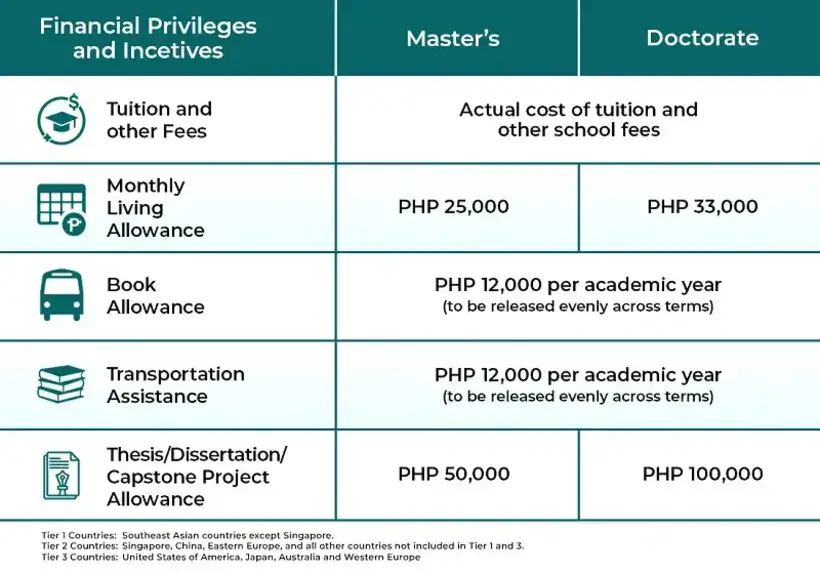
The SIKAP Program provides a range of benefits that empower graduate students to excel in their educational journey. These benefits are designed to ease the financial burden associated with advanced studies and support students in their pursuit of academic excellence. Here’s a breakdown of the benefits:
- Tuition and Other School Fees: SIKAP scholars receive coverage for both Master’s and Doctorate degrees.
- Monthly Living Allowance: Scholars pursuing a Master’s degree receive Php 25,000 per month, while Doctorate degree candidates receive a monthly allowance of Php 33,000.
- Book Allowance: A book allowance of Php 12,000 per academic year is provided to scholars at both Master’s and Doctorate levels.
- Transportation Assistance: To facilitate their studies, scholars receive a transportation allowance of Php 12,000 per academic year.
- Thesis/Dissertation/Capstone Project Allowance: Scholars pursuing a Master’s degree receive Php 50,000, and those pursuing a Doctorate degree receive Php 100,000 to support their research and projects.
The CHED SIKAP Program is a remarkable opportunity for Filipino teaching personnel to further their education and contribute to the enhancement of academic and professional expertise. These scholarships aim to empower individuals to excel in their respective fields while providing essential financial support to make their advanced studies a reality.
If you meet the program’s qualifications, consider applying for the CHED SIKAP Program to elevate your educational journey to new heights.
Paving the Way for Future Healers: CHED Scholarships for Medical Students (CGMS-SUCs)
The Commission on Higher Education (CHED) is dedicated to nurturing the next generation of healthcare professionals. In its pursuit of supporting aspiring medical students, CHED offers the Cash Grant to Medical Students Enrolled in State Universities and Colleges (CGMS-SUCs).
This scholarship program is tailored to alleviate the financial burdens associated with medical education in select State Universities and Colleges (SUCs). Let’s delve into the qualifications, application process, and crucial details regarding CGMS-SUCs.
Qualification
Eligibility for the CHED CGMS-SUCs is specific to medical students who meet the following criteria:
- Must be new or continuing Filipino medical students currently enrolled in a Doctor of Medicine program.
- Enrollment must be in designated SUCs, which include institutions like Bicol University, Cagayan State University, Mariano State University, and others.
How to Apply for CGMS-SUCs
The application process for the CGMS-SUCs scholarship is relatively straightforward. Here are the steps to follow:
- Submit the Completed Application Form: Applicants must complete the application form and submit it to the relevant SUC offering the Doctor of Medicine program.
- Evaluation and Approval: After submitting the application, the documents will be evaluated by the respective SUC. If your application is approved, you will receive a Notice of Award (NOA).
Additional Information
It’s crucial to be aware of a few key details when considering the CGMS-SUCs scholarship:
- Submission Deadline: Applications must be submitted before the start of the Academic Year. This ensures that students have the necessary financial support from the beginning of their medical education journey.
The CHED CGMS-SUCs scholarship program serves as a beacon of hope for future medical professionals, addressing the financial challenges that come with pursuing a medical degree.
By providing crucial support, CHED empowers aspiring doctors to focus on their studies and, ultimately, contribute to the healthcare needs of the Philippines. If you meet the program’s criteria and aspire to become a healthcare provider, consider applying for the CGMS-SUCs scholarship to embark on your medical journey with financial confidence.
Frequently Asked Questions (FAQs)
Are you eager to embark on an educational journey with the help of the Commission on Higher Education (CHED) Scholarships? It’s a commendable pursuit, but you may have a few queries along the way. To provide clarity and guidance, we’ve compiled a list of frequently asked questions (FAQs) about CHED Scholarships.
1. Is an Exam Required for the CHED Scholarship Program?
No, there isn’t a qualifying exam for the CHED Scholarship Program. Qualification is primarily based on meeting the scholarship’s criteria and submitting the required documents. As long as you satisfy the eligibility requirements and submit the necessary paperwork, you can be considered for the scholarship.
2. Is There a Return Service Agreement for the CHED Scholarship?
Unlike some other government scholarships like the Department of Science and Technology (DOST) Scholarship, the CHED Scholarship does not involve a return service agreement. You are not obligated to commit to any service or work after completing your education.
3. Is Pre-Enrollment Required for CHED Scholarship Application?
No, you don’t have to be enrolled in a university or college before applying for the CHED Scholarship. However, during the application process with your CHED Regional Office (CHEDRO), you will need to provide information about the college and the specific course you intend to enroll in.
4. Is Direct Submission of My Application to the CHED Regional Office Allowed?
All applications for the CHED Scholarship are done through the online modality preferred by the relevant CHED Regional Office (CHEDRO). It’s essential to follow the specific online application process and requirements outlined by your regional office.
5. When Is the Refund of My CHED Scholarship Required?
Refunding the CHED Scholarship is only necessary if you have violated certain conditions stipulated by the scholarship program. Such violations could include enrolling in a non-priority program, submitting fake documents, or other breaches of the scholarship’s terms and conditions.
6. Is it Possible to Apply for CHED Scholarships for Studying Abroad?
Yes, CHED does offer foreign scholarships and training programs for Filipino students who wish to study abroad. One notable example is the Southeast Asian Ministers of Education Organization – Regional Center for Graduate Study and Research in Agriculture (SEAMEO SEARCA) Graduate Scholarship Programs.
These programs provide scholarships for Master’s and Ph.D. studies in agriculture and related fields in SEAMEO member countries.
7. Is It Permissible to Combine the CHED Scholarship with Another Government-Funded Scholarship?
In general, CHED scholars are entitled to only one government-funded scholarship. However, there aren’t specific restrictions on having a local government-funded scholarship simultaneously with a CHED scholarship. It’s advisable to consult your CHED Regional Office (CHEDRO) for further clarification if you have concerns about combining scholarships.
These FAQs aim to address some of the common queries individuals have when considering CHED Scholarships. As you embark on your scholarship journey, remember that each CHEDRO may have specific application instructions, and staying informed about their requirements is crucial for a successful application.