
Choosing the right career path is a crucial decision that can shape your future in significant ways. Filipinos often face the decision of whether to work abroad, with the promise of higher income and diverse job opportunities, or to pursue a stable government job in their homeland by passing the rigorous Civil Service Exam.
Working abroad offers the potential for financial growth and exposure to different cultures, fostering personal independence and growth. It also provides opportunities to support family back home by sending remittances.
On the other hand, a stable government job in the Philippines, once achieved through the Civil Service Exam, is considered a family-oriented choice, offering job security, competitive salary, career growth, a retirement plan, bonuses, and salary increases.
However, the journey to attain such a position is not without its challenges, as the exam is renowned for its low passing rate. In this article, we provide a comprehensive guide to help Filipinos make an informed decision and navigate the process of preparing for and passing the civil service exam, should they choose the path of stable government employment.
Unveiling the Essence of Civil Service Exams
Civil Service Exams serve as a pivotal gateway to securing employment within the Philippine government. These rigorous examinations, conducted by the Civil Service Commission (CSC), are designed to assess an individual’s qualifications and eligibility for various government positions.
Understanding the different types of civil service exams, the modes of taking these exams, and the significance of proper preparation can greatly enhance your chances of success in this competitive realm.
Types of Civil Service Exams
Civil Service Exams in the Philippines are categorized into two distinct types, each tailored to specific job requirements and educational backgrounds.
Subprofessional Civil Service Exam:
- Eligibility: Career Service Subprofessional Eligibility.
- Qualification: This exam is designed for individuals seeking entry into first-level government positions that require less than four years of college education.
- Exam Subjects: The subprofessional exam assesses candidates on their proficiency in English, Mathematics, General Information, and Clerical Operations.
- Exam Duration: Candidates have 2 hours and 40 minutes to complete the subprofessional exam.
Professional Civil Service Exam:
- Eligibility: Career Service Professional Eligibility.
- Qualification: The professional exam is intended for candidates aspiring to first and second-level government positions, including roles in science, technology, and various professional fields. To be eligible for this exam, candidates must have at least a bachelor’s degree, which equates to four years of college education.
- Exam Subjects: The professional exam covers a wider range of subjects, including English, Mathematics, General Information, Analogies, and Logical Reasoning.
- Exam Duration: Candidates are given 3 hours and 10 minutes to complete the professional exam.
Modes of Taking the Civil Service Exam
To cater to a diverse range of candidates and circumstances, the CSC offers different modes of taking the Civil Service Exam:
- Paper and Pencil Test (CSC-PPT): This is the traditional method of examination, involving a paper-based test where candidates mark their answers by shading circles.
- Computerized Examination (CSC-COMEX): The computerized exam offers a more streamlined and efficient experience for test-takers, providing quicker results and reducing the chances of errors in scoring.
Online Civil Service Exams: In special circumstances, such as the COVID-19 pandemic in 2020, the CSC introduced online exams to simplify logistics and accommodate remote testing. It’s important to note that online exams differ from in-person computerized exams (COMEX).
Additional Information
In pursuit of government job eligibility through Civil Service Exams, it’s crucial to stay informed about the evolving landscape of these examinations. The CSC may consider adjustments, including potentially lowering passing grades and allowing Filipinos abroad to take exams online, enhancing accessibility and flexibility for aspiring civil servants.
Proper preparation is key to success in the professional-level exam, potentially eliminating the need to take the subprofessional exam first. By understanding the nuances of these exams and preparing accordingly, you can position yourself for a successful career in Philippine government service.
Qualification Requirements for the Civil Service Exam
Securing eligibility to take the Civil Service Exam in the Philippines is a significant step towards a career in government service. To ensure that the examination process is fair and conducted with integrity, the Civil Service Commission (CSC) has established a set of qualification requirements that candidates must meet. Understanding these requirements is essential for those considering a path in the public sector.
Citizenship and Age Requirements
- Citizenship: The first and foremost qualification requirement is citizenship. To take the Civil Service Exam, an applicant must be a Filipino citizen. Dual citizens can apply, provided they present a Certification of Retention/Reacquisition of Philippine Citizenship from the Bureau of Immigration.
- Age: Applicants should be at least 18 years old on the date of application to be eligible to take the exam.
Moral Character and Criminal History
- Good Moral Character: The CSC emphasizes the importance of good moral character. Applicants should not have convictions for specific crimes, including drug addiction, drunkenness, dishonesty, moral turpitude, and examination irregularity.
- Pending Cases: Individuals with pending criminal or administrative cases can still take the Civil Service Exam. However, if they are found guilty, their eligibility can be forfeited in accordance with the Civil Service Law.
Government Service and Exam Frequency
- Government Service: If an applicant has prior experience in government service, they must not have been dishonorably discharged or dismissed from military service or a civilian position. Maintaining good standing is crucial for eligibility.
- Exam Frequency: Applicants are not allowed to have taken the civil service exam in the three months leading up to the examination date. This regulation helps ensure the fairness of the examination process and prevents excessive attempts in a short period.
Strict Enforcement of Rules
It’s important to note that the Civil Service Commission enforces these qualification requirements rigorously. If grounds for disqualification are discovered during the processing of an application, the applicant will be prohibited from taking the exam, and any fees paid will be forfeited.
Therefore, candidates are advised to thoroughly review their eligibility and adhere to the established criteria to avoid any complications during the examination process. Understanding these requirements is the first step toward a successful journey in the field of Philippine government service.
Exemptions from the Civil Service Exam
The Civil Service Exam in the Philippines is a vital step for many individuals seeking government employment. However, certain exemptions exist that allow specific groups of people to bypass the examination process. These exemptions are designed to acknowledge qualifications and experiences that render the exam unnecessary for certain candidates. Let’s explore some of the key exemptions from the Civil Service Exam.
1. College Graduates with Legal and Professional Degrees
Those who have successfully passed the bar and licensure board examinations administered by the Supreme Court and the Professional Regulation Commission are exempt from taking the Civil Service Exam.
2. Community Health Workers and Nutrition Scholars
- Barangay Health Workers: Individuals with at least two years of college education, accredited by the Local Health Board, and who have served their community for at least five years.
- Barangay Nutrition Scholars: Those who have rendered at least two years of continuous nutrition services and related activities.
3. Elected and Appointed Barangay Officials
Barangay officials who have completed their terms of office are exempt from the exam, recognizing their experience in local governance.
4. ICT Training Course Graduates
Individuals who have successfully completed training courses or proficiency tests on Systems Analysis and Design and/or Computer Programming conducted by the Information and Communications Technology Office (ICTO).
5. Graduates with Latin Honors
Those with Latin honors from reputable foreign schools or recognized institutions in the Philippines are exempt from the exam, acknowledging their academic excellence.
6. Former Sanggunian Members
Former vice mayors, vice governors, and regular Sanggunian Members of local government units are exempt from the exam.
7. Science and Technology Specialists
Specialists with a bachelor’s degree in relevant fields and further qualifications in research or teaching are exempt from the Civil Service Exam.
8. Skilled Workers
Individuals with at least one year of very satisfactory work performance in specialized roles that are not measurable by written tests.
9. Veterans and Dependents
Veterans who are eligible for a Veteran Preference Rating Eligibility (VPRE) receive a 10-point boost to their exam rating in specific civil service exams. The spouses and children of veterans can also benefit from VPRE in relevant civil service exams.
It’s important to note that skills eligibilities are distinct from subprofessional or professional career service eligibilities, recognizing that diverse qualifications and experiences exist among candidates. Understanding these exemptions can provide valuable insights for those who may be eligible to pursue a career in Philippine government service without the need to take the Civil Service Exam.
Civil Service Exam Schedules
When planning to take the Civil Service Exam in the Philippines, one of the key considerations is the scheduling of these examinations. The Civil Service Commission (CSC) offers various options to cater to different candidates and to ensure that the exams are accessible.
Here’s a breakdown of the schedules for the two primary modes of the Civil Service Exam, the Paper and Pencil Test (CSC-PPT) and the Computerized Examination (CSC-COMEX).
Paper and Pencil Test (CSC-PPT)
- Conducted Twice a Year: The CSC-PPT is typically conducted twice a year, with exams scheduled in March and August. These regular offerings provide candidates with opportunities to pursue government service positions.
- Application Acceptance Periods: To secure a slot for the March exam, the application acceptance period typically runs from November of the previous year to the end of January. For the August exam, the acceptance period is usually in May and June. It’s crucial to submit your application within these windows.
- Limited Slots: It’s important to note that slots for the CSC-PPT are available on a first-come, first-served basis. Given the competitive nature of these exams, early application is recommended to secure your place.
- Schedule Flexibility: Keep in mind that the schedules for the CSC-PPT may change due to various factors. To stay updated on the latest scheduling information, candidates should regularly check the CSC website or the official CSC Facebook page for announcements and updates.
Computerized Examination (CSC-COMEX)
- Administered by CSC: The CSC-COMEX is administered directly by the Civil Service Commission in its Central Office and Regional Offices. This mode offers candidates an alternative way to take the Civil Service Exam, particularly in a more technologically advanced format.
- Professional and Sub-Professional Level Exams: The professional level exams are held on several days in February, April, May, and June, providing a wider range of scheduling options. Sub-professional level exams are typically scheduled for one specific day.
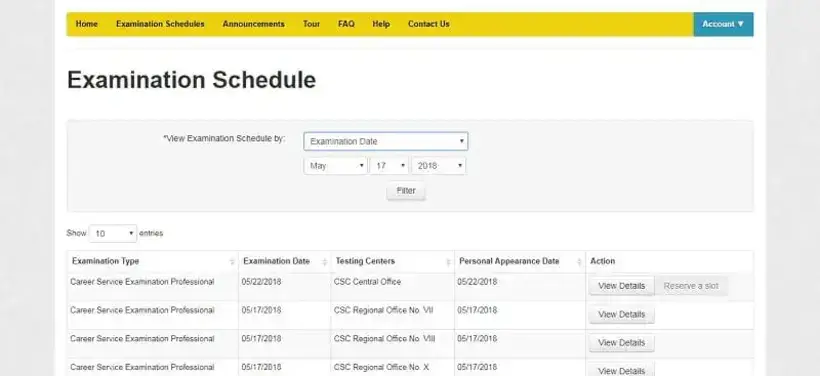
- Schedules Subject to Change: As with the CSC-PPT, schedules for the CSC-COMEX may also be subject to change. For the most up-to-date scheduling information and to make slot reservations, candidates should visit the CSC-COMEX “Examination Schedule” page on the official CSC website.
Understanding the scheduling options for the Civil Service Exam is essential for proper planning and preparation. Whether you opt for the traditional Paper and Pencil Test (CSC-PPT) or the Computerized Examination (CSC-COMEX), staying informed about the schedules and being proactive in your application process will help you embark on your journey toward a career in Philippine government service.
Civil Service Exam Requirements
Applying for the Civil Service Exam in the Philippines is a process that demands careful attention to detail. It’s essential to meet all the specified requirements to ensure a smooth and successful application. Here, we break down the key requirements you need to have in order to apply for the Civil Service Exam.
1. Fully Accomplished Civil Service Exam Application Form (CS Form No. 100, Revised 2016)

This form is downloadable from the official Civil Service Commission (CSC) website and must be properly filled out. Notably, there are spaces for your “Signature over Printed Name of Applicant” and “Right Thumbmark” that should be left blank until completed in the presence of a CSC processor.
2. Four (4) Identical ID Pictures
These pictures should be passport size (1.8 inches x 1.4 inches or 4.5 cm x 3.5 cm), colored with a white background, and taken within three months before the application. They must be printed on high-quality photo paper and include a close-up shot of your face.
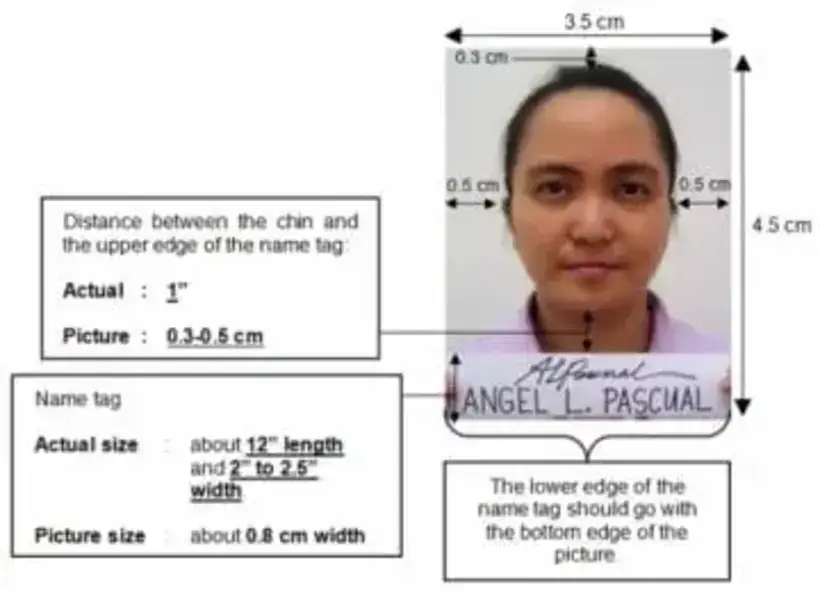
Your name tag should be handwritten below your chin, in the format: First Name, Middle Initial, Last Name, and Extension Name (if any). Facial features should not be computer-enhanced, and eyeglasses or facial accessories that cover your features are not allowed.
3. Original and Photocopy of Any Valid (Not Expired) ID Card
Your ID card should show your complete name, date of birth, clear picture, signature, and the signature of the issuing agency’s head or representative. Acceptable IDs include a driver’s license, BIR ID, Philippine passport, PRC license, SSS ID, GSIS ID, voter’s ID, Philhealth ID, and others. It’s important to note that some expired ID cards with an expiry date in CY 2022 may still be accepted.
4. Original and Photocopy of Certification of Retention/Reacquisition of Philippine Citizenship (if applicable)
For dual citizenship applicants under R.A. 9225, this certification is necessary to prove your eligibility.
5. Examination Fee
The examination fee varies depending on the mode of the Civil Service Exam you choose. For the Paper and Pencil Test (CSC-PPT), the fee is Php 500, while the Computerized Examination (CSC-COMEX) requires a fee of Php 680. It’s essential to pay this fee as part of your application process.
6. Copy of the Appointment Letter Sent to Your Email (if applicable)
If you are taking the Computerized Exam (COMEX), you will need a copy of the appointment letter sent to your email as part of your application.
7. For Dual-Citizenship Applicants: Bureau of Immigration Identification Certificate (IC)
Dual-citizenship applicants need to include a copy of their Bureau of Immigration Identification Certificate (IC) to demonstrate their eligibility for the Civil Service Exam.
Ensuring that you have all the necessary documents and meet the specified requirements is crucial for a successful application to the Civil Service Exam. It’s important to double-check each item on the list and follow the guidelines provided by the CSC to prevent any complications during the application process.
Application Process for the Civil Service Exam (CSC)
When preparing to apply for the Civil Service Exam (CSC) in the Philippines, it’s important to be aware of the application procedures and steps involved, whether you’re opting for the traditional Paper and Pencil Test (CSC-PPT) or the more modern Computerized Examination (COMEX). Below, we outline the application process for each of these modes.
A. Paper and Pencil Test (CSC-PPT) or Ballpen-Based Exam
1. Download the Application Form
Start by downloading the official application form, CS Form No. 100 (Revised 2016), from the official CSC website. Ensure that you have a digital copy of this form to begin your application process.
2. Complete the Form, Minus Your Signature and Thumbprint
Fill in all the required information on the application form except for your signature and thumbprint. Leave these sections blank for now.
3. In-Person Submission

Personally submit your application to the nearest CSC Regional Office (CSCRO) or a Field Office. It’s important to hand in your application in person.
4. Affix Signature and Thumbprint
When submitting your application, you will be required to affix your signature and thumbprint in the presence of a CSC processor. This step ensures that the application is officially completed.
5. Review and Payment
Submit the application form for review, and if you meet the qualifications, proceed to pay the examination fee, which is Php 500, at the cashier.
6. Receipt and Reminders
After payment, return to the Action Officer with the official receipt. You will then receive an examination receipt slip and important reminders for your upcoming exam.
B. Computerized Examination (COMEX)
1. Online Registration
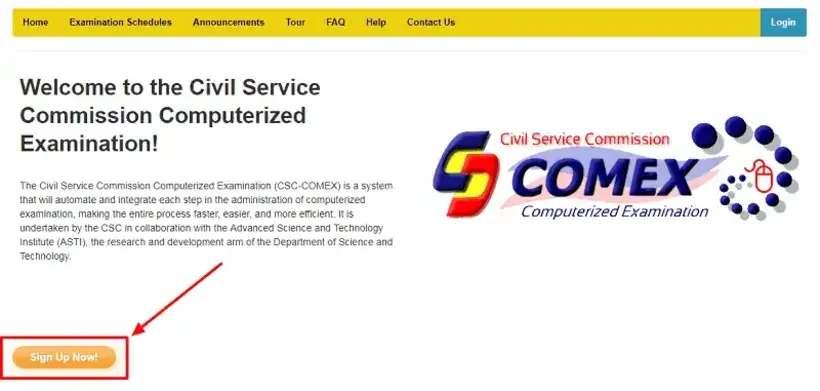
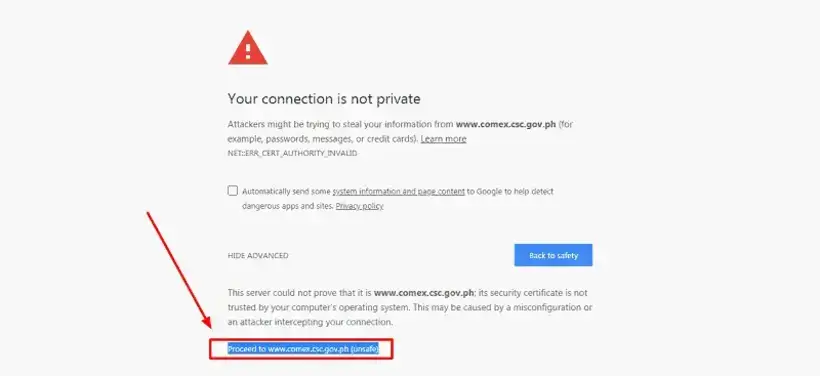
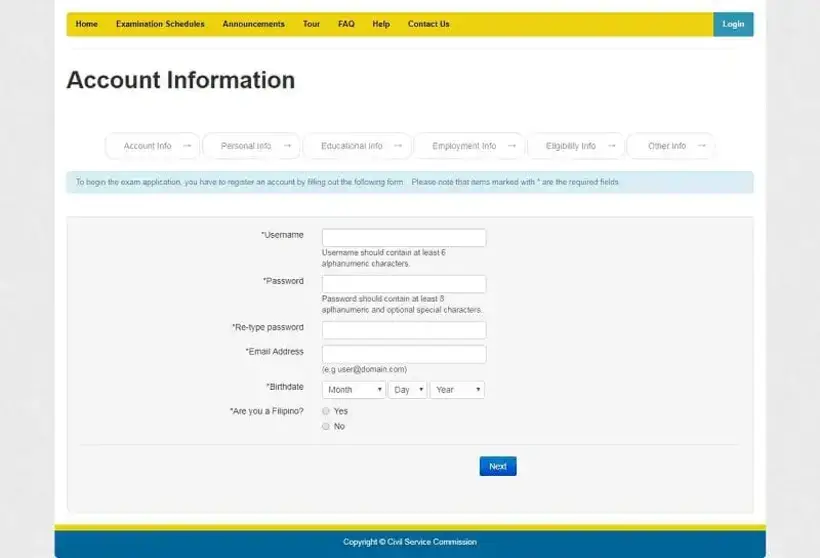
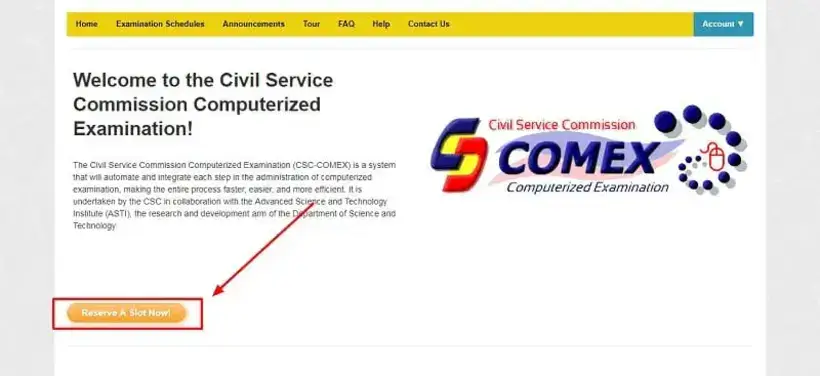
To apply for the Computerized Examination (COMEX), you must access the CSC-COMEX website and create an account. This step is conducted online and involves providing personal, educational, employment, and other relevant information.
2. Acceptance of Terms and Conditions
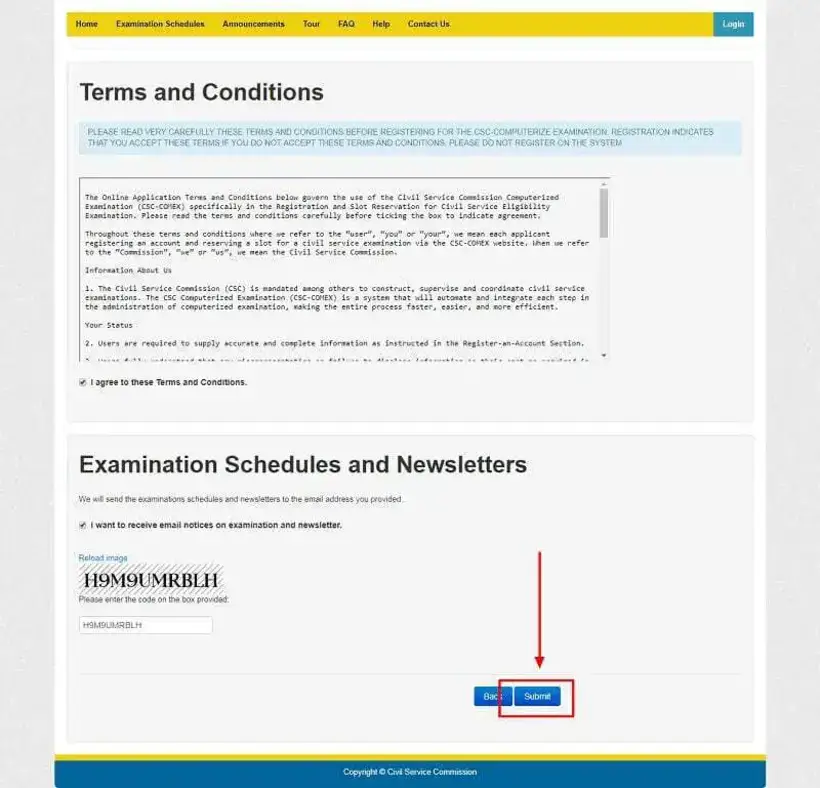
As part of the registration process, you will need to read and accept the “Terms and Conditions.” You will also have the option to choose to receive email updates regarding your application.
3. Captcha and Submission
Type in the captcha code provided and submit your registration. This initiates your application for the COMEX.
4. Email Verification

You will receive a verification link in your email. Click on this link to activate your COMEX account. This is a crucial step to proceed with your application.
5. Account Login and Slot Reservation
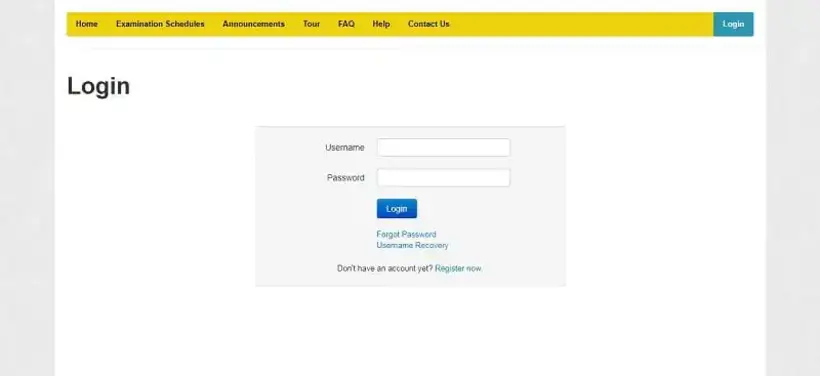
With your activated account, you can log in with your username and password. Here, you can reserve a slot for the examination by selecting your preferred testing center and examination date.
6. Slot Reservation Confirmation
After reserving your slot, you will receive a “slot reservation” confirmation via email. Be sure to print and keep this confirmation, as you will need it on the day of the examination.
Whether you choose the traditional Paper and Pencil Test (CSC-PPT) or the modern Computerized Examination (COMEX), following these application procedures meticulously is key to ensuring a smooth and successful application process for the Civil Service Exam.
Be attentive to the specific requirements for your chosen mode and stay updated through the official CSC channels for any important announcements or changes in the application process.
Unveiling the Content: Civil Service Exam Coverage
Understanding the coverage of the Civil Service Exam is essential for effective preparation and a successful examination experience. The exam is divided into two levels, the Sub-Professional Level and the Professional Level, each tailored to distinct government positions. Here, we delve into the specifics of the exam content and what you can expect at each level.

Sub-Professional Level Content
- Qualification: The Sub-Professional Level of the Civil Service Exam qualifies individuals for first-level government positions, particularly in clerical roles.
- Subjects: The exam at this level covers four main subjects: Verbal Ability, Numerical Ability, General Information, and Clerical Ability. The Clerical Ability section assesses basic tasks such as filing, alphabetizing, and other fundamental administrative functions.
- Personal Information Questions: In addition to the core subjects, candidates can expect to answer 20 Personal Information Questions.
Professional Level Content (Preferred by Most)
- Qualification: The Professional Level of the Civil Service Exam is a preferred choice for many candidates as it qualifies individuals for both first and second-level government positions, which often require a bachelor’s degree.
- Subjects: At this level, candidates are evaluated on their Verbal Ability, Numerical Ability, General Information, and Analytical Ability. The Analytical Ability section includes questions related to logic, data interpretation, word association, analogy, and other cognitive tasks.
- Personal Information Questions: Similar to the Sub-Professional Level, the Professional Level also includes 20 Personal Information Questions.
It’s important to note that both the Sub-Professional and Professional Level exams provide questions in either English or Filipino.
The specific tasks and question types may vary based on the level you choose. To prepare effectively for the Civil Service Exam, aspiring candidates should carefully review the content and ensure they have a strong grasp of the subjects and tasks relevant to their chosen level. This knowledge can significantly enhance their performance and chances of success on exam day.
Guidelines for Taking the Civil Service Exam (CSC)
Taking the Civil Service Exam is a significant step in your journey toward a government career in the Philippines. Whether you opt for the traditional Paper and Pencil Test (CSC-PPT) or the modern Computerized Examination (COMEX), adhering to the specified guidelines and being well-prepared can help ensure a smooth and successful testing experience.
The Paper and Pencil Test (CSC-PPT) Exam Process
The Paper and Pencil Test (CSC-PPT) is a crucial step for individuals seeking government employment in the Philippines. Understanding the procedure for this traditional exam mode is essential for a smooth testing experience. Here’s a step-by-step guide to help you navigate the CSC-PPT process:
1. Venue Confirmation
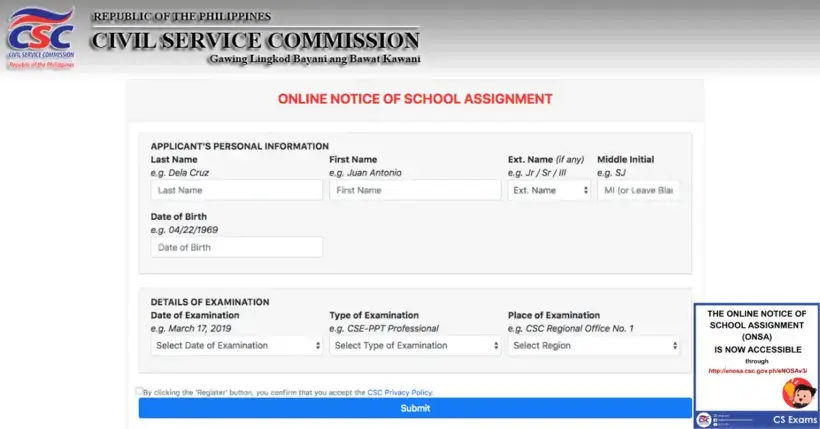
Prior to your exam, find your assigned exam venue by checking the Online Notice of School Assignment (ONSA) on the official Civil Service Commission (CSC) website. Alternatively, you may receive an SMS notification from the CSC with your assignment details.
2. Venue Familiarization
To minimize exam-day stress, visit the exam venue a day or two before the test to become familiar with the location. This pre-exam visit can help you plan your travel and reduce last-minute uncertainties.
3. Early Arrival
Arrive early at the exam venue on the scheduled day. The gates usually open from 6 A.M. to 7:30 A.M., and being punctual is crucial to ensure a smooth check-in process.
4. Required Items
Adhere to the dress code and bring the necessary items, including your identification card (I.D.), application receipt (if available), printed Notice of School Assignment, black ballpen/s, water or a non-alcoholic beverage, and optionally, some snacks to keep your energy up during the exam.
5. I.D. Requirements
It’s essential to have your original I.D. card, the same one you presented during your application. If your I.D. has expired in CY 2022, it is still accepted. If you’ve lost your I.D., provide an I.D. card from the list of accepted I.D. cards, but it must be valid and not expired. If your I.D. does not show your date of birth, bring an original copy of your Birth Certificate from the Philippine Statistics Authority as an additional proof.
6. Prohibited Items
Remember that printed materials and electronic devices are not allowed in the testing room. Ensure you do not bring any prohibited items with you.
7. Exam Completion
Follow the instructions provided during the exam and use only a black ballpen for answering questions.
8. Surrender Prohibited Items
Before the exam begins, surrender any prohibited items to the room examiner.
9. Exam Conclusion
The proctor will collect all answer sheets and booklets simultaneously at the end of the allotted time. You will be informed when to leave the room after the exam concludes.
By adhering to these step-by-step guidelines, you can confidently navigate the Paper and Pencil Test (CSC-PPT) process, allowing you to focus on your performance during the examination and increasing your chances of success in your pursuit of a government career in the Philippines.
The Computerized Examination (COMEX) Process
The Computerized Examination (COMEX) is a modern and technology-driven way to take the Civil Service Exam in the Philippines. To ensure a seamless experience during this mode of examination, it’s essential to follow the specific steps laid out by the Civil Service Commission (CSC). Here is a comprehensive guide on the steps to follow when taking the Computerized Examination:
1. Arrival at the Testing Venue
Show up at the designated testing venue on the specified date and time as indicated in your examination schedule. Punctuality is key to ensure a smooth check-in process.
2. Document Verification
Submit the required documents for verification, which typically include the original and photocopy of a valid I.D. card accepted by the CSC. The accepted I.D.s include:
- Passport,
- Voter’s ID,
- GSIS ID (UMID),
- Driver’s License,
- PRC License,
- SSS ID,
- BIR ID (ATM type or TIN card type with a picture),
- NBI Clearance,
- Police Clearance or Police Certificate,
- Postal ID,
- Barangay ID,
- Company or Office ID,
- Student ID (validated for the current school year/semester/trimester),
- or Philhealth ID (showing your Philhealth number, clear picture, full name, and signature).
If your chosen I.D. does not display your date of birth, you must also bring an original and photocopy of your Birth Certificate issued by the Local Civil Registry or the Philippine Statistics Authority.
3. Payment of Examination Fee
Proceed to the cashier at the testing venue to pay the examination fee, which, as of the current guidelines, amounts to Php 680. Ensure that you have the exact amount ready.
4. Presentation of Official Receipt
After completing the payment process, present the official receipt to the CSC processor or action officer. This receipt serves as proof of your examination fee payment.
5. Receipt of CSID
Once your payment is confirmed, you will receive your CSID (Computerized Systems ID), which is a crucial identifier for the COMEX process. Hold onto this card for the duration of your examination.
6. Orientation and Briefing
Attend the orientation or briefing session conducted by the proctor or room examiner. This session will provide you with essential information and guidelines for taking the Computerized Examination.
7. Signing Attendance Sheets
Sign the picture-seat plan and the examinee attendance sheet as part of the formalities.
8. Commence the Examination
After completing the necessary pre-examination processes, you are ready to begin the Computerized Examination. Follow the instructions provided on the computer interface and make sure to manage your time effectively.
Following these comprehensive steps ensures a smooth and organized experience when taking the Computerized Examination (COMEX) for the Civil Service Exam, allowing you to focus on your performance and enhance your chances of success.
The Civil Service Exam Passing Score
In the pursuit of civil service eligibility in the Philippines, obtaining a passing score of 80.00 or higher on the Civil Service Exam is the threshold for success.
This benchmark underscores the rigorous standards set by the Civil Service Commission, emphasizing the need for candidates to demonstrate their competence and knowledge to qualify for various government positions.
Meeting or exceeding this passing score is a testament to the candidate’s readiness to embark on a career in public service, ensuring that they possess the required skills and capabilities for the roles they seek.
The Waiting Period: Getting Your Civil Service Exam Results
For those who have completed the Civil Service Exam in the Philippines, a common question arises: How long does it take to receive your exam results? The timing can vary depending on whether you took the Paper and Pencil Test (CSC-PPT) or the Computerized Examination (COMEX). Here’s a breakdown of the expected timeframes for each:
A. Paper and Pencil Test (CSC-PPT) or Ballpen-Based Exam
- List of Passers: Typically, the List of Passers is released on the Civil Service Commission (CSC) website within 60 days after the examination. After approximately 30 days from the publication of the List of Passers, successful candidates can claim their Certification of Eligibility from their respective CSC Regional Office.
- Examination Rating: The Examination Rating becomes available around 15 days after the publication of the List of Passers on the CSC website. To check your Examination Rating, you can use the Online Civil Service Examination Result Generation System (OCSERGS) on the CSC website.
- Certification of Eligibility Claim: To claim your Certification of Eligibility, visit your CSC Regional Office, ensuring you present your application receipt (if available) and one valid ID, preferably the same one you used during your application.
B. Computerized Examination (COMEX)
- List of Passers: In the case of the Computerized Examination (COMEX), the List of Passers is usually released on the CSC website within just one week after the exam.
- Certification of Eligibility: For those who have successfully passed the COMEX, Certification of Eligibility is issued.
- Report of Rating: If you didn’t pass the COMEX, you have the option to request your Report of Rating through the CSC website, which provides a detailed breakdown of your performance.
As you eagerly await your Civil Service Exam results, it’s essential to keep an eye on the official CSC website for updates and notifications. This ensures you stay informed and can take the appropriate steps to obtain your Certification of Eligibility or your Report of Rating, depending on your examination outcome.
Next Steps Following a Successful Civil Service Exam Outcome
Passing the Civil Service Exam is a significant achievement that opens doors to various career opportunities, but what happens next largely depends on your career goals and the job market in both the public and private sectors. Here’s a closer look at the possibilities and what to expect after successfully clearing the exam:
1. Government Job Eligibility
One of the primary outcomes of passing the Civil Service Exam is becoming eligible to apply for permanent government positions. This eligibility can be a stepping stone to a career in public service, offering job security, competitive salaries, career growth, and other benefits that attract many Filipinos to government employment.
2. Private Sector Relevance
While civil service eligibility is a valuable credential, private sector employers may not always prioritize it when making hiring decisions. Instead, they tend to focus on educational achievements, skills relevant to the job, and work experience. However, civil service eligibility can still hold significance in specific situations.
3. Higher Private Sector Positions
Civil service eligibility may be particularly relevant for individuals applying for higher positions in the private sector, especially if they hold a Career Executive Service Officer (CESO) certification. CESO certification is a recognition of managerial skills and leadership capabilities, making it a valuable asset for those pursuing managerial roles in the public and private sectors.
4. Competition in Government
It’s important to note that passing the Civil Service Exam does not guarantee immediate employment in the government. Government job openings can be limited, and candidates often face stiff competition. Vacancies typically arise when existing employees retire, resign, or are dismissed, which means job opportunities may not be readily available.
5. Starting Point
Passing the civil service exam is an excellent starting point for individuals who aspire to build a career in the public sector. It serves as an entry-level qualification, and once you secure a government position, you can work your way up through promotions and further Civil Service eligibility exams.
In conclusion, success in the Civil Service Exam is a noteworthy achievement that sets the stage for various career prospects. It opens the doors to government job opportunities, can be a distinguishing factor in the private sector, and positions you for potential leadership roles.
However, it’s essential to keep in mind that securing a government position may require patience due to competition and limited job vacancies in the public sector.