

If you’re running a business or practicing a profession registered with the Bureau of Internal Revenue (BIR), you have to keep track of your financial transactions using books of accounts.
If you’ve just started a new business and haven’t chosen a different way to record stuff, you’ll probably end up using Manual Books of Accounts. These are the official books required by the BIR where you jot down all your business transactions.
But there’s a catch – you can only write things by hand using this method. No printing and pasting stuff onto the pages! Doing that can get you in trouble and lead to penalties.
The good news is, you can avoid the hassle of handwriting everything. One legal option is using Loose-leaf Books of Accounts. It’s a way to keep things organized without having to do everything by hand.
What Are Loose-Leaf Books of Accounts?
Loose-leaf Books of Accounts are one of three methods allowed by the BIR to keep track of a business’s transactions. Let’s break it down:
| Manual | Loose-leaf | Computerized Accounting System | |
|---|---|---|---|
| Nature | Manual | Manual | Automated |
| Method of recording | Handwritten | Electronic | Electronic |
| Medium of Storage | Bound books with handwritten entries | Bound books with printed out entries | Electronic (DVD) |
| Annual Submission | Not required | Required | Required |
| Requires Permit to Use | No | Yes | Yes |
So, Loose-leaf Books of Accounts kind of sit between Manual Books and Computerized Accounting Systems. They let you keep electronic records like the fancy computer systems but with a twist – you have to print them out and bind them like the old-school manual books.
To use Loose-leaf books, businesses record transactions using a computer system throughout the year. It could be a simple Excel file or a more complex accounting system. At the end of the year, the company has to print out these records, bind them together, and send them to the BIR for approval.
The BIR considers Loose-leaf Books of Accounts a “manual” way of doing things because you’re handing in a print-out of your transactions instead of digital copies.
Why Choose Loose-Leaf Books of Accounts?
Loose-Leaf Books of Accounts have some cool advantages:
- Easier Printing of Transactions: Loose-leaf books are way better than manual ones because it’s much faster to print out transactions from the accounting system than writing each one by hand. This saves a ton of time, especially when there are loads of transactions to deal with.
- No Fancy Accreditation Needed: Unlike fancy Computerized Accounting Systems, Loose-leaf books don’t need any special accreditation. This is awesome because getting an accounting system approved can take forever, with the BIR checking out all its features and stuff. Loose-leaf keeps things simple and quick.
What Do You Need to Get Loose-Leaf Books of Accounts?
So, to use loose-leaf books, you first need a kind of permission slip from the BIR called a Permit to Use (PTU) Loose Leaf Books of Accounts. Here’s the easy version of what you need for it:
1. BIR Form 1900
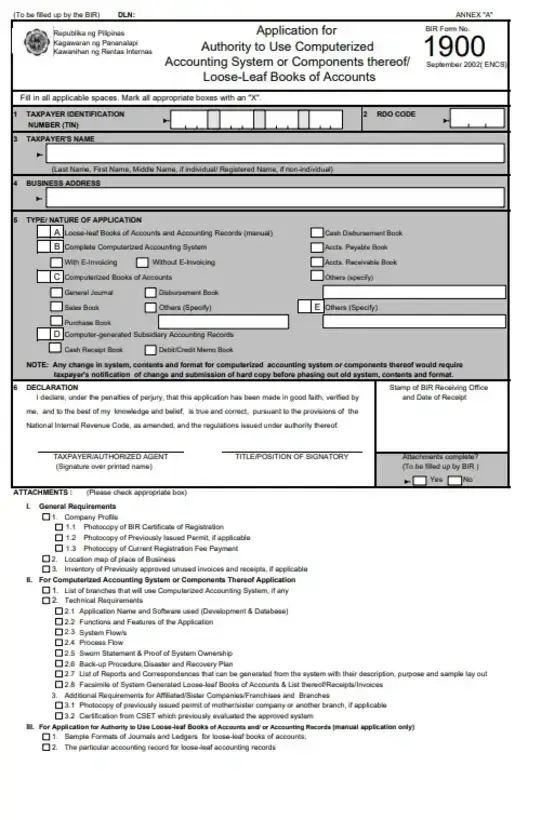
Fill in your basic info and just check “A” under Section 5 – it’s the form where you pick loose-leaf books.
2. Sample Printouts of Journals and Ledgers
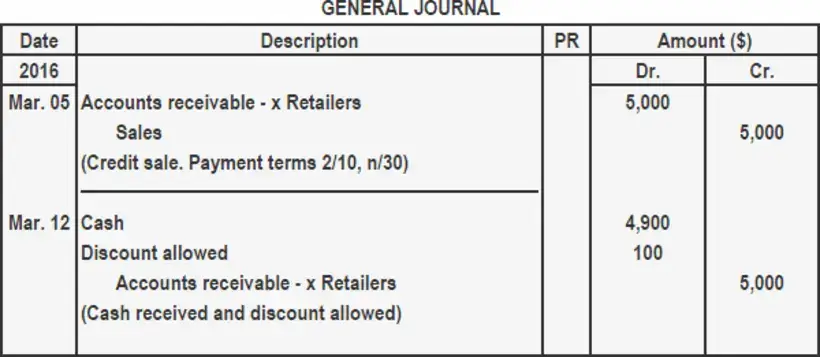
Show the BIR some examples of your printed-out transactions for journals or ledgers. Basically, it’s like a sneak peek of your bookkeeping. If you use a computer system, make sure the printout has all the important info and fits on your paper.
Don’t worry if you’re not sure what to do – we made a sample template here.
3. Sworn Statement for Permit to Use Loose-leaf Books of Accounts
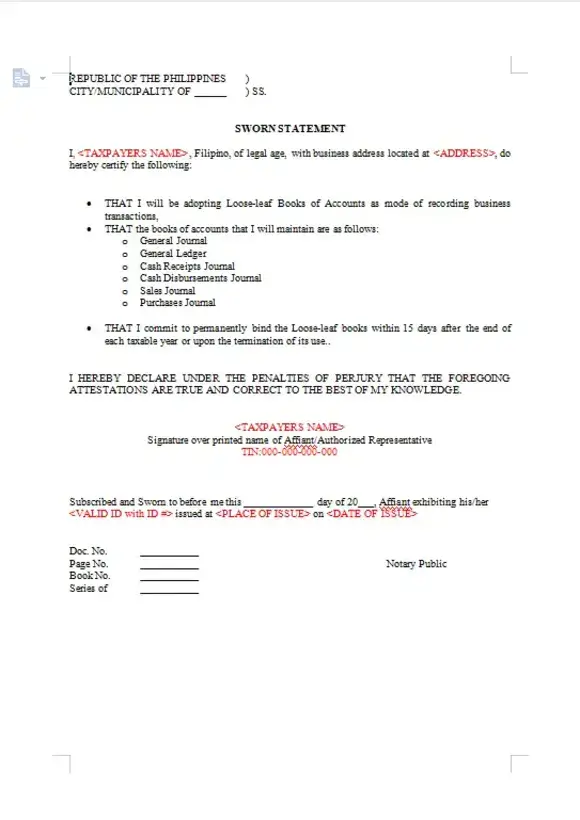
This is just a paper where you promise to keep your books in order and hand them in on time. We even have a template here.
4. Other Stuff
- Copy of your BIR Certificate of Registration
- A copy of the form you filed to pay your Annual Registration Fee (₱500)
- (If someone else is doing this for you) Something called a Special Power of Attorney – but that’s only if you need it.
Easy Steps to Get Loose-Leaf Books for Your Business
1. Get Your Stuff Together
First off, collect all the things you need. You can find the list up there.
2. Hit Up the Revenue District Office (RDO)
Look for the RDO in your business papers from the BIR. Go there, hand over your stuff from step one.Someone from the BIR will check things out. If everything’s cool and there are no big problems, they’ll take your papers.
3. Grab Your Permit to Use (PTU)
Once the BIR says you’re good to go, you can snag your Permit to Use. Now you can start using those loose-leaf books for your business.
What You Need to Do to Handle Loose-Leaf Books?
1. Getting Stuff Ready
Okay, first step – print out all your transactions for these loose-leaf books. But hold on, you gotta make sure you’ve already typed everything on the computer before hitting that print button. And double-check so everything’s right.
2. Making It Look Solid
After printing, it’s time to get those pages all bound up. The cover needs to have your business name, your name, and the date range it covers. No rules on how many bound books you can make – go for one per year or split it into quarters. Just depends on how much you’re dealing with.
3. Handing It Over
About 15 days after the year ends, it’s submission time. Take those hardbound loose-leaf books to your RDO and hand them over with some paperwork:
- Permit to Use Loose-leaf Books of Accounts
- A sworn statement saying your books are complete and on point (Get the template here)
- Update your registered books with BIR 1905
Once everything checks out, the BIR stamps your books.
4. Keeping Them Safe
Stamped and all, you’ve got to keep these books and their attachments at your business address. Safety first!
How Do I Update My Permission Slip for Loose-Leaf Books?
If you’ve added more branches to your business after you got your first permission slip (PTU) for loose-leaf books, here’s what you gotta do:
To update it, grab these documents and take them to the RDO:
- The original permission slip for loose-leaf books
- BIR Form 1900
- Printed examples of your journals and ledgers
- A sworn statement saying you want to update your permission slip
- The BIR Certificate of Registration for the new branch
- The BIR form (0605) that shows you paid the current Annual Registration Fee (₱500) for the new branch
- (If someone else is doing this for you) A Special Power of Attorney – only if needed.
Once the BIR does their thing, they’ll hand you a shiny, updated PTU.
Frequently Asked Questions
1. Do I need a fancy accounting system for Loose-leaf Books of Accounts?
No need! You can use simple spreadsheet software like MS Excel or Google Sheets to record and print transactions in the BIR-approved format. Loose-leaf Books of Accounts are still considered manual, so no need for a full-blown accounting system. Just the way you record stuff has a touch of the electronic vibe.
2. If I get a Permit to Use (PTU) halfway through the year, when do I start using Loose-leaf Books?
Check the date on your PTU for Loose-leaf Books – that’s when the party starts. Anything before that date should go in your manual books. But hey, if you’ve already noted those transactions in your manual books, you can totally include them in your Loose-leaf Books for consistency.
3. What if I don’t have manual books during a tax check-up?
If you’re into Loose-leaf Books of Accounts, show off your Permit to Use instead of manual books during tax mapping. No rush to show your printed books – you only need to hand those in 15 days after the year ends.
4. Can I get more time for submitting Loose-leaf Books?
Yep, just shoot a letter to your RDO asking for an extension. Usually, the BIR gives a 30-day extension upon request, but it might differ a bit between branches.
5. Can I just staple my books instead of hardbinding them?
Nope, no shortcuts here. The books must be hardbound – no paper clips, folders, or staplers allowed. This way, your records stay intact for a good 10 years, as the BIR demands they’re safely kept at your main spot.