
Embarking on a journey towards a civil service exam or pursuing new job opportunities often entails the crucial step of obtaining a police clearance in the Philippines. This comprehensive guide is tailored to streamline the process, equipping you with the knowledge and insights necessary for a swift and efficient application.
From essential documents to step-by-step procedures, we’ve compiled everything you need to navigate the intricacies of securing your police clearance, ensuring that you can confidently fulfill this vital requirement for your career aspirations.
What is a PNP Police Clearance?
Police clearance holds paramount significance, serving as a pivotal tool for government agencies and employers in verifying the absence of a criminal record among applicants.
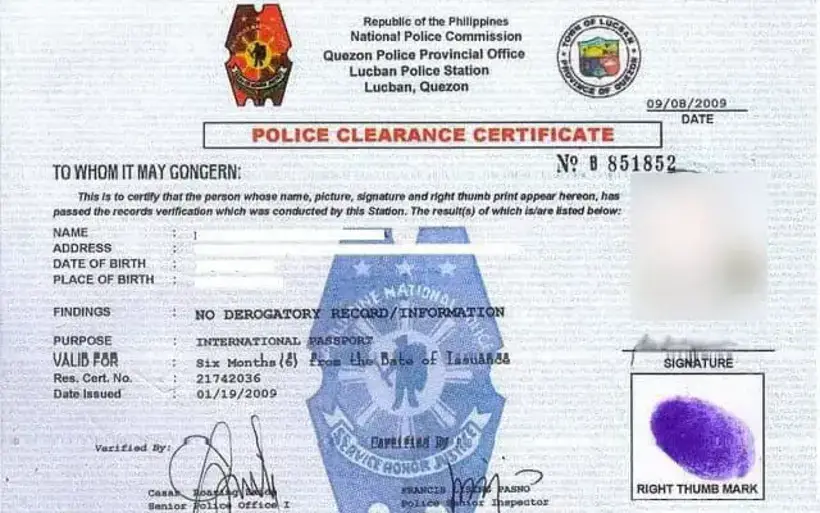
In response to the growing need for an efficient and centralized system, the Philippine National Police (PNP) introduced the National Police Clearance System (NPCS), streamlining record checks by consolidating data from diverse locations.
This innovative approach ensures unparalleled convenience, eliminating the need for individuals to choose between work or residence clearance, as their records can now be seamlessly accessed at any police station.
Widely applicable, police clearance is mandated for civil service exams, firearm registration, credit card applications, and various government-issued documents, with the notable exceptions of Philippine passport applications/renewals and COMELEC voter registration.
Beyond its routine utility, this clearance serves a special purpose in law enforcement, aiding in the identification and apprehension of fugitives who inadvertently disclose their presence by seeking clearance.
The introduction of the online police clearance application system has further amplified efficiency, resulting in the arrest of 294 wanted individuals, issuance of 4.2 million clearances, and a noteworthy contribution of over 619 million pesos to government revenue. This impressive impact underscores the transformative power of technology in enhancing the efficacy of the clearance process.
Police Clearance Types in the Philippines
National Police Clearance (NPC)
The National Police Clearance (NPC) stands as a robust counterpart to the NBI clearance, encompassing a wide spectrum of criminal record checks. Leveraging a national database, the NPC provides a comprehensive overview of an individual’s criminal history, extending its reach across the entire Philippines.
This expansive scope makes it a valuable document for those seeking employment or engaging in activities that require a thorough background check.
To obtain an NPC, applicants must adhere to an online appointment system. This digital approach aims to streamline the application process, promoting efficiency and time management. However, it’s important to note that NPC issuance is centralized, with limited locations available at select police stations. This may require applicants to plan accordingly and travel to specific locations for the issuance of their clearance.
Local Police Clearance (LPC)
The Local Police Clearance (LPC) follows a more traditional approach, requiring individuals to visit the municipal hall in person. This clearance is particularly localized, focusing on an individual’s criminal history within the specific municipality. The LPC is a staple requirement for local employment within the same area, making it an essential document for those pursuing job opportunities within their immediate community.
Securing an LPC often involves an additional step—applicants need to obtain a Barangay Clearance as part of the application process. This adds a layer of documentation to ensure a thorough vetting process. While the traditional nature of LPC application may seem more time-consuming, it remains a standard and widely accepted practice for local employment scenarios.
Applicants should be aware that online appointments for both types of police clearance are limited to specific police stations. This limitation emphasizes the need for careful consideration based on the applicant’s location and convenience.
Ultimately, the choice between NPC and LPC hinges on the specific requirements set by employers. Understanding the nuances of each type of clearance is crucial for individuals navigating the employment process, ensuring they meet the expectations of their prospective employers.
This informed decision-making process ensures a smoother application experience and compliance with the necessary background check standards.
How Do Police Clearance and NBI Clearance Differ?
Issuing Authority
- Police Clearance: The Philippine National Police (PNP) takes the reins in issuing Police Clearance, playing a crucial role in the scrutiny of individuals’ criminal records.
- NBI Clearance: Meanwhile, the National Bureau of Investigation (NBI) holds the responsibility for issuing NBI Clearance, contributing its expertise to the realm of background checks.
Database System
- Police Clearance: Anchored by the National Police Clearance System (NPCS), this clearance relies on a centralized database that spans records from diverse towns and cities nationwide.
- NBI Clearance: Operating its own centralized database system, NBI Clearance maintains an independent repository for comprehensive record checks.
Launch Date
- Police Clearance: The National Police Clearance System (NPCS) made its debut in 2018, bringing a modernized approach to record verification.
- NBI Clearance: Preceding NPCS, the NBI clearance system has been a stalwart presence in the realm of background checks.
Integration Status
While the NPCS aspires to eventually supersede the NBI clearance system, the two coexist presently, serving distinct purposes within the clearance landscape.
Nationwide Coverage
Both Police Clearance and NBI Clearance now boast nationwide coverage, extending accessibility to applicants across the archipelago.
Handling “HIT” on Records
- Police Clearance: In the event of a “HIT” on an applicant’s records, the Police Clearance system navigates the intricacies of these situations.
- NBI Clearance: Similarly, the NBI Clearance system addresses “HIT” scenarios, ensuring thorough scrutiny and appropriate action.
Information Coverage
Both clearances, in their current forms, cover criminal cases, excluding civil cases or private disputes between individuals and organizations. This shared focus underscores their primary role in scrutinizing an individual’s criminal history.
Note: Although the long-term vision involves replacing the NBI clearance with the NPCS, the current landscape sees the two clearances coexisting, each maintaining its distinct focus and functionality within the framework of background checks.
What is the Duration of Validity for Police Clearance?
The validity of the new National Police Clearance is noteworthy for its simplicity and efficiency. Issued as a single certificate, this clearance remains valid for a period of 6 months, providing individuals with a reasonable timeframe for its application in various situations.
Adding an extra layer of security, the certificate incorporates a QR code feature, enabling swift and reliable authenticity verification. This combination of a streamlined format, a reasonable validity period, and advanced security features makes the National Police Clearance a valuable and accessible document for individuals navigating background check requirements.
Police Clearance Requirements
In the pursuit of a Police Clearance, understanding the necessary identification documents is paramount. Here’s a breakdown of the key essentials:
1. Must be Original and Unexpired
To kickstart the process, applicants must present at least two original identification documents. These must not be photocopied, should be unexpired, and must include a clear photograph, complete name, and a valid signature.
2. Accepted Valid IDs by PNP
The Philippine National Police (PNP) accepts a comprehensive list of valid IDs. Here are the accepted identification documents:
- AFP ID
- BFP ID
- GSIS UMID
- LTO Driver’s License
- PRC ID/License
- School ID with registration form
- IBP ID
- PCG ID
- BJMP ID
- Marina ID
- Pag-IBIG ID
- OFW ID
- Alien Certificate of Registration
- Birth certificate
- Passport
- SSS ID/UMID
- TIN ID
- PWD ID
- Voter’s ID
- PhilHealth ID
- PNP ID
- Postal ID
- Senior citizen ID
3. Alternative if One Valid ID is Available
In cases where only one valid ID is accessible, an alternative option is available. Applicants can proceed with the application by bringing one valid ID alongside a certified true copy of their birth certificate from the Philippine Statistics Authority (PSA). It’s essential to attach the original official receipt for the birth certificate to complete the verification process.
4. Additional Requirements for Special Circumstances
a. PWD Verification
If an individual has indicated PWD status during the online registration, it is imperative to bring the PWD ID for verification purposes.
b. Free Police Clearance for Fresh Graduates
Fresh graduates seeking a free Police Clearance are required to present the First Time Job Seeker Barangay Certificate to avail themselves of this benefit.
In essence, a thorough understanding of these requirements empowers individuals to navigate the Police Clearance application process seamlessly. Familiarizing oneself with the accepted IDs and alternative options ensures a smooth verification process, laying the foundation for a successful application experience.
Is a Personal Appearance Necessary?
The requirement for personal appearance is an essential aspect for both National and Local Police Clearance processes, transcending the type of clearance sought.
This mandate ensures that applicants, irrespective of the clearance type, personally present themselves for verification. Not only does this requirement facilitate the update of records with recent photos and biometrics, especially in the case of digitized records, but it also serves as a pivotal security measure.
While an online appointment through the National Police Clearance System is mandatory for the National Police Clearance, applicants for Local Police Clearance can directly proceed to the municipal hall without securing an online appointment.
This personal appearance protocol acts as a proactive security measure, enabling law enforcement to potentially identify and apprehend individuals with outstanding warrants attempting to undergo the clearance process.
What is the Cost of Getting a Police Clearance?
Acquiring the new National Police Clearance (NPCS) comes with a total cost of PHP 160. This comprises a PHP 150 police clearance fee and an additional PHP 10 for the transaction. Payments for the clearance can be conveniently made through Landbank or Bancnet when applying via the NPCS website.
Notably, fresh graduates embarking on their first job-seeking endeavor can benefit from a fee waiver, exempting them from the PHP 160 charge. To qualify for this waiver, individuals must present a Barangay Certificate, affirming their eligibility under the First Time Jobseekers Assistance Act.
This cost structure and waiver provision aim to make the police clearance process accessible to all, catering to the diverse needs of applicants.
Do I Need Barangay Clearance and Cedula for Police Clearance?
When applying for a National Police Clearance, the acquisition of Barangay Clearance and Cedula is not mandatory; only the listed valid IDs are accepted for verification. Conversely, for a Local Police Clearance, the submission of Barangay Clearance and Cedula becomes a requisite, and there’s no need for an online appointment.
A notable exception exists for first-time job seekers, who can obtain a free police clearance with specific requirements. To qualify, individuals must secure a Barangay Certification affirming their first-time job seeker status and at least six months of residency.
Additionally, an Oath of Undertaking before the Barangay Chairman is required. It’s important to note that the privilege of a free police clearance can only be availed of once, adding a crucial limitation to this beneficial provision.
Is Walk-In Application Available for Getting Police Clearance?
For the application of Local Police Clearance, the convenience of a walk-in procedure is facilitated, allowing individuals to directly apply at the municipal hall of their residing municipality. Unlike some other clearances, there is no obligation for an online appointment in this case.
The coverage of Local Police Clearance is specifically tailored to check for criminal records within the same municipality, offering a localized perspective.
However, for the National Police Clearance, an online appointment is a requisite, especially for those seeking nationwide coverage. It’s important to note that not all police stations are integrated into the online appointment system, potentially posing a challenge for some applicants.
In such cases, if the online appointment is unsuccessful, it suggests that the respective police station likely issues only Local Police Clearances, emphasizing the importance of understanding the coverage limitations based on the chosen application method.
Where Can I Get Police Clearance in the Philippines?
When obtaining a Police Clearance in the Philippines, the process varies depending on the type of clearance sought:
Local Police Clearance:
- Location: Head to the municipal or city hall with jurisdiction over your place of residence.
- Online Appointment: No appointment is required for a Local Police Clearance.
National Police Clearance:
- Appointment Method: Schedule through the National Police Clearance System (NPCS) website.
- Choices: Selection is limited to police stations or police camps available in the system, and applicants typically choose the nearest one.
Upcoming Convenience: The Philippine National Police (PNP) has plans to introduce National Police Clearance booths in SM malls nationwide. The objective is to decongest police camps, enhance accessibility, and make the process more convenient for applicants.
his expansion aims to bring easier application, processing, and release of police clearances at accessible venues like SM malls, streamlining the overall clearance acquisition experience.
How Can I Apply for Police Clearance Online in the Philippines?
The National Police Clearance System (NPCS), inaugurated in 2018 by the Philippine National Police (PNP), marks a significant leap toward enhancing the efficiency of criminal record checks. The introduction of online application methods through NPCS offers unparalleled advantages, enabling applicants to conveniently apply for a National Police Clearance anytime and anywhere.
This transition to online processes not only saves considerable time, with the application time reduced from approximately 30 minutes at police stations to less than 10 minutes online but also streamlines the overall application procedure. Despite the online convenience, a personal appearance is still required, serving the purpose of updating the PNP database with applicants’ photos and fingerprints.
As individuals gear up to utilize NPCS for their police clearance needs, understanding the outlined steps and procedures is crucial for a seamless and effective application process.
1. Visit the NPCS Website for Registration

The National Police Clearance System (NPCS) Registration Process is designed to ensure a streamlined and efficient experience for first-time applicants.
To initiate the registration, applicants must visit the official NPCS website. On the NPCS home page, the process begins by clicking on the “Register” button.
A pop-up box will prompt applicants to select their preferred language from options including English, Filipino, or Cebuano. Following this, applicants are required to carefully review and acknowledge various policies, including the Service Agreement, Privacy Policy, and other essential reminders by ticking the corresponding boxes.
Once the agreement and policy acknowledgment are complete, applicants proceed by clicking “I Agree,” confirming their consent to the terms and initiating the registration process.
This systematic approach ensures clarity and compliance with the necessary procedures for a National Police Clearance.
2. Provide Information in the “New Applicant Registration” Form

The Account Creation Process on the National Police Clearance System (NPCS) involves a user-friendly registration form.
To begin, complete the “New Applicant Registration” form by furnishing essential details such as your email address and password, name, gender, and birth date. Ensure agreement with the Terms and Conditions by ticking the corresponding box.
Upon completion, click “Register” for the registration confirmation. A warning box prompts users to verify the provided information before proceeding. If confident in the accuracy of the details, users can click “Save” to proceed; otherwise, they have the option to click “Cancel” for any necessary corrections.
This methodical process ensures a secure and accurate creation of an NPCS account.
3. Sign In to Your Account
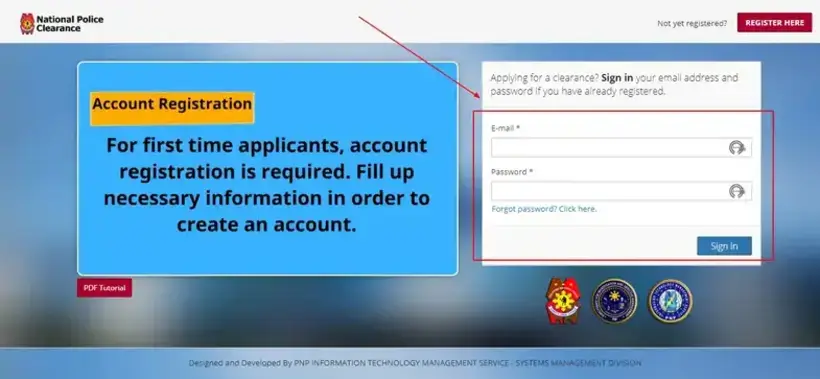
Login using the email address and password you supplied during the registration process.
4. Select “Edit Profile”

Within your NPCS account, choose “Edit Profile.”
5. Complete the “Applicant Information” Form

Completing your Applicant Profile on the National Police Clearance System (NPCS) involves furnishing essential details in various sections. Nationality, Birth Place, Civil Status, Address, Mobile/Telephone Number, Height, Weight, Complexion, Educational Attainment, and Family Background are among the key sections that require attention.
This comprehensive information ensures the accuracy and completeness of your profile for the police clearance application process.
For applicants with disabilities, there’s a specific provision. If you are a person with a disability (PWD), simply mark the checkbox indicating your PWD status and provide your PWD ID number. This inclusion is part of the NPCS’s commitment to accommodating diverse applicant needs, ensuring a streamlined and accessible process for everyone.
Moreover, the NPCS acknowledges the challenges faced by fresh graduates entering the job market. For those embarking on their professional journey, marking the checkbox for the First Time Job Seeker Assistance Act (RA 11261) can be pivotal. This not only facilitates a smoother application process but also waives the police clearance fee.
To qualify for this benefit, present a Barangay Certificate as evidence of your first-time job seeker status. It’s important to note that this fee waiver is a one-time opportunity for eligible applicants.
Before finalizing your profile, a crucial step involves reviewing all the provided information. Check for any missing data or spelling errors, as the details you input will directly appear on the printed police clearance. This meticulous review ensures the accuracy of your documentation, emphasizing the responsibility of the applicant in maintaining the integrity of the information.
Once satisfied with the accuracy of your profile, proceed to click “Save Profile” to complete the application process efficiently.
6. Select the “Clearance Application” Button

Choose this option to schedule an appointment with the nearest police station online.
7. Schedule an Appointment
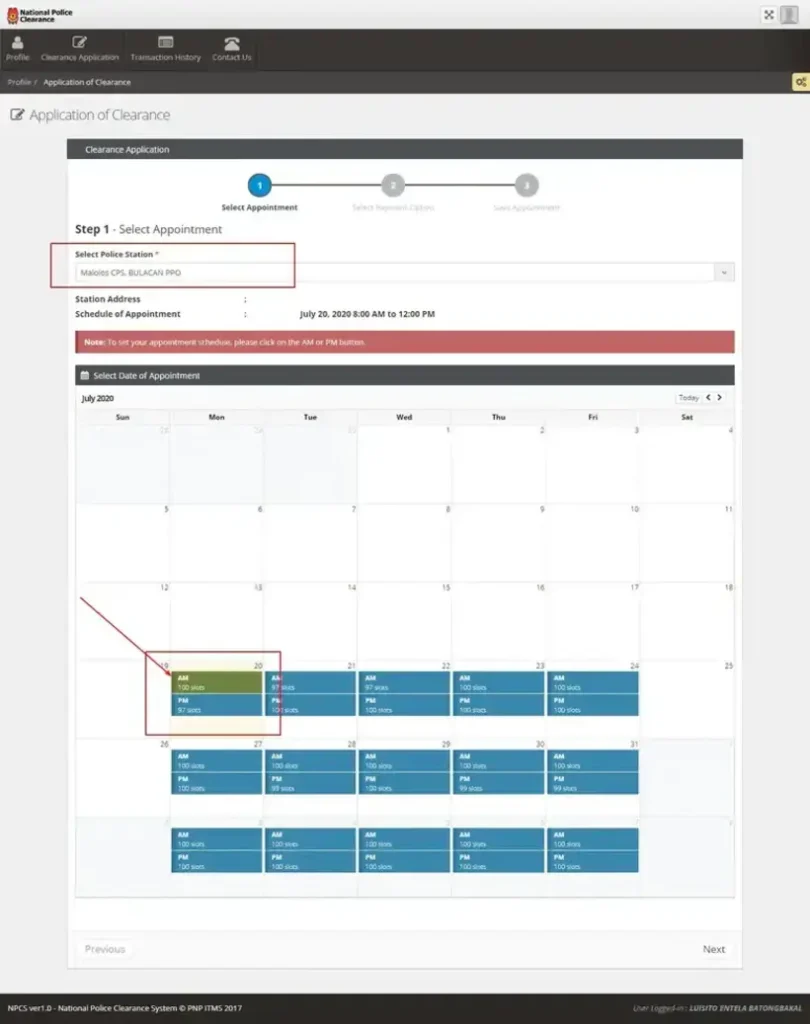
Begin by selecting your preferred Police Station from the drop-down list. Then, choose your desired date and select either AM or PM schedule from the available options.
To proceed to the next step of the application process, click “Next.”
8. Choose Payment Method

In the Payment Option Selection stage, opt for “LandBank of the Phils.” as your preferred payment method. The system will display the police clearance fee of Php 150, which is required to secure your appointment. Notably, first-time jobseekers are eligible for a fee waiver, and they can avail it at the police station on the day of their appointment.
To continue with the appointment process, click “Next.” This ensures a straightforward and transparent payment process for securing your police clearance.
9. Examine the Notes/Reminders and Make the Payment for the Police Clearance Fee

The Police Clearance Appointment Finalization and Payment Steps involve a thorough review of your transaction on the Transaction Summary Page. Here, carefully examine your selected police station, appointment details, and payment option.
Once satisfied, click “Save Appointment” to proceed. Take note of the displayed reference number, which is crucial for tracking your transaction.
To fulfill the payment, click “Click here to Pay” at the bottom right corner. Choose your payment method between LandBank or Bancnet, depending on your account.
If you don’t have a bank account, alternative options include over-the-counter payment at the nearest 7-Eleven or using GCash by entering your GCash number on the ePayment portal.
It’s imperative to complete the payment at least two banking days before the appointment date to prevent cancellation.
First-time job seekers enjoy an exception as they are exempt from the police clearance fee. Instead, they need to present the First-Time Job Seeker Barangay Certificate directly at the police station on the appointment day.
This comprehensive approach ensures a smooth and accessible finalization of police clearance appointments, accommodating various payment options and providing exceptions where applicable.
10. Head to Your Selected Police Station for Photo Capture and Biometrics
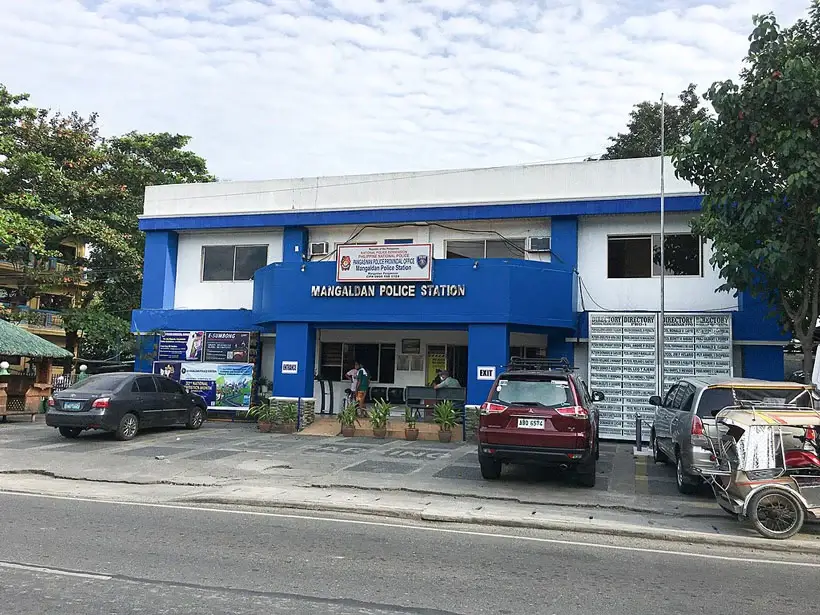
Upon arriving at the selected police station for your appointment, ensure you have the necessary documents ready.
Present the Official Receipt, two valid IDs, and a copy of your payment Reference Number to the Clearance Police Non-Commissioned Officer (PNCO).
Follow the guided area for data collection, where your photo, fingerprints, and digital signature will be captured for processing.
Your application then undergoes a thorough verification process facilitated by the advantage of a connected database. All police stations are linked to a centralized PNP database, enabling a swift and efficient verification process.
In the event that the process takes longer, it may indicate a “HIT” (possibly due to a namesake) on your police clearance. Notably, unlike the NBI clearance, a “HIT” on police clearance can often be resolved within minutes, provided there is a clean record and no active arrest warrant.
This streamlined verification process ensures a reliable and timely issuance of your police clearance.
11. Await the Release of Your Police Clearance

Police clearances boast a same-day release feature, setting them apart from other government-issued documents.
While the exact duration of the process can vary among police stations, it typically takes 15 minutes or more. Once the verification process is complete, individuals are required to patiently wait for their names to be called for the release of their police clearance.
The efficiency of this process not only provides a quick turnaround but also eliminates the need for individuals to resort to falsification, ensuring the integrity of the document. It is crucial to note that falsifying a police clearance document carries severe legal consequences.
Anyone caught using a falsified document may face penalties, including imprisonment in its medium and maximum periods and a fine of not more than Php 5,000. This underscores the importance of obtaining a genuine and legally acquired police clearance.
Tips and Warnings For Getting a Police Clearance
1. Missed Appointment Policy
A crucial aspect of the police clearance application process is understanding the policy regarding missed appointments. Contrary to common assumptions, a missed appointment doesn’t automatically cancel your police clearance application. However, if you fail to attend your scheduled appointment, there’s a 15-day window to claim it. Beyond this period, your payment is forfeited, necessitating a re-application.
2. Inability to Edit Printed Data
It’s essential to be aware that any erroneous personal data printed on your police clearance document cannot be edited post-issuance. To rectify inaccuracies, the recommended course of action is to reapply online. Through the online system, you can make the necessary changes, secure a new appointment, and return for biometrics capturing.
3. Online Verification of Authenticity
Ensuring the authenticity of your police clearance is paramount. The NPCS website provides an online verification feature for this purpose.
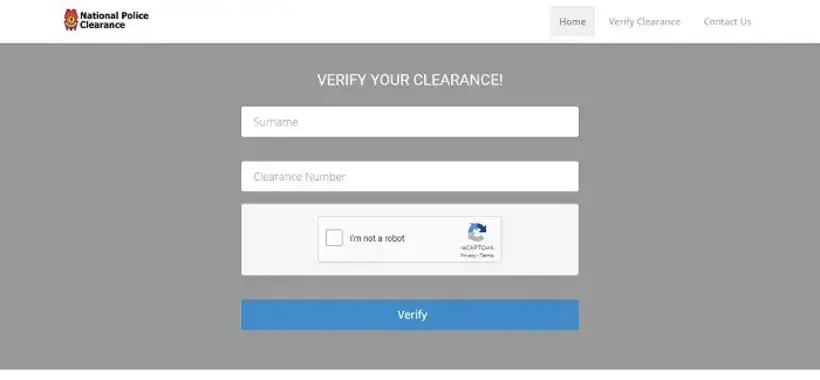
To check the validity of your clearance, enter your surname and police clearance number on the designated portal, complete the captcha, and click “Verify.”
4. Weekday-only Application
Keep in mind that police clearance applications are only accommodated on weekdays, from Monday to Friday. The online system does not offer slots for appointments on Saturdays or Sundays. Plan your application accordingly to align with the weekday-only availability.
5. Non-Renewable Nature
Unlike some other clearance documents, police clearance cannot be renewed. It is essential to note that a new application is required after expiration. The validity period is six months from the release date, setting it apart from documents like the NBI clearance.
Understanding these tips and warnings will contribute to a smoother and more successful police clearance application process. It ensures that applicants are well-informed about the policies and procedures, reducing the likelihood of complications and ensuring the accuracy and authenticity of the obtained clearance.
Frequently Asked Questions
1. How Can I Authenticate My Police Clearance with DFA Red Ribbon for Work/Immigration Abroad?
To authenticate a police clearance for the DFA Red Ribbon (Apostille), the primary requirement is to obtain an original copy of the police clearance issued by the Philippine National Police (PNP). Notably, the authentication procedure has been updated, with the transition from the traditional red ribbon to the Apostille certificate.
This shift occurred on June 17, 2019, replacing the former authentication process. To proceed with the authentication, individuals should follow the updated procedure to obtain the Apostille certificate, ensuring compliance with the current standards and regulations for the authentication of documents for various purposes such as work or immigration abroad.
2. How Does NBI Clearance Differ from Police Clearance?
- Scope Difference (Before NPCS): Before the inception of the National Police Clearance System (NPCS), there existed a notable distinction in the scope of NBI and police clearances. NBI clearance covered nationwide criminal cases, whereas police clearance was limited to the issuing town or city.
- NPCS Impact: The launch of the National Police Clearance System (NPCS) in 2018 played a transformative role, blurring the geographical limitations that previously defined the disparity between NBI and police clearances. The NPCS effectively merged criminal records nationwide, creating a more unified approach.
- NPCS Functionality: The NPCS brings enhanced functionality, allowing the Philippine National Police (PNP) to efficiently check criminal records in any police station across the Philippines. This parallels the capabilities of the National Bureau of Investigation (NBI) database.
- National ID System Integration: A significant development on the horizon is the planned integration of the NPCS database into the National ID System. This integration aims to further streamline and enhance the efficiency of record-keeping and verification processes.
- Non-Replacement of NBI System: It’s crucial to note that the NPCS does not seek to replace the NBI Clearance System, as clarified by the PNP. Instead, it complements existing systems, providing an additional avenue for criminal record verification.
- Handling “HIT” Differences: A notable difference in the handling of a “HIT” (a record requiring further scrutiny) exists between the NBI and police clearances. NBI verification for a “HIT” can take up to 10 days, whereas the NPCS, with its unified cloud-stored local database, handles it immediately.
- Information Types Stored (NBI): The NBI clearance system stores a comprehensive range of official records mandated by law. This includes civilian identification records, derogatory and criminal records, facial photos, fingerprint scans, and even dental records with the assistance of the Philippine Dental Association.
- Information Types Stored (PNP): The PNP database, integrated into the NPCS, includes vital information such as blotter records, derogatory and criminal records, facial photos, and fingerprint scans.
Understanding these differences sheds light on the evolution of clearance systems in the Philippines, highlighting the capabilities and functions unique to each while emphasizing their complementary roles in ensuring a thorough and efficient criminal record verification process.
3. As a Filipino/Foreigner Residing Abroad Who Previously Lived in the Philippines, How Can I Apply for a Police Clearance or Certificate While Overseas?
- Equivalence of Terms: It’s crucial to recognize that the Philippine NBI clearance holds equivalence to what other countries often refer to as a police clearance or certificate. Understanding this terminology alignment is essential for a seamless application process while residing abroad.
- Comprehensive Coverage of NBI Clearance: The Philippine NBI clearance stands out for its comprehensive coverage, encompassing various information such as court charges and even dismissed traffic violations. This detailed documentation ensures a thorough background check.
- Destination Country Requirements: The path to obtaining police clearance abroad is contingent on the specific requirements of the destination country. Some countries may necessitate clearance from both the current country of residence and the country of nationality. For instance, the U.S. State Department mandates applicants to submit police certificates from both their current country of residence and their country of nationality.
- Example of US Requirements: Illustrating the diversity of requirements, the United States, as an example, imposes specific conditions. Applicants seeking immigration need to submit police certificates from both their current country of residence and their country of nationality, highlighting the importance of understanding and adhering to the destination country’s regulations.
- Application for OFWs Example: For Overseas Filipino Workers (OFWs), applying for an immigrant visa to the U.S. while residing in another country, such as Saudi Arabia, involves obtaining police certificates from both their current residence and the Philippines. This exemplifies the intricacies involved in meeting destination-specific prerequisites.
- Clarification on Terminology: A key point of clarification is that the term “police certificate” used by other countries aligns with the Philippine NBI clearance. Ensuring a clear understanding of this terminology aids in facilitating communication and compliance with international requirements.
- Procedure for NBI Clearance (Philippine Equivalent): The procedure for obtaining the Philippine NBI clearance varies based on whether the applicant resides in the Philippines or outside the country. Navigating this process requires a keen understanding of the specific steps and documentation needed to secure the clearance from abroad.
Understanding these intricacies and adhering to destination country requirements ensures a smooth application process for police clearance or certificates while residing abroad. It underscores the need for comprehensive research and adherence to specific guidelines to meet international standards.
4. How Do I Make Payment for Police Clearance Through 7-Eleven?
To successfully complete the payment for your police clearance through 7-Eleven, follow these step-by-step instructions:
- Logging into NPCS Account: Begin by logging into your NPCS account using your registered email address and password. This ensures that you are in the right stage of the process for payment.
- Go to Transaction History: Navigate to the Transaction History section from the main menu as you reach the payment stage. This step is crucial for tracking and reviewing your payment details.
- Select “Click here to pay”: Choose the option “Click here to pay,” keeping in mind that this facilitates over-the-counter payment at 7-Eleven. This selection initiates the payment process through the LandBank ePayment portal.
- Choose “Cash Payment” Option: Upon entering the LandBank ePayment portal, select the “Cash Payment” option and proceed with the submission. This ensures that you are opting for the cash payment method.
- Review Transaction Details: Double-check your appointment details and thoroughly review the total amount, including any convenience fees associated with the transaction. Accuracy at this stage is essential for a seamless process.
- Select 7-Eleven as Payment Channel: From the payment gateway, opt for 7-Eleven as your preferred payment method. Take note of the due date and time, ensuring that your payment aligns with the stipulated timeline.
- Copy and Save Payment Reference Number: After processing your payment, the Payment Result page will display a summary, including the reference number for 7-Eleven payment. Save this reference number or take a screenshot for future reference.
- Install CLiQQ Mobile App: Download the CLiQQ mobile app, a prerequisite for generating the barcode essential for payment. This app serves as a convenient tool for managing your transactions.
- Open CLiQQ App and Create an Account: Register on the CLiQQ app using your mobile number, Facebook, or Google account. Enter the verification code received via SMS to authenticate your account.
- Select “Pay Bills”: In the CLiQQ app, navigate to the “Pay Bills” section. This action prompts the app to update the list of available billers, including the option for police clearance payment.
- Select “Government” from Billers: Choose the “Government” category within the app, as the police clearance is issued by the Philippine National Police.
- Select MYEGPH from Options: Opt for MYEGPH, as it corresponds to the payment reference obtained from the MyEG Philippines payment gateway. This step ensures the proper routing of your payment.
- Enter Payment Details: Input the payment reference number, mobile number, and total amount as indicated in the app. Confirm the details to complete the transaction securely.
- Visit Nearest 7-Eleven to Make Payment: With the CLiQQ app, open it at the nearest 7-Eleven store, proceed to the “Manage Transactions” section, and present the generated barcode to the cashier for payment.
- Keep Receipt for Verification: Retain the receipt issued by 7-Eleven as proof of payment. This receipt is crucial for verification on the day of your appointment, ensuring a smooth and successful process.
By diligently following these steps, you can navigate the payment process for your police clearance with ease, leveraging the convenience of 7-Eleven for a hassle-free experience.