
In 2020, the Philippine Statistics Authority (PSA) opened the doors to public registration for the PhilSys National ID, marking a significant milestone in the nation’s identification system. Millions of Filipinos eagerly participated in the biometrics procedure, aiming to obtain this crucial identification document.
However, a notable number of registrants currently find themselves in a waiting period, as the surge in applications has led to delays, as reported by the PSA. To address this, the PSA encourages registrants to visit designated centers and request a printed, temporary version of the ID while awaiting the official card.
This article serves as a comprehensive resource, offering insights into the PhilSys ID, a walkthrough of the quick registration process, and guidance on checking the status of your ID application.
What is PhilSys?

The Philippine Identification System (PhilSys), also known as the National ID system, stands as the primary identification platform designed to encompass all citizens and foreign residents in the Philippines. Established under the Philippine Identification System Act or Republic Act 11055, this initiative is a pivotal step towards achieving a unified and efficient identification system in the country.
Envisioned to streamline various government and private transactions, the PhilSys serves as a singular and reliable proof of identity for individuals, fostering a more secure and integrated approach to identification.
Enacted as a comprehensive response to the need for a standardized and reliable identification process, the PhilSys ID addresses fundamental questions posed by the Philippine Statistics Authority (PSA), the chief implementor of the National ID system. Through the system, the PSA aims to answer the critical inquiries: “Who are you?” and “Are you who you really say you are?”
These questions underscore the essence of establishing a robust and secure identification framework, ensuring the accuracy and authenticity of individuals’ identities across various sectors, ultimately contributing to enhanced public service delivery and national security.
As the chief implementor of the National ID system, the Philippine Statistics Authority (PSA) plays a pivotal role in overseeing the implementation and administration of the PhilSys. With a focus on efficiency and security, the PSA works towards ensuring that the PhilSys ID becomes a reliable tool for both government and private entities, offering a streamlined approach to identity verification.
The PhilSys ID is not merely a card; it represents a transformative initiative that addresses longstanding challenges in identification processes, fostering a more connected and secure environment for citizens and residents in the Philippines.
What is the Philippine National ID or PhilSys ID?
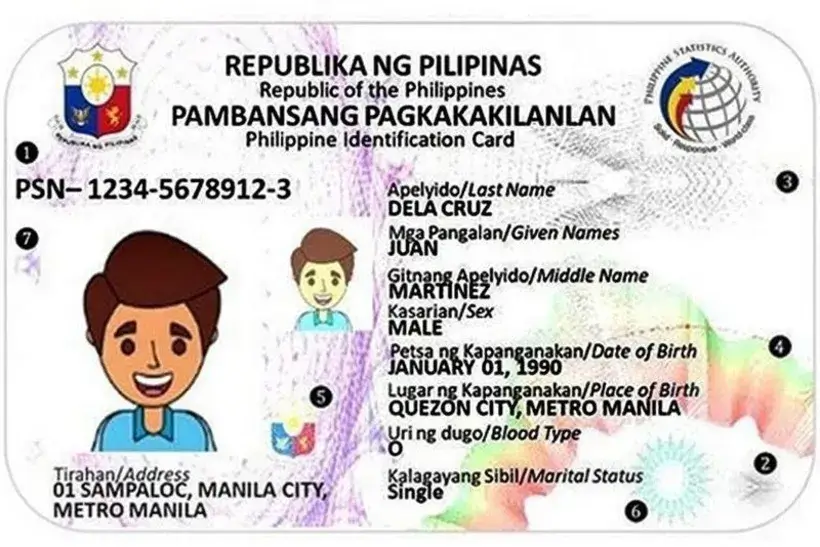
The PhilSys National ID is a nontransferable identification card designed to be a definitive proof of identity for registered individuals in the Philippines. At its core, the ID serves as a tangible representation of an individual’s unique 12-digit PhilSys Number (PSN), a distinctive identifier assigned to each cardholder upon birth or registration.
This standardized system aims to establish a cohesive and foolproof means of identity verification across various sectors, contributing to streamlined processes in both government and private transactions.
A notable feature of the National ID is its inclusion of a QR code, which contains the PSN and two fingerprint data, enhancing the security and integrity of the identification system. This advanced technology not only facilitates swift and accurate identity verification but also adds an additional layer of protection against identity theft and fraud.
The comprehensive nature of the information embedded in the QR code underscores the PhilSys National ID’s role as a sophisticated and reliable tool for authentication.
It is important to note, however, that while the PhilSys National ID holds significant weight as an official government-issued identification in the Philippines, it does not serve as a complete replacement for other valid IDs used for specific purposes.
Various existing IDs, such as passports, UMID (for SSS/GSIS transactions), PRC ID (for professional practice), and driver’s license (for driving), continue to maintain their relevance and validity for their designated functions. The PhilSys ID complements this existing array of identification documents, contributing to a more comprehensive and interconnected identity verification landscape in the country.
Who Qualifies for a PhilSys National ID or Philippine National ID?
Register in PhilSys and obtain a National ID if you fall into any of the following categories:
- Filipino Citizens: This includes those with dual or multiple citizenships. All Filipino citizens are eligible to register and acquire the PhilSys National ID, providing a unified proof of identity.
- Overseas Filipino Workers (OFWs) and Foreign Citizens Abroad: Filipinos working abroad as Overseas Filipino Workers (OFWs) and other citizens residing in foreign countries are strongly encouraged to register for the National ID. This ensures that they have a secure and recognized identification document that can facilitate various transactions and services.
- Foreign Nationals Residing in the Philippines: Foreign nationals living in the Philippines for over six months are also eligible for registration in PhilSys and can obtain a National ID. This inclusive approach contributes to a comprehensive and integrated identification system, promoting efficiency and security for all residents in the country.
How Can I Register for PhilSys ID or National ID? A Quick Guide to Walk-In Registration Steps
To enhance the efficiency of the process, the PhilSys online registration portal has been temporarily disabled by the PSA. To obtain your National ID card, you can now conveniently walk in at any registration booth. Follow these steps for guidance:
1. Visit a National ID Registration Center Near You
To facilitate National ID registration, start by visiting the PhilSys website to access the list of provinces, cities, and municipalities currently open for online booking appointments. For personalized assistance, reach out to your local government unit to inquire about established registration centers for the National ID.
Notably, the convenience of obtaining a National ID extends to malls across the Philippines, including SM, Ayala, Robinsons, and Megaworld malls. Designated spots within these malls serve as accessible hubs for the public to apply for a National ID. If you find yourself at one of these malls for errands or leisure, consider taking the opportunity to visit the PhilSys booth for swift and convenient National ID registration.
Requirements for a Philippine National ID or PhilSys National ID
To successfully complete National ID registration, students and adults must provide the original copy of one of the following supporting documents:
- PSA-issued Birth Certificate and Government-Issued ID: A PSA-issued Birth Certificate coupled with one government-issued ID containing the full name, front-facing photograph, and signature/thumbmark is a valid combination for National ID requirements.
- Philippine Passport or ePassport: Individuals can present their Philippine Passport or ePassport as a standalone document for National ID registration.
- GSIS or SSS-Issued UMID Card: The Unified Multi-Purpose Identification Card (UMID) issued by GSIS or SSS serves as a recognized and comprehensive document for National ID registration.
- LTO Student Permit or Driver’s License: For those holding a Student Permit or a Non-Professional/Professional Driver’s License issued by the Land Transportation Office (LTO), these documents are acceptable for National ID purposes.
Ensuring the availability of these supporting documents during the registration process facilitates a smooth and efficient application for the National ID.
If the primary documents are unavailable, individuals can present the original copy of any of the following secondary documents to meet the National ID requirements:
- LCRO-Issued Certificate of Live Birth
- PSA-Issued Report of Birth
- PSA-Issued Certificate of Foundling
- Integrated Bar of the Philippines (IBP) Identification Card
- Professional Regulatory Commission (PRC) ID
- Seaman’s Book
- Overseas Workers Welfare Administration (OWWA) ID
- Senior Citizen’s ID
- SSS ID
- Pantawid Pamilyang Pilipino Program (4Ps) ID
- License to Own or Possess Firearms (LTOPF) ID
- NBI Clearance
- Police Clearance/ID
- Solo Parent’s ID
- PWD ID
- Voter’s ID
- Postal ID
- Taxpayer Identification Number (TIN) ID
- PhilHealth ID
- Philippine Retirement Authority (PRA)-Issued Special Resident Retiree’s Visa (SRRV)
- National ID from Other Countries
- Residence ID from Other Countries
The acceptance of these secondary documents provides flexibility for individuals who may not possess the primary documents, ensuring a more inclusive National ID registration process.
Secondary supporting documents are accepted for National ID registration, provided they contain the essential details of a front-facing photograph, full name, permanent address, birthdate, and signature/thumbmark. These documents include:
- Employee ID
- School ID
- Barangay Clearance/Certificate
- Barangay ID
- City/Municipal ID
These diverse options ensure that individuals without primary documents can still meet the necessary criteria for National ID registration, offering flexibility and inclusivity in the identification process.
To initiate National ID registration, begin by:
- Fill Out the Registration Form: Begin your National ID registration by completing the requisite form. The form captures essential personal information, ensuring a systematic and accurate record of your identity details.
- Present Supporting Documents: To substantiate your identity, present any of the specified supporting documents listed for National ID registration. Whether it’s a PSA-issued document, government ID, or other recognized credentials, these documents play a crucial role in verifying your identity.
- Undergo Biometrics Capture: Enhancing the security and accuracy of the National ID system, individuals are required to undergo a biometrics capture. This process includes the recording of fingerprints and other biometric data, contributing to a foolproof identification system.
- Keep the PhilSys Transaction Slip: As you conclude the registration process, be sure to retain the PhilSys transaction slip provided. This slip contains vital information, including the PSA PhilSys ID transaction number. Keeping this document is crucial for future reference, allowing you to track the progress of your National ID application and ensuring a smooth and efficient experience throughout the registration journey.
By following these steps diligently, you pave the way for a seamless National ID registration process, bringing you one step closer to a secure and unified identification system in the Philippines.
2. Anticipate the Arrival of Your PhilSys or Philippine National ID Card
Once you have successfully completed the National ID registration process, the next step is to patiently await the delivery of your PhilSys National ID to your specified address. The efficient processing and delivery system ensures a timely receipt of your identification card.
Upon delivery, it’s essential to be prepared—have your PhilSys transaction slip and another valid ID on hand to present to the courier. This ensures a smooth and secure handover, allowing you to officially possess your PhilSys National ID and avail the benefits of a unified identification system in the Philippines.
Frequently Asked Questions
1. For What Purposes Can I Utilize a Philippine National ID or PhilSys National ID?
Easier Transactions with Government and Private Organizations
The PhilSys National ID introduces a transformative way to engage in transactions with both government and private entities, offering a streamlined process for individuals. This multifaceted identification card serves as the sole proof of identity for various activities, such as opening a bank account.
Financial institutions are mandated to recognize the National ID for Know-Your-Customer (KYC) processes, further simplifying and securing the verification procedures associated with financial transactions.
Simpler and Faster Access to Government Services
The National ID facilitates simpler and faster access to an array of government services, marking a significant leap towards efficiency in public administration. Accepted in various government transactions, the PhilSys National ID expedites processes related to financial assistance, social protection, health, education, and more.
This accessibility not only enhances the overall citizen experience but also aligns with the government’s commitment to providing timely and efficient services to the Filipino population.
Reducing Identity Fraud and Control Over Personal Data
An inherent advantage of the PhilSys National ID is its role in reducing or eliminating identity fraud, bolstering the accuracy and integrity of identification databases. This groundbreaking system empowers Filipinos with greater control over their personal data during transactions utilizing PhilSys.
This not only enhances security but also fosters transparency and accountability in the handling of data across the country. The PhilSys National ID emerges not just as an identification card but as a catalyst for positive changes in how personal information is managed and protected in the Philippines.
2. Is Philippine National ID or PhilSys ID Registration Mandatory?
Contrary to being a mandatory requirement for all, National ID registration is a voluntary process, and individuals are not obligated to participate. According to the Philippine Identification System Act, there are no penalties imposed for those who choose not to register, respecting individual autonomy in this matter.
This voluntary nature ensures that citizens have the freedom to decide whether to avail themselves of the benefits of the National ID system.
While registration is not compulsory, the PhilSys actively encourages individuals to participate in the registration process. It underscores the potential advantages and convenience that the National ID offers in various aspects of daily life.
The PhilSys platform envisions being integral for the issuance of government services in the future, and registration is presented as a proactive step toward enjoying the full spectrum of benefits that the system aims to provide. This recommendation aims to create awareness and promote the positive implications of becoming a part of the PhilSys National ID network.
3. Where Can the PhilSys National ID or Philippine National ID Be Used?
The PhilSys National ID holds versatile applicability across various domains, enhancing accessibility and efficiency in numerous aspects of daily life:
- Social Welfare Programs: Accepted for applications and benefits from key social welfare programs such as SSS, GSIS, PhilHealth, Pag-IBIG Fund, and other government agencies.
- Government-Issued IDs: Recognized for the issuance of essential government IDs, including passports, driver’s licenses, and other government-issued identification documents.
- Financial Transactions: Valid for streamlining processes related to bank account opening and various transactions with banks and financial institutions.
- Tax Transactions: Utilized in tax-related transactions, contributing to a more efficient and integrated taxation system.
- COMELEC Registration and Voting: Accepted for COMELEC registration and voting, promoting an inclusive and streamlined electoral process.
- Education and Healthcare: Facilitates admittance to schools and government hospitals, ensuring a seamless experience in these critical sectors.
- Employment Transactions: Recognized and accepted for employment-related purposes, contributing to a more efficient and standardized employment verification process.
4. Does the Philippine National ID or PhilSys National ID Have an Expiry?
Unlike many identification cards, the PhilSys National ID boasts the advantage of not having an expiry date, ensuring that individuals do not need to undergo the renewal process periodically.
A distinctive feature of the PhilSys National ID system is its inclusivity from the very beginning. Newborns are automatically issued a PhilSys ID without the inclusion of fingerprint and iris scan details, laying the foundation for their secure identification from the outset.
As part of the PhilSys protocol, a new ID is issued for newborns once they reach the age of five. This process facilitates the registration of complete biometrics, ensuring that the identification records are comprehensive and accurate as individuals grow and develop. This thoughtful approach to ID management reflects the system’s commitment to maintaining up-to-date and secure records for every Filipino citizen.
5. Is There a Minimum Age Requirement for Philippine National ID or PhilSys National ID Registration?
PhilSys adopts an inclusive approach with open registration, welcoming individuals of all ages, including newborn children, to participate in the National ID system.
For children below the age of five, the registration process involves collecting essential demographic information and front-facing photographs. During this stage, the PhilSys Number is linked to the parent or legal guardian, ensuring a secure and accessible identification system for the youngest members of the population.
To accommodate the evolving nature of personal information, children registered under PhilSys are required to undergo an update at the age of 15. This process involves refreshing and recapturing biometrics to maintain accurate and up-to-date records as individuals progress through different life stages.
The commitment to regular updates underscores the system’s dedication to ensuring the security and relevance of identification records throughout an individual’s life.
6. How Much Does the Philippine National ID or PhilSys National ID Cost?
For Filipino citizens, both the first-time application and renewal of the PhilSys National ID come at no cost. The renewal process is particularly noteworthy as it encompasses the replacement of the ID for the purpose of recapturing or updating biometric information. This ensures that Filipino citizens can conveniently update their records without incurring any fees.
In contrast, foreigners residing in the Philippines encounter a standard fee associated with the initial application, renewal, or replacement of the PhilSys National ID, especially in cases of loss or damage. This fee structure reflects the system’s commitment to accommodating the needs of both citizens and non-citizens, acknowledging the diverse demographics within the country.
7. How Can I Monitor the Status of My PhilSys ID or National ID?
To check the delivery status of your PhilSys National ID, follow these simple steps:
- Visit tracking.phlpost.gov.ph: Access the official Philippine Postal Corporation (PHLPost) tracking website to initiate the tracking process.
- Enter Your PhilSys ID Transaction Reference Number: Locate the PhilSys ID transaction reference number on your transaction slip and enter it into the designated field on the tracking website.
- Click Track: Click on the “Track” button to retrieve the current status of your National ID delivery.
If no results are visible, it indicates that your National ID is still in the processing stage. In such cases, it is advisable to allow a waiting period of approximately six months for the delivery process to be completed. This structured approach ensures that individuals are informed about the progress of their National ID application and provides clarity during the waiting period.
8. How Can I Verify My National ID or PhilSys ID?
o authenticate your PhilSys National ID, follow these steps:
- Visit verify.philsys.gov.ph: Navigate to the official verification website.
- Click the “Scan QR Code” Button: Once on the website, locate and click the “Scan QR Code” button to initiate the authentication process.
- Open Your Camera: Enable your device’s camera to scan the QR code present on your PhilSys National ID.
This streamlined process serves to verify the legitimacy of your National ID through a comprehensive check. It ensures that the information and credentials associated with the ID align with the official records. By incorporating QR code scanning and online verification, the PhilSys National ID system enhances security and accuracy, contributing to the establishment of a robust and trustworthy identification infrastructure.
9. How Can I Get a Digital Copy of My National ID or PhilSys ID?
The printed ePhilID serves as a practical alternative if your National ID is yet to be received, providing a temporary solution for identification needs. Functioning as an alternative version of the PhilSys National ID, the ePhilID is accepted as valid proof of identity and age, making it suitable for various transactions.
Its acceptance is not limited to everyday use, as the Department of Foreign Affairs-Office of Consular Affairs (DFA-OCA) acknowledges ePhilIDs as valid documents for passport applications. The ePhilID encapsulates essential personal information, including full name, sex, date and place of birth, marital status, blood type, address, a 1×1 photo, and a QR code, ensuring a comprehensive representation of the individual’s identity.
To claim your ePhilID, follow these steps to schedule an appointment efficiently:
- Visit the Official ePhilID Appointment System: Begin by accessing the official ePhilID Appointment System on the PhilSys website.
- Agree to the Privacy Notice: Commit to the Privacy Notice and input your 29-digit reference number obtained from the transaction slip.
- Provide Personal Details: Furnish your personal details, including your name, email address, and contact number, ensuring accurate and up-to-date information.
- Verification Code: Wait for a verification code to be sent to your registered mobile number and email address to confirm your identity.
- Select Registration Center and Appointment Details: Choose the registration center that suits your convenience and select the preferred date and time for your appointment.
- Check and Save Appointment Slip: Verify the appointment details on the slip sent to your email and either print or screenshot it for presentation on the appointed day. This systematic approach ensures a smooth and organized process for claiming your ePhilID.
The printing of ePhilID is currently accessible in limited areas, specifically in Metro Manila, Pampanga, and Bulacan.
10. Is My Data Secure with PhilSys?
PhilSys prioritizes the protection of individuals’ information and has implemented robust safeguards covering various aspects of information security, cybersecurity, data protection, and privacy.
Data Collection Limits
The collection and storage of data under PhilSys strictly adhere to the provisions of both the Data Privacy Act and the PhilSys Act. Notably, PhilSys ensures the collection of only essential information, with a commitment to excluding unnecessary details such as political or religious affiliation, socio-economic status, educational background, and criminal records.
This limitation fosters privacy and aligns with the principles of responsible data handling.
Tokenization for Security
In a proactive measure to enhance security, PhilSys employs tokenization, a method that involves replacing sensitive data with derivative tokens. These tokens include the PhilID Card Number (PCN) and Alyas PSN, accompanied by optional one-time PIN (OTP) or biometric verifications for digital authentications or electronic Know Your Customer (e-KYC) transactions.
Tokenization adds an extra layer of security to safeguard sensitive information during digital interactions.
Non-Storage of PSN
A pivotal security measure is the non-storage of the PhilSys Number (PSN) in the databases of government agencies and private sectors.
This deliberate non-storage enhances the protection of individual identity data. While specific tokens may be retained for the purpose of uniqueness verification or cross-checking data, such storage only occurs with explicit consent or legal authorization, ensuring a controlled and regulated approach to data management.
This meticulous strategy reflects PhilSys’s commitment to balancing data security with responsible and ethical information practices.
Conclusion
In anticipation of a more streamlined bureaucratic process, the implementation of the PhilSys ID system holds the promise of remedying and simplifying transactions across government and private sectors. However, it is crucial to acknowledge the frustration and inconvenience caused by the extended waiting period for National IDs.
Despite this, there remains hope that the government will fulfill its commitment to expedite the printing of new IDs, addressing the concerns of countless individuals awaiting their official identification. To stay informed and receive timely updates on National ID registration and delivery, a practical recommendation is to follow the PSA Philippine Identification System page on Facebook.
By doing so, individuals can proactively stay updated on developments, potentially easing the challenges associated with the National ID rollout.