
The significance of a Philippine passport extends beyond its identification as a travel document, with recent extensions granting ten years of validity for adults.
Serving as a key document for a spectrum of activities, including participation in civil service examinations and facilitating the acquisition of foreign visas for travel, work, or study abroad (such as visas for Japan, Korea, and the United States), its importance in accessing global opportunities cannot be understated.
This updated guide aims to offer a comprehensive understanding of the Philippine passport application process, designed to streamline the procedure and mitigate potential complexities, ensuring a smoother experience for applicants seeking this essential document.
Requirements for a Philippine Passport from the Department of Foreign Affairs (DFA)
1. Secure a Confirmed Online Appointment
Online appointments are a mandatory prerequisite for all dealings with the Department of Foreign Affairs (DFA), whether for new applications or renewals of passports. Emphasizing a strict no walk-in policy, the department strictly refrains from accommodating applicants without a scheduled online appointment.
This stringent approach underscores the critical necessity of securing an appointment through the online system for any transaction, promoting an organized and efficient process for all individuals seeking DFA services.
2. Printed Passport Appointment Packet
Following the successful payment of the passport processing fee through designated ePayment channels, applicants will receive an email link leading to the passport appointment packet. This packet includes essential documents pertinent to the passport application process. It is strongly recommended that applicants print out these documents, as they are indispensable for the application.
On the scheduled appointment day for the passport application, it is vital to bring along the printed documents alongside other required paperwork. This careful preparation ensures a smooth and efficient process during the appointment at the passport facility.
3. Completed Philippine Passport Application Form (Exclusive to Courtesy Lane Applicants)
The Philippine passport application process for courtesy lane applicants is an exclusive avenue for eligible individuals to bypass the standard online appointment system. Unlike regular applicants, those eligible for the courtesy lane facility do not need to obtain or submit the typical passport appointment packet. Instead, on the day of their appointment, they are required to present a duly completed passport application form.
This form can be acquired from the Department of Foreign Affairs (DFA) office or downloaded online for both adult and minor applicants. However, an update effective June 3, 2020, mandates that all applicants, even those entitled to courtesy lanes, must secure an online appointment before visiting any DFA offices.
4. In-Person Appearance Required
Compulsory Attendance is a fundamental requirement for passport applicants, necessitating their physical presence on the specified date and time of their appointment. Not showing up carries consequences; failure to attend leads to a 30-day prohibition from rescheduling another online appointment.
This penalty is put in place to dissuade applicants from disregarding their allotted appointment slots, aiming to instill a sense of commitment and punctuality in adhering to the scheduled appointments, thereby maintaining the efficiency of the passport application system.
5. Valid Identification (Original + Photocopy)
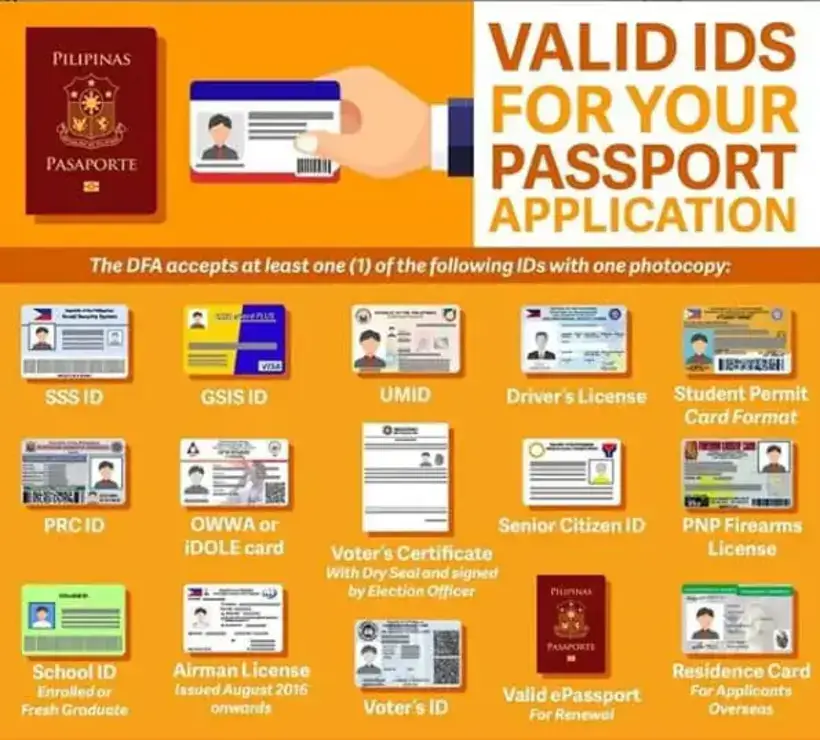
For the passport application process, it is mandatory to present a single, valid government-issued photo identification. This ID should meet specific criteria: it must be clear, unaltered, and display information that corresponds accurately with the details provided during the application.
However, depending on the circumstance, the Department of Foreign Affairs (DFA) reserves the right to ask for supplementary documentation if deemed essential. These requirements are in place to ensure the authenticity and coherence of the applicant’s identity, supporting a secure and accurate passport issuance process.
The following IDs are considered acceptable for Passport Applications:
- Philippine Identification (PhilID) Card: Recognized by DFA Consular Offices since June 9, 2021, this national ID is considered a primary identification document for passport applications.
- SSS ID/GSIS Card/UMID Card: The Social Security System ID, Government Service Insurance System Card, or Unified Multi-Purpose Identification Card are acceptable identity documents for passport applications.
- Philippine Postal Corporation’s (PHLPost) Postal ID: Issued from November 2016 onwards, the PHLPost Postal ID serves as a valid identification document for passport applications.
- COMELEC Voter’s ID/Certificate: Voter’s IDs issued by the COMELEC main office or Voter’s Certificates, which may require additional clearances (such as NBI or police clearances) for regional office certificates, are recognized by the DFA.
- LTO Driver’s License/Student Permit: Both a driver’s license and student permit issued by the Land Transportation Office are acceptable for passport applications. The card format is essential for verification.
- Senior Citizen ID: For applicants who qualify, the Senior Citizen ID is a recognized identification document for passport applications.
- PRC ID: The Professional Regulatory Commission Identification is accepted by the DFA for passport application processes.
- OWWA E-Card: The Overseas Workers Welfare Administration Card is a valid ID for Filipinos working abroad.
- PNP Permit to Carry Firearms Outside Residence: This permit, issued by the Philippine National Police, is recognized as a valid ID for passport applications.
- Airman License: Airman Licenses issued from August 2016 onwards are considered valid IDs for passport applications.
- School ID/Certificate of Enrolment: For minor applicants, school identification or a certificate of enrollment is accepted by the DFA.
- Seafarer’s Record Book (SRB): Issued by the Maritime Industry Authority, SRBs dated from February 2020 onwards are recognized as valid IDs for passport applications.
- For OFWs or Filipinos abroad: Residence cards or any ID issued by the host country indicating Philippine citizenship are accepted by the DFA for passport applications.
6. Original PSA or NSO Birth Certificate
The birth certificate required for a passport application must be an original copy authenticated by the Philippine Statistics Authority (PSA) and printed on Security Paper (SECPA). This authentic document provides crucial information and is a fundamental requirement. In cases where an individual is born abroad, the Report of Birth for Foreign-Born Individuals, duly authenticated by the PSA, becomes necessary.
If the PSA-issued birth certificate is unclear or illegible, a Certified True Copy (CTC) from the Local Civil Registrar can be submitted as an alternative, ensuring that the vital information is accurately presented for the passport application process.
7. Passport Requirements for Women Who Are Married
For married women applying for a passport, the basic requirements align with the standard prerequisites outlined for all applicants. Essential documents include the original birth certificate and a valid ID. Additionally, the original marriage contract or a Report of Marriage authenticated by the Philippine Statistics Authority (PSA) is necessary.
For women married to foreign nationals, it is required to submit the original and a photocopy of the Commission on Filipino Overseas (CFO) Guidance and Counseling Certificate of Attendance. A notable point to consider is the requirement of the marriage contract if opting to use the spouse’s last name; however, if choosing to use the maiden name on the passport, the marriage contract may not be necessary.
8. Passport Requirements for New Minor Applicants
When applying for a passport for minors, specific requirements and accompanying documents are necessary to ensure a smooth and successful application process. Here is a comprehensive list of essential requisites:
- Basic Requirements:
- Confirm online appointment and submit a completed application form, if applicable.
- Provide the PSA/NSO birth certificate.
- Minor’s Appearance with Parent:
- At least one parent must accompany the minor to the DFA office.
- Parent’s ID:
- The parent accompanying the child should bring their passport or any valid government-issued ID.
- If Only One Parent is Present:
- Marriage Certificate: Required if one parent is accompanying the child.
- Unmarried Parents: If the mother won’t accompany the child:
- Special Power of Attorney (SPA): Executed by the mother (if abroad, authenticated by the Consulate/Philippine Embassy).
- Accompanied by Adult Companion:
- SPA or Affidavit of Consent and Support: From the parents authorizing the accompanying adult.
- Companion’s ID: The accompanying adult must provide their passport or a valid government-issued ID.
- Applicant Not Traveling with Parents:
- DSWD Clearance and Affidavit of Support and Consent: Required if not traveling with parents.
- Authentication if Abroad: Affidavit authenticated by the Philippine Embassy/Consulate.
- Companion’s ID: Passport or any valid ID of the authorized adult companion.
- School ID: If applicable, the minor should also provide a school ID.
- Special Circumstances:
- Additional Documents for Specific Cases:
- Minors without a birth certificate, illegitimate minors, legally adopted, or those in the process of foreign adoption may need supplementary supporting documents.
- Additional Documents for Specific Cases:
Understanding and preparing the necessary documents in accordance with these guidelines will facilitate the passport application process for minors. It’s crucial to ensure compliance with the Department of Foreign Affairs (DFA) requirements to avoid any complications during the application process.
9. Additional Documentation
When applying for a passport, various situations may necessitate specific supporting documents to complete the application process. Understanding the specific requirements for distinct circumstances is crucial. Here’s a detailed breakdown of supporting documents required for various specific passport application scenarios:
- Late Registered Birth Certificate Applicants:
- Registered at least 10 years ago: No additional documents required.
- Registered less than 10 years ago: IDs issued before late registration or current IDs with NBI clearance.
- No Birth Certificate or Report of Birth:
- Born on or before 1950: PSA Authenticated Certificate of No Birth Record and Affidavit of Two Disinterested Persons.
- Born after 1950: PSA Authenticated late registered Birth Certificate with pre-late registration IDs or current IDs with NBI clearance.
- Female Applicants with Dissolved Marriages:
- Annotated PSA marriage certificate or Court Order of dissolution.
- PSA birth certificate and acceptable IDs.
- Missing/Lacking Data in Birth Certificate or Report of Birth:
- Proof of filing a supplemental report or correction from the Local Civil Registrar (LCR).
- Discrepancies in Birth Certificate/Report of Birth:
- Discrepancy in first name: Original petition and supporting documents.
- Other discrepancies: Annotated PSA birth certificate reflecting corrected entries.
- Dual Citizens:
- Original PSA authenticated Birth Certificate/Report of Birth and Identification Certificate from the Philippine Foreign Service Post (FSP) or Bureau of Immigration (BI).
- Original and photocopy of the foreign passport.
- Government-issued ID from the Philippines or country of second citizenship.
- Naturalized Filipino Citizens:
- Identification Certificate of Naturalization from the Bureau of Immigration.
- Filipino Citizens by Election:
- Affidavit of Election of Philippine Citizenship and Identification Certificate of Election from the Bureau of Immigration.
- Filipino Citizens by Act of Legislation:
- Certified true copy of the law granting citizenship and Foreign Birth Certificate authenticated by Philippine FSP.
Understanding these specific situations and the supporting documents needed for each circumstance is crucial to ensure a smooth passport application process. It’s essential to comply with the Department of Foreign Affairs (DFA) guidelines for specific cases to avoid complications during the application.
How Can I Get a Philippine Passport?
1. Book an Appointment Online
Scheduling an appointment online with the DFA office is a mandatory step before visiting in person. This involves completing an application form and selecting your preferred appointment location and time slot.
Please note that at present, online appointments are exclusively accessible for Filipinos residing in the Philippines. For those residing abroad, passport applications are processed at the nearest Philippine Embassy or Consulate.
To use the online appointment system, you’ll need:
- A functional computer with internet access.
- A compatible web browser (Internet Explorer ver. 11 or higher / Mozilla Firefox ver. 45 and up are recommended).
- A valid and active email address to receive system-generated messages.
- A PDF reader and a working printer to view and print the system-generated application form on A4-size paper.
Key things to consider:
- Utilize a Gmail or Yahoo! email account for the appointment. Emails from Outlook, MSN, Hotmail, and Live may not be compatible with the system.
- The online appointment system operates on a first-come, first-served basis.
- Opt for an earlier time slot (AM) if possible to reduce wait times and expedite the passport application process on the same day.
- You can attempt to schedule a passport appointment via the DFA customer service hotline at (02) 737 1000.
- Passport appointments are free of charge. Beware of individuals charging high fees to unlawfully secure slots in the online appointment system.
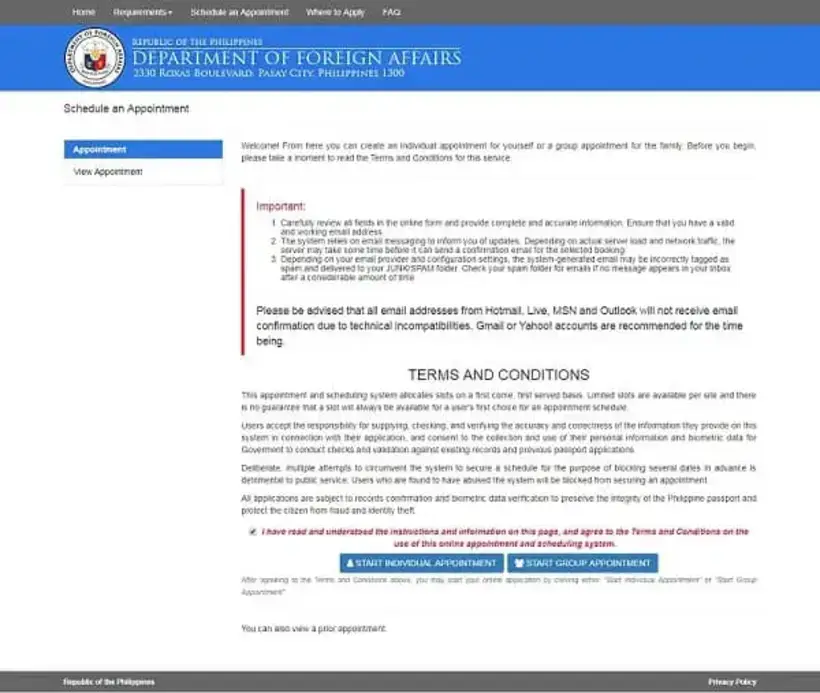
To set an appointment, visit the DFA passport appointment system website. Once there, select “Schedule An Appointment” from the available options. After reviewing the Terms & Conditions, choose “Start Individual Appointment” (for individual applications) or “Start Group Appointment” (for family appointments).
Choose your desired DFA branch and then click on “Next” to advance to the following page.
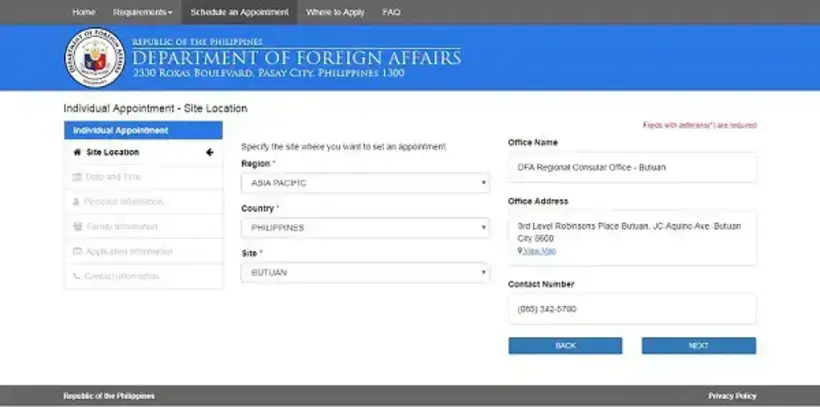
Helpful suggestion: Apart from the DFA Aseana, several DFA branches are located in designated malls within Metro Manila. For those residing in provinces, consider opting for the nearest DFA Regional Consular Office, particularly if all the Manila branches are already fully booked.
Proceed to the following page and choose your desired appointment date and time. Dates highlighted in green signify available slots, whereas those in red indicate that all slots have been filled.
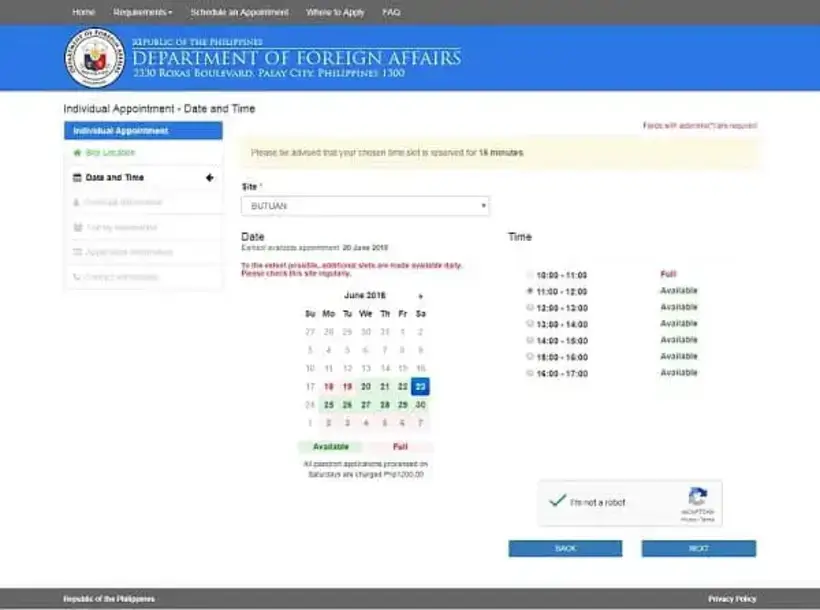
For shorter wait times, consider opting for an early morning appointment on a Saturday.
If your passport appointment is set for a Saturday, it automatically qualifies for express processing, allowing you to receive your passport faster by paying an additional fee.
After selecting your appointment date and time, complete the captcha verification by ticking the designated box and click “Next.”
The subsequent page will prompt you to fill in your personal details on the application form. These details include your email address, contact number, civil status, date of birth, birth legitimacy, and your full name. If you have a name suffix (e.g., Jr, Sr), include it after your first name.
Additional questions might appear if the applicant is a minor. Once completed, click “Next.”
On the following page, you’ll be required to provide information about your family, particularly the names of your parents and their citizenship. Fill in all requested details and click “Next” to proceed.
The subsequent page will present additional questions related to your application.
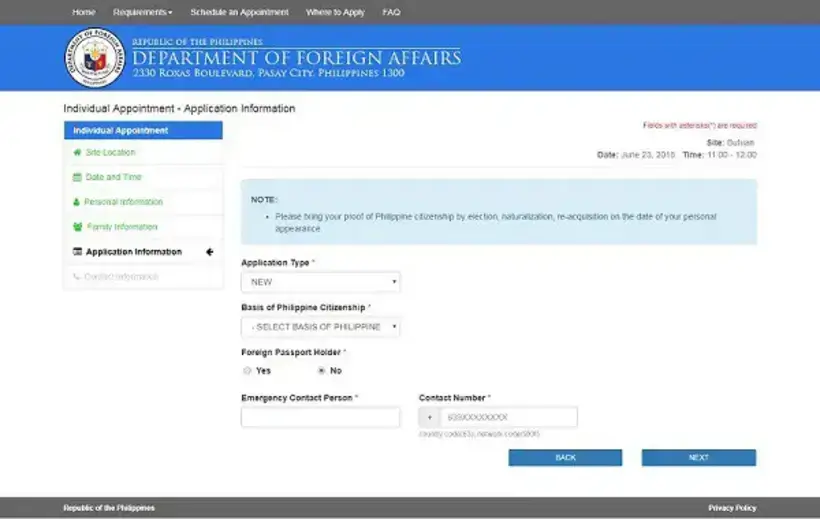
Select “New” as the application type if this is your first time applying for a passport.
Under “Basis of Philippine Citizenship,” choose the process through which you obtained Filipino citizenship. Options include:
- Birth
- Marriage
- Election
- Naturalization
- RA 9225
- Others
For those acquiring Filipino citizenship through election, naturalization, or re-acquisition, remember to bring the necessary supporting documents on your appointment day.
Once finished, click “Next.”
Furnish your contact information, including your home or office address and phone number, ensuring all details are complete and accurate. Click “Next.”
An “Information Review” page will prompt you to verify all the personal details provided. If everything is accurate, solve the captcha, check the box affirming awareness of passport privilege, and click the “Confirm” button.
Choose the processing type you prefer: regular processing for Php 950 or express/expedite processing, slightly pricier at Php 1200.
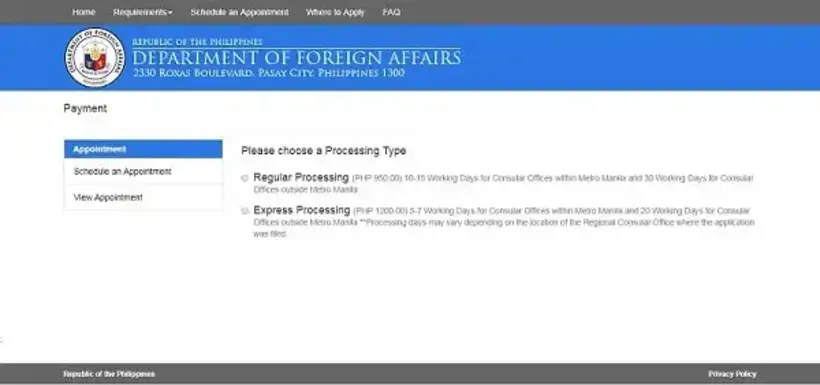
Opting for regular processing will result in receiving your passport after 12 working days.
On the other hand, selecting express processing ensures a quicker turnaround time: 6 working days for Consular Offices within Metro Manila or 7 working days for DFA offices located outside Metro Manila.

Upon selecting your preferred processing type, proceed to payment. Click on the “Pay Now” button to initiate the transaction.
A reminder will pop up, emphasizing that the payment is exclusively for the passport processing fee, which is non-refundable. To ensure completion of the transaction, payment must be made within 48 hours of receiving the Reference Number via email, or the transaction will be canceled.
To confirm your understanding and agreement with these reminders, tick the box labeled “I Agree.” To complete the payment process, click on the “Proceed to Payment” button, finalizing the transaction.
2. Submit the Payment for the Philippine Passport Fee at Designated Channels
Selecting “Proceed to Payment” after the previous step leads you to the Philippine passport ePayment portal.
Upon reaching this portal, essential details will be displayed, including the total passport fee to be paid and a list of authorized payment centers or channels where the fee can be settled.
Following the review of provided information, click “Proceed” to continue with the payment process.
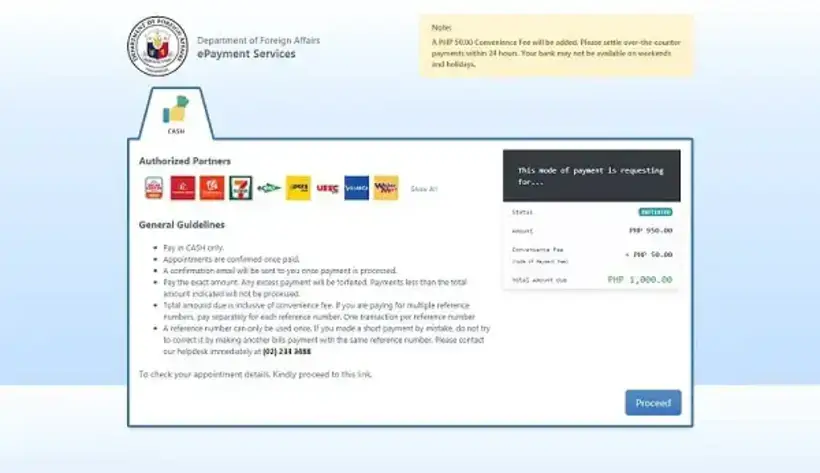
Upon receiving the reference number via email, ensure to take note of this number and present it at the Payment Center when settling the processing fee for your passport appointment.
The DFA has authorized specific establishments and payment channels where you can make this payment, including:
- Bayad Center,
- EcPay,
- Pera Hub,
- Robinsons Business Center and Department Stores,
- Waltermart Department Store,
- 7-Eleven,
- USCC (Western Union),
- Villarica Pawnshop, or
- via credit/debit card.
It’s essential to remember that you can only confirm your appointment after payment of the processing fee.
This payment must be completed within 48 hours of receiving the reference number; failure to do so will result in the cancellation of your passport appointment.
Several key points to consider when paying the processing fee are that it is non-refundable, and an additional convenience/service fee of Php 50 will be charged by the Payment Center. Each reference number requires a separate payment transaction, and for any inquiries regarding the ePayment portal, contact the Help Desk at (02) 234 3488 or via email at info@passport.gov.ph.
The introduction of the ePayment system by the DFA serves various purposes. It aims to save time by allowing applicants to pre-pay the fees in select centers, streamlining the process and ensuring applicants show up for their appointments. This system also allows the DFA staff to process applications faster, resulting in more efficient accommodation of applicants and serves as a deterrent against fixers.
After making the payment, keep the receipt issued to you.
Upon successful payment confirmation in the new email, click the provided link and print the necessary documents as part of your passport appointment packet, including:
- the Checklist with your scheduled appointment,
- Confirmed Application Form with the bar code, appointment reference number (ARN), and eReceipt number,
- as well as two copies of the eRECEIPT.
Ensure to bring these documents along with other required paperwork to the DFA Consular Office on your appointment day.
3. Head to the DFA Office at Your Scheduled Appointment Date and Time
Upon your appointment day, it’s crucial to adhere to specific guidelines to ensure a smooth passport application process at the DFA Office. Plan to arrive 30 minutes to an hour ahead of your scheduled time as late arrivals are not entertained. Remember that satellite offices handle passport applications and renewals exclusively, while other matters are addressed at DFA Aseana.
- The office maintains a dress code, requiring appropriate attire and avoiding certain clothing items such as sandals, slippers, shorts, tubes, or sleeveless tops.
- Additionally, minors below 18 years old must be accompanied by a parent or an adult.
- Prior to your visit, prepare the necessary documents, ensuring you have the printed passport appointment packet and original copies along with photocopies of all required documentation.
- The team at the office will handle image capture, so passport-sized photos are not necessary.
- Keep in mind the strict “No Escort” policy; only applicants are permitted on the consular premises.
Upon arrival, present your appointment packet at the Application/Appointment Counter to receive a queue number. Wait for your turn according to the announcement screen or your given queue number.
When called, proceed to present all required documents at the Information Counter or Processing Area. Adhering to these guidelines will help facilitate the passport application process smoothly and efficiently.
4. Head to the Encoding Section for Image Capturing and Fingerprint Processing
New applicants visiting the DFA Office will undergo the necessary procedures for capturing their photograph and biometrics, a crucial step to establish their identity. Biometric information is securely stored within the microchip of the e-Passport, adding an extra layer of security to the document.
The Encoding section, managed by DFA personnel, handles the entire process, including capturing the applicant’s photograph, fingerprints, and digitized signature. No need to bring passport pictures as the team will manage the photo capture process.
Preparation for the photograph entails specific guidelines, including the removal of eyeglasses, contact lenses, facial piercings, earrings, and jewelry. Light makeup is recommended, and applicants are advised to avoid smiling or showing their teeth while facing the camera directly.
After the completion of the procedures, the DFA staff will issue a claim stub or specify the date for passport collection on the official receipt. Additionally, there is an option for a courier service that provides passport delivery for a fee of Php 150. Should applicants wish to opt for this service, they can make the payment at the Delivery Counter within the DFA office before leaving.
5. Receive/Claim Your Philippine Passport
There are several ways to receive your Philippine passport, each with its own set of guidelines and reminders to ensure a smooth process.
- Claiming at DFA Office: When opting for passport pickup at the DFA Office, ensure to return on the specified date indicated in the claim stub or Official Receipt at the Passport Releasing section. If unavailable to personally claim the passport, an authorized representative can do so with a Special Power of Attorney or an authorization letter.
- Courier Service: For those who selected the courier service, anticipate passport delivery within 1 to 2 weeks after the application. In the event of unavailability, ensure your representative presents the necessary documents for passport receipt.
- Additional Reminders: Required Documents: Remember, the Official Receipt is mandatory for passport claiming. If misplaced, an Affidavit of Loss is required for reissuance. Always review and verify the printed information in your new passport before leaving the DFA premises.
- Signing the Passport: Individuals aged 13 and above should sign on the third page of the passport upon receipt. However, applicants aged 12 or below should leave this section blank to comply with the regulations.
- Avoiding Damage: To prevent damage to the electronic chips in the passport, especially the covers, refrain from stapling anything to the document.
- Unclaimed Passports: Per Department Order No. 37-03, unclaimed passports will be automatically canceled after 180 days. It’s essential to adhere to these guidelines to ensure the efficient and proper receipt of your passport.
Passport Application Process: Essential Tips and Warnings
Warning Regarding Fraudulent Services
The landscape of passport application services is rife with potential risks, especially on social media platforms. Caution is advised when encountering strangers offering passport appointment services on behalf of the DFA.
These services often lead to costly and fraudulent appointments. Genuine passport applications are exclusively processed through the official DFA appointment system, ensuring authenticity and reliability in the application process.
Passport Photo Guidelines and Tips
When capturing your passport photo, adhering to specific guidelines ensures the photo meets the required standards and guidelines.
Tips for Appropriate Passport Photos:
- Attire: Opt for a collared, formal, or decent shirt for your passport photo.
- Eye Contact: Maintain direct eye contact with the camera lens without tilting your head.
- Facial Expression: Keep a neutral facial expression, avoiding eyebrow raising, frowning, or squinting.
- Smile Guidelines: If smiling, ensure no visible teeth; avoid bangs covering the eyes or brows.
- Eyewear: Refrain from wearing eyeglasses; only medically necessary contact lenses of the same color as the natural eyes are permissible.
- Ears and Accessories: Both ears must be visible without ear or hair accessories, and ensure a neat hairstyle for complete facial visibility.
- Makeup and Accessories: Minimal makeup and small earrings are allowed for female applicants (not for males). Head scarves or veils are permitted for religious or health reasons only.
Infants Passport Photo Specifics
For infants, specific guidelines apply to ensure the photograph meets the necessary standards. While a high-chair is allowed for the photo, it’s essential to ensure that the parents’ or guardians’ hands or arms supporting the child are not visible in the image, even if they provide support. Adhering to these guidelines will ensure the passport photo for infants complies with the required standards.
Frequently Asked Questions
1. What to Do if You Didn’t Receive an Email Confirmation?
Addressing a missing email confirmation for a passport appointment involves understanding potential reasons and taking necessary steps to resolve the issue. The lack of receipt of the email confirmation might stem from various causes, such as using a non-Yahoo! or non-Gmail account, leading to technical difficulties.
To mitigate this, it’s advised to check the SPAM/JUNK folder in your email platform, where the confirmation might have been unintentionally placed. Additionally, incorrect or misspelled email addresses could result in appointment cancellation or technical system glitches, causing email loss.
Resolving this involves ensuring the use of a free Yahoo! or Gmail account and rectifying any misspelled email addresses. If the confirmation remains missing, it’s recommended to wait for 5 days before reapplying or contact the DFA hotline at 556-000 (DFA Aseana) for assistance in re-sending the confirmation email.
2. Is It Possible to Change My Appointment Location and Schedule?
Guidelines for rescheduling your appointment entail a straightforward process. To access this option, click on the designated “reschedule” button to modify your existing appointment. However, it’s essential to consider that the availability for rescheduling is subject to the availability of appointment slots.
Additionally, it’s important to note that the option for rescheduling is permitted only once. For instance, if you have a weekday appointment, you can reschedule it to another weekday within the available slots.
3. What Should I Do if I Mistakenly Filled out the “New Passport” Application Form Despite Already Having a Passport?
Correcting mistakes on a passport application form is feasible during the appointment day when applicants undergo a verification process to confirm information and necessary requirements. To rectify the error, it’s crucial to communicate the mistake to the DFA personnel and clarify that the passport is intended for renewal rather than a new application.
When attending the appointment, it’s important to bring along essential documents such as the old passport for the renewal process. In the event of a lost passport, applicants should provide a notarized affidavit of loss. For any further inquiries or concerns, individuals can contact the DFA Manila hotline at (02) 834 4000 or refer to specific contact details for DFA satellite offices.
4. How Can I Confirm if My Passport is an e-Passport?
Determining if your passport is an e-Passport is relatively straightforward. E-passports were initially issued around 2009, introducing modern microchip technology for identity verification. The key distinction between an e-passport and the government-issued old passport (MRRP and MRP) is the integration of this microchip technology.
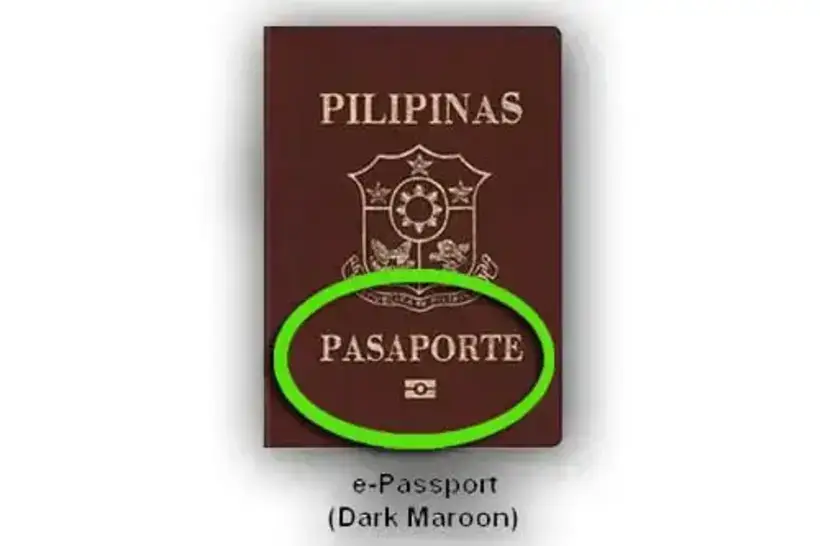
To confirm if your passport is an e-Passport, look for a microchip logo, typically a small rectangle located below the word “PASAPORTE” on the front cover of your passport. The presence of this microchip logo serves as a clear indicator that your passport is indeed an e-Passport.
5. Is an Old Passport from the 1990s or Older, Lost Over Time, Eligible for Renewal or a New Application?
When dealing with old passports for renewal or a new application, it’s important to note that passports issued in the 1990s or earlier are no longer eligible for renewal. Renewal is feasible solely for the new e-passport introduced since 2009.
The Department of Foreign Affairs (DFA) indicates that attempting to renew Brown Passports, Green Passports, Machine Readable Passports (Maroon), or any other older passports would be classified as a new application rather than a renewal.
6. What Should I Do if My Philippine Passport is Damaged or Mutilated?
A passport is not only a travel document but often a primary form of identification. If your Philippine passport has been damaged or mutilated, it is crucial to address the issue promptly. Travelling with a damaged passport not only raises concerns about identification but could also lead to entry restrictions or even denial at immigration checkpoints.
A damaged passport is deemed invalid by immigration authorities. Therefore, attempting to travel with a damaged or mutilated passport can result in being barred from entry to your intended destination. It is the responsibility of the passport holder to proactively seek a replacement before any overseas travel plans.
When a passport is damaged or mutilated, the passport application process does not involve a simple renewal. Instead, it is treated as a completely new application, requiring adherence to specific protocols and requirements.
Several conditions can render a passport invalid, including torn or missing pages, a damaged data page, unreadable microchip or MRZ (Machine Readable Zone), an unstitched booklet, water damage, or a photo that has been tampered with or is unclear.
To replace a damaged Philippine passport, certain documents and steps are mandatory:
- Personal Appearance at the Department of Foreign Affairs (DFA): An online appointment is necessary to appear in person.
- Duly Accomplished Passport Application Form: This form can be obtained online or at the DFA office.
- Notarized Affidavit of Explanation: Detailing the circumstances of the damage to the passport.
- Original and Photocopy of Damaged Passport’s First and Last Pages: These pages help in the verification process.
- Payment of a Php 350 Penalty Fee: This fee is a standard requirement for a damaged passport replacement.
- Birth Certificate (if necessary): Required if passport details are unrecognizable due to damage.
Upon submission of the required documents and the application at the DFA, a mandatory 15-day clearing period is initiated. This period is primarily for verification and record tracing before the new passport application is processed.
It’s essential to be proactive in addressing a damaged or mutilated passport to ensure smooth travel and to avoid any potential entry issues or denial at immigration checkpoints. Adhering to the outlined replacement process is crucial for obtaining a valid passport for hassle-free international travel.
7. Is it Permissible to Use My Philippine Passport if I’ve Acquired US Citizenship?
Upon acquiring US citizenship, the validity of the previous Philippine passport ceases. It becomes invalid for use in international travel or any official identification purposes. The decision to reclaim Philippine citizenship remains at the discretion of the individual. Those desiring to maintain or reacquire Philippine citizenship can explore the avenue of dual citizenship, allowing them to retain both nationalities.
An available guide outlines the process for reclaiming Filipino roots through dual citizenship. However, it’s important to note that in order to apply for a new Philippine passport, reclaiming Philippine citizenship is a necessary prerequisite.
8. In the Philippines, After Marriage, Which Surname is Appropriate for My Passport: Maiden Name or Husband’s Surname?
The use of a married name in a Philippine passport is entirely optional as per Philippine law. Opting to use your husband’s surname in your passport is a choice left to the individual. However, it’s crucial to note that altering this name in the future is subject to specific restrictions. The married name can only be changed if circumstances arise such as the passing of the spouse or if the marriage is legally dissolved or invalidated.
To include the married name in the passport for those married within the Philippines, it’s necessary to present a PSA copy of the marriage certificate. For marriages that take place outside the country, it is important to report the marriage to the nearest Philippine Embassy or Consulate in that particular jurisdiction.
This reporting ensures that the marriage is duly recognized and acknowledged for potential adjustments or changes in personal documentation, including the passport.
9. Is it Possible to Reschedule a Missed Passport Appointment Due to an Emergency?
Due to a strict policy implemented by the Department of Foreign Affairs (DFA) since June 1, 2016, there is no allowance for rescheduling missed passport appointments, regardless of the circumstances, including emergencies.
This policy includes a 30-day ban for applicants who fail to attend their originally scheduled appointment. The ban restricts rebooking for a month after the initial appointment date, affecting the ability to secure a new slot promptly.
Statistical data reflects a substantial 47% no-show rate among appointment holders, significantly impacting the efficiency of the appointment system. This high rate of no-shows has led to extended waiting periods for applicants, causing delays and sometimes resulting in a two-month wait for a new appointment slot.
The purpose behind this strict policy and the enforced ban is to serve as a deterrent, emphasizing the importance of respecting and honoring allocated passport appointments.
10. Is it Possible to Edit Mistaken Information in the Confirmed Online Passport Appointment Form?
After confirmation, changes to a confirmed passport appointment are limited. Only the appointment location and schedule can be altered, while crucial personal information, such as misspelled names, incorrect gender, or application type errors, cannot be amended once the appointment is confirmed.
However, there’s no need to create an entirely new appointment for these corrections. Upon the appointment day, individuals are advised to inform the Department of Foreign Affairs (DFA) personnel about the mistake for potential rectification.
It’s essential to note that all applications go through a verification process, and bringing necessary supporting documents (e.g., a correct PSA birth certificate) can assist in expediting the correction process. This procedure ensures accuracy and compliance with the required documentation for the passport application.
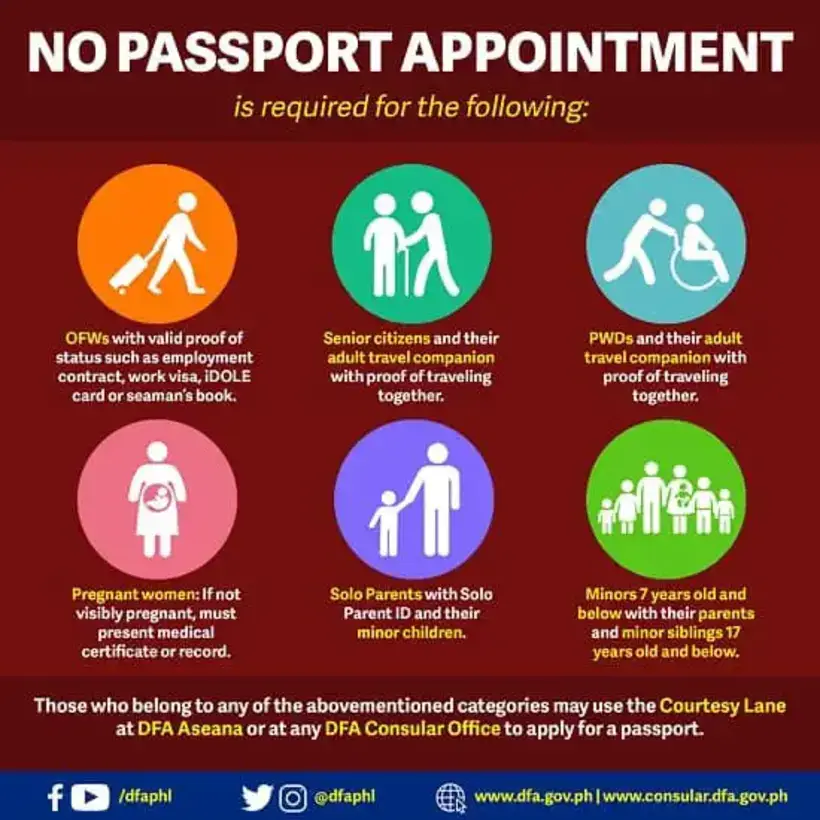
11. Which Individuals Are Exempted from Making Passport Appointments?
The Department of Foreign Affairs (DFA) in the Philippines offers a courtesy lane, providing expedited passport services for specific groups of individuals. Understanding the eligibility criteria and the necessary requirements is essential for a smooth and swift passport application process.
Eligible Applicants and Required Documents
- Minors aged 7 or below: They must be accompanied by parents, legal guardians, or authorized representatives. PSA Birth Certificates are mandatory, and additional requirements might be needed if the minor is unaccompanied.
- Pregnant Women: Providing a medical certificate is necessary to avail of the courtesy lane.
- Senior Citizens: Those with valid identification are eligible for the courtesy lane but must be accompanied by an adult.
- Solo Parents: Presenting a valid Solo Parent ID allows access to the courtesy lane.
- OFWs (Overseas Filipino Workers): They must present relevant proof of status such as OWWA E-card, work visa, employment contract, or Seafarer’s Identification and Record Book.
- People with Disabilities (PWDs): Having a valid PWD ID or a visible disability permits access to the courtesy lane.
Courtesy Lane Reminders
- OFW Courtesy Lanes: Specific DFA offices provide these lanes, but other Consular Offices might require an online appointment.
- Special Cases at DFA NCR Central: Senior citizens, PWDs, and infants up to 12 months may not utilize courtesy lanes at this office.
- Accompanying Family Members: Immediate family members accompanying eligible applicants can also use the courtesy lane, provided they can substantiate their relationship.
- Non-Family Companions: For non-family companions, proof of travel arrangements with the senior citizen/PWD is necessary for courtesy lane access.
- Limited Slots and Arrivals: Courtesy lanes operate on a first-come, first-served basis with limited slots available. It’s advisable to arrive early to secure a queue number for efficient service.
- Processing Options: Senior citizens and PWDs have the choice between regular or expedited processing during regular hours. However, outside regular hours, expedited processing is obligatory for them. All other applicants must undergo expedited processing.
Understanding the criteria and guidelines for the DFA Courtesy Lane can significantly expedite the passport application process for eligible individuals, ensuring a smoother and more efficient experience at the DFA offices.
12. What Steps Should I Take If I Discover a Typographical Error or Incorrect Information in My Newly Received Passport?
In the event of discovering errors in your newly received passport, promptly visit or contact the nearest Consular Office, or reach out to them via telephone. Inform the office about the observed typographical error or any incorrect information that needs rectification in your passport.
The Consular Office staff will provide guidance and support you through the necessary steps to rectify the error or incorrect information in your passport, ensuring that the issue is addressed promptly and accurately.
13. How Can I Apply for a Philippine Passport on Behalf of My Minor/Baby?
Applying for a Philippine passport for minors and babies involves a structured process.
- The initial step is completing the necessary passport requirements, which includes securing an online appointment (unless the child is seven years old or below), filling out the passport application form, and ensuring the presence of both the minor and a parent or authorized legal companion.
- Required documents consist of the minor’s PSA-issued birth certificate, a marriage certificate (if only one parent is accompanying), an original and photocopy of a parent’s or guardian’s valid ID, and a school ID if applicable.
- Subsequently, minors aged 8 to 17 years old need to secure an online appointment, while children seven years old and below can access courtesy lanes at DFA offices.
- Upon submission, payment of the Philippine passport fee is required. For babies and children aged 7 and below, an expedited fee of Php 1,200 is applicable.
It is important to verify specific restrictions at the chosen DFA branch before the visit. Lastly, once the passport is processed, applicants can claim it by visiting the DFA office on the indicated date as per the receipt, or if delivery was chosen, await the arrival of the passport/s at the specified mailing address.
14. Is a Birth Certificate Still a Requirement for Philippine Passport Application or Renewal?
While a birth certificate is not required for ePassport renewals since the DFA stores a copy from the initial application process, it remains a vital document for various other passport transactions.
Specifically, a birth certificate is necessary for new or first-time passport applications, in cases of lost, damaged, or mutilated Philippine passports, for applicants listed in the DFA watchlist, and for renewal applications of old brown and green Philippine passports lacking a complete middle name.

Additionally, it is needed for renewal applications requiring changes in personal information. Acceptable copies include birth certificate copies from either NSO or PSA, provided they are original, authenticated, and printed on SECPA (Security Paper). This document remains a crucial requirement for specific passport transactions, ensuring the accuracy and authenticity of the applicant’s personal information.
15. Can I Use a Postal ID as a Valid ID for the Philippine Passport Application?
The Philippine Postal Corporation’s (PHLPost) Postal ID became an officially recognized and accepted identification document for passport application by the Department of Foreign Affairs (DFA) from August 1, 2019. This recognition came following the signing of a Memorandum of Agreement (MOA) between the DFA and PHLPost, granting access to the Postal ID Online Verification System (POVS).
This system was implemented to authenticate the validity of each Postal ID card, ensuring the prevention of counterfeit IDs from being circulated. Previously, before this agreement, the Postal ID, along with the Philhealth ID and TIN ID, was not acknowledged as a valid form of identification for Philippine passport application or renewal.
16. Which Valid Government-Issued ID is the Easiest and Fastest to Obtain for Philippine Passport Applications?
The Postal ID is considered the most convenient and fastest valid government-issued identification to obtain in the Philippines. Typically, regular processing may take up to 20 working days.
However, a rush processing option is available for a fee of Php 650, significantly reducing the processing time by up to 95%. With rush processing, the ID can be obtained within 24 hours, and in select offices, even a same-day release is possible, though only available on weekdays.
The Postal ID meets the necessary criteria for a valid ID, encompassing a scanned photo and signature, making it acceptable for crucial transactions such as passport or credit card applications.
Unlike other IDs like NBI clearance, police clearance, or PRC license, obtaining a Postal ID does not require an online appointment, making it the most expedient choice for obtaining a valid ID in the shortest amount of time among various government-issued IDs in the Philippines.