
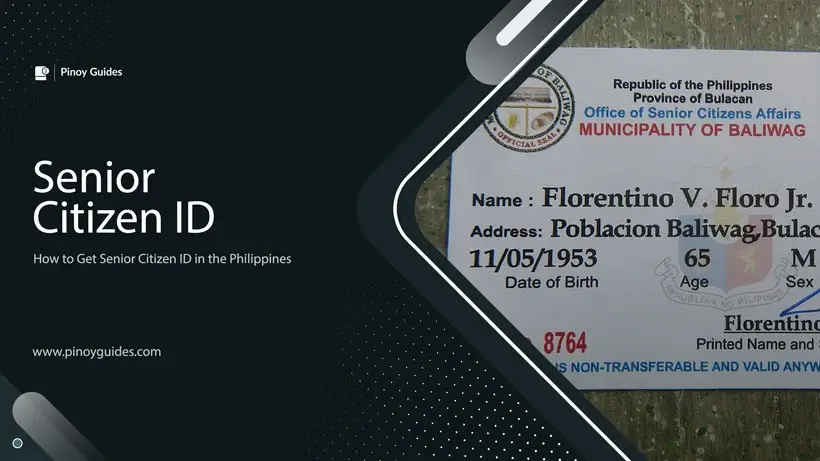
Ensuring seamless transactions and unlocking a host of discounts and benefits at eligible establishments, a Senior Citizen ID stands as a crucial document for our elderly community. Obtainable at the Office of the Senior Citizen’s Affairs (OSCA), the process is remarkably fast and easy, empowering seniors to navigate their daily activities with added convenience and financial relief.
In this guide, we explore the significance of acquiring a Senior Citizen ID and demystify the straightforward steps to obtain this essential document.
What is a Senior Citizen ID in the Philippines?

The Senior Citizen ID, issued by the Office for Senior Citizens’ Affairs (OSCA), serves as a key to a spectrum of discounts, benefits, and privileges granted under Republic Act No. 9994, the Expanded Senior Citizen Act of 2010. Eligible members, upon presentation of this ID, gain access to various advantages that significantly contribute to their well-being and financial relief.
To avail of these benefits, seniors are required to present their ID as proof of age and identity. OSCA plays a pivotal role in facilitating this process, taking on responsibilities such as the issuance of discount booklets and new Senior Citizen IDs, as well as providing assistance for the replacement of missing, lost, mutilated, or damaged senior citizen IDs and booklets.
Who Qualifies for a Senior Citizen ID?
To qualify for a Senior Citizen ID, individuals must meet specific eligibility criteria, as outlined below:
- Age Requirement: Applicants should be 60 years old or older to be eligible for a Senior Citizen ID.
- Citizenship Requirement: Eligibility is limited to citizens of the Philippines.
- Residency Requirement:
- City/Municipality Residency: Prospective applicants must be residents of the city or municipality for at least six (6) years before applying.
- Other Areas Residency: In areas outside the city/municipality, applicants must be residents for at least one year and registered voters, excluding bedridden senior citizens.
- Verification of Eligibility: The eligibility of applicants can be verified through official city/municipality social media accounts, websites, or by making direct inquiries via a provided phone number. This ensures a thorough validation process to confirm the fulfillment of residency requirements and citizenship status for Senior Citizen ID applicants.
Essential Requirements for a Senior Citizen ID
As seniors seek to unlock a multitude of benefits through a Senior Citizen ID, understanding the crucial requirements for the application process is paramount. Delve into the specifics below to ensure a seamless application experience.
- Duly Accomplished Application Form from OSCA: Obtain the official application form from the Office for Senior Citizens’ Affairs (OSCA) and ensure all fields are accurately filled out.
- ID Photographs: Provide three recent 1×1 ID photographs, with some areas possibly requiring a 2×2 size. Verify the preferred size with OSCA.
- Proof of Identity and Age: Include a photocopy of the PSA Birth Certificate or any valid ID with the applicant’s birth date and address.
- Acceptable IDs: Choose from a range of acceptable identification documents, including but not limited to:
- Comelec Voter’s ID
- Driver’s License
- NBI Clearance
- Police Clearance
- Old residence certificate
- Postal ID
- Combination of identification documents
- Note on Documentary Requirements: Be aware that documentary requirements may vary by city or municipality, so it’s crucial to check with the local OSCA for specific guidelines.
- Additional Requirements in Some Areas: In certain locations, additional documents such as a Barangay Certificate of Residency and a photocopy of Voter’s ID/Voter’s Certification/COMELEC Registration may be required (e.g., Naga City).
- Verification Process: Prior to visiting the OSCA office, verify specific requirements with the local OSCA through social media or phone inquiries. This ensures preparedness and avoids any potential delays.
- Authorization Letter for Special Cases: If the applicant is unable to apply in person, an Authorization Letter is required. This letter should specify details about both the applicant and the authorized representative, including their relationship and the reason for authorization. This is particularly pertinent for bedridden senior citizens.
Navigating through these requirements with diligence ensures a smooth application process, paving the way for seniors to fully enjoy the benefits that come with their Senior Citizen ID.
How Do I Apply for a Senior Citizen ID?
Embarking on the journey to acquire a Senior Citizen ID involves a series of straightforward steps. Follow this guide to ensure a smooth and efficient application process.
1. Visit the OSCA Office
Head to the Senior Citizen’s Affairs Office (OSCA) in your city or municipality, typically situated within the municipal or city hall.
2. Request the Application Form
Approach the office personnel or the designated person in charge and request the official application form.
3. Complete the Form
Fill out the application form with meticulous attention to detail. Include the following information:
- District
- Barangay
- Complete name, age, sex, civil status
- Complete address
- Date and place of birth
- Details of spouse and children, if applicable
- Signature
4. Document Submission
Compile all necessary documents, including the duly accomplished application form, and submit them to the OSCA office.
5. Await Processing
Patience is key as you wait for the processing of your Senior Citizen ID. The waiting period varies but is typically expedited, ranging from less than an hour to up to five working days. The specific duration depends on the efficiency of the municipality or city’s administrative processes.
By diligently following these steps, you’ll navigate the Senior Citizen ID application process seamlessly. From filling out the application form to patiently awaiting the release of your ID, each step is integral to ensuring you can fully enjoy the benefits and privileges that come with your Senior Citizen status.
Frequently Asked Questions
1. Can I use my senior citizen card issued in the province in Metro Manila?
A Senior Citizen ID issued in the province holds nationwide validity, allowing seamless utilization in Metro Manila without any restrictions. This means that the benefits and privileges associated with the Senior Citizen status, as conferred by the ID, are applicable and honored across the country, providing convenience and accessibility for seniors residing or visiting Metro Manila.
2. Can I avail of the 20% discount at a restaurant if I forgot my OSCA-issued senior citizen ID card?
If you find yourself at a restaurant without your OSCA-issued senior citizen ID, there’s no need to worry about missing out on the 20% discount. Restaurants often accept alternative proofs of identification to honor the benefits.
- Acceptable alternatives include presenting your passport or any government-issued ID that indicates your age or date of birth, such as:
- a driver’s license,
- voter’s ID,
- SSS/GSIS ID,
- PRC Card,
- or Postal ID.
- Additionally, other valid documents establishing Philippine citizenship and age of at least sixty (60) years are recognized, ensuring that seniors can still enjoy their entitled discounts even when the official OSCA-issued ID is inadvertently left behind.
3. How much does the senior citizen ID card cost?
In most cases, obtaining a Senior Citizen ID card is a cost-free process, ensuring accessibility for seniors. However, it’s important to note that certain cities or municipalities may impose a fee, typically around PHP 100, for replacement in the event of mutilation or loss.
While the initial issuance is generally complimentary, individuals should be aware of potential charges associated with replacements to ensure the continued availability of this essential identification document.
4. What should I do if I lost my senior citizen ID card?
If you find yourself in the unfortunate situation of losing your Senior Citizen ID, follow these steps for a smooth replacement process:
- Visit OSCA: Head to the Office for Senior Citizens’ Affairs (OSCA) in your city or municipality to initiate the replacement process.
- Submit Affidavit of Loss: Provide two copies of the Affidavit of Loss to formally report the missing Senior Citizen ID.
- Submit Police or Barangay Report: Submit two copies of the Police or Barangay Report, documenting the loss for official records.
- Submit Lost/Replacement Form: Complete and submit the Lost/Replacement Form issued by OSCA to provide essential details for processing.
- Pay Replacement Fee (if applicable): Be prepared to pay the ID replacement fee if applicable, ensuring a smooth transition to obtaining a new Senior Citizen ID.
By adhering to these steps and submitting the required documents, you can efficiently replace your lost Senior Citizen ID and continue enjoying the benefits and privileges associated with your senior status.
5. Does the Senior Citizen ID have an expiration date?
The Senior Citizen ID stands out as a unique identification document with the notable advantage of having no expiration date, rendering it valid indefinitely. Replacement is only necessitated in cases of loss or mutilation, and the validity persists even if the ID shows signs of wear. While periodic updates to the design may occur, members are encouraged, though not obligated, to apply for a new ID.
Interestingly, the old version of the Senior Citizen ID continues to be honored if not replaced, providing seniors with flexibility in maintaining their recognized status without mandatory updates. This enduring validity ensures that seniors can seamlessly enjoy the benefits and privileges associated with their Senior Citizen ID over an extended period.
6. Is the Senior Citizen ID considered a valid ID?
The Senior Citizen ID holds significant validity as an identification document, being widely recognized by both government and private establishments. It is accepted for various essential transactions that mandate a valid government-issued ID.
Moreover, the versatility of the Senior Citizen ID extends to applications for passports and driver’s licenses, underscoring its credibility and acceptance in official processes. This multifunctional ID serves as a testament to the importance and legitimacy accorded to the Senior Citizen status in facilitating a range of administrative and transactional needs.