
Did you know that not everything you earn gets taxed?
In the Philippines, some incomes and transactions are tax-exempt. Certain people and organizations don’t have to pay taxes at all.
It’s important to know both what taxes you owe and if you qualify for any tax exemptions. This article explains who doesn’t have to pay taxes, what you need for a Tax Exemption Certificate, and how to apply for it.
Note: This article is just general information and not a replacement for professional advice.
What’s a Tax Exemption?
Taxes fund government services, but sometimes you get a break. A tax exemption is when you or a group can skip paying some or all taxes on income or transactions. If it’s tax-exempt, it doesn’t count in the tax calculation, meaning you pay less or nothing at all.
What’s a Tax Exemption Certificate?
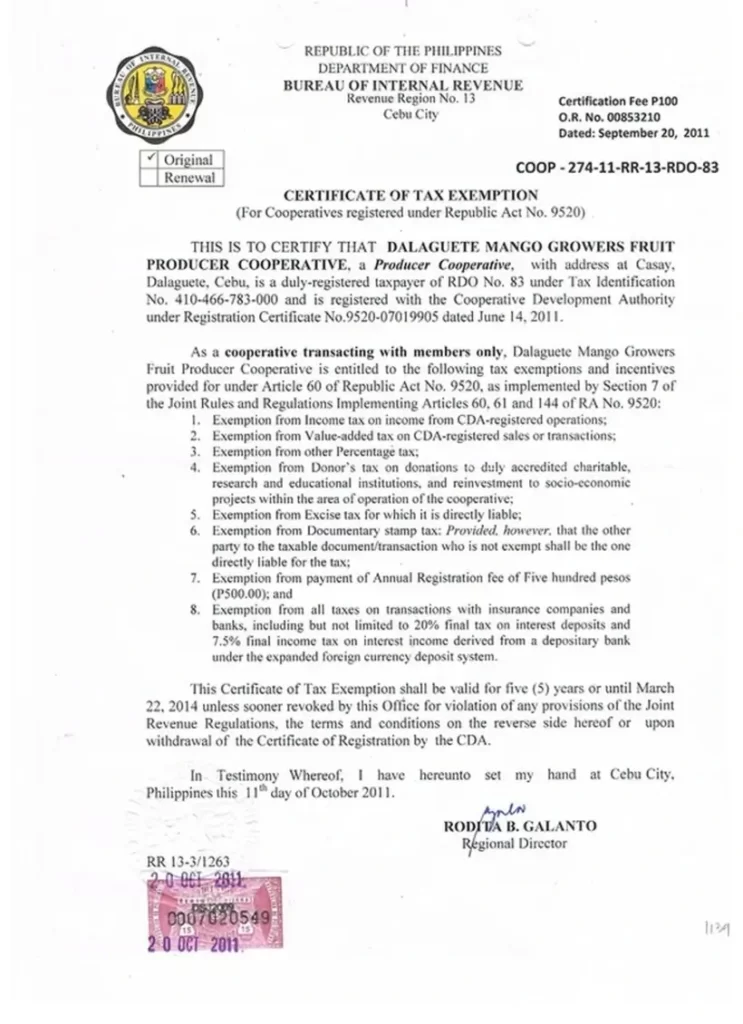
A Tax Exemption Certificate (TEC) is given to people or groups who don’t have to pay taxes. It’s like a special pass from the government because of certain privileges. Since everyone usually has to pay taxes, these exemptions are checked to make sure they’re fair.
Example of a BIR Tax Exemption Certificate
Who Gets Tax Exemption in the Philippines?
As per the Tax Code, you can get a Tax Exemption Certificate if:
- You have no income, earn minimum wage, or make less than PHP 250,000.
- You’re a cooperative dealing only with members.
- You’re a cooperative dealing with both members and non-members, with savings below PHP 10 million.
- You’re a non-profit educational institution.
- You’re a non-profit corporation under Section 30 of the National Internal Revenue Code.
Where to Get a Tax Exemption Certificate?
Get your Certificate of Tax Exemption (CTE) from the Revenue District Office (RDO) where you live or are registered.
Tax Exemption Certificate Requirements
1. For Scholarship and Job/Livelihood Programs
- Certificate of Low Income or No Income from Barangay Chairman.
- Notarized Affidavit of Low Income or No Income.
- Proof of payment: PHP 100 Certification Fee and PHP 30 Documentary Stamp Tax.
If transacting through a representative:
- Special Power of Attorney.
- Government-issued ID of the representative.
2. For Cooperatives
a. New Application
- Certified True Copies of Articles of Cooperation and By-Laws.
- New Certificate of Registration (CDA certified).
- Current Certificate of Good Standing (CDA certified).
- BIR Certificate of Registration.
- Certification under Oath of Cooperative Members List.
b. Renewal
- Latest Articles of Cooperation and By-Laws (CDA certified).
- New Certificate of Registration (CDA certified).
- Current Certificate of Good Standing (CDA certified).
- Latest audited financial statements.
3. For Non-Stock, Nonprofit Educational Institutions
- Application letter.
- Certificate of Good Standing (SEC).
- Certification under Oath of Treasurer.
- Financial Statements (last three years).
- Government recognition/permit/accreditation.
- Certificate of Utilization of Annual Revenues and Assets.
4. For Non-Stock, Nonprofit Corporations
- Application letter citing NIRC Section 30.
- Latest Articles of Incorporation and By-Laws (SEC).
- Certification under Oath by an executive officer.
- RDO Certification (TIN and status).
- Income Tax Returns and Financial Statements (last three years).
How to Get a Certificate of Tax Exemption in the Philippines
For Scholarship and Job/Livelihood Programs
- Submit documents to your RDO’s Administrative Section.
- Pay fees at the Collection Section.
- Get your documents from the Administrative Section.
For Cooperatives
- Fill out BIR Form 1945 (3 copies).
- Submit form and docs to the BIR District Office.
For Non-Stock, Nonprofit Educational Institutions
Submit Tax Exemption Application to the Assistant Commissioner, Legal Service.
For Non-Stock, Nonprofit Corporations
- File Certificate of Tax Exemption request at your RDO.
- If qualified, RDO prepares CTE and forwards it to the Regional Director.
- Regional Director signs and issues CTE if approved; otherwise, provides feedback to RDO.
- If not qualified, RDO notifies the applicant in writing.
Frequently Asked Questions
1. Is it necessary to submit all the listed requirements to obtain the Certificate of Tax Exemption?
Yes, you must provide all the specified documents for your category.
2. Can I request tax exemption online or via email?
No, you need to physically submit your requirements at your RDO.
3. What is the process for applying for tax exemption for a religious organization?
Follow the procedures outlined for non-stock, nonprofit corporations.
4. Is there a specific template available for the Certificate and Affidavit of Low/No Income?
No template is provided, but make sure to clarify the purpose of your Certificate of Tax Exemption application.
5. As a student applying for a scholarship, how can I secure a tax exemption?
Complete the required documents and submit them to your RDO.
6. How do I apply for tax exemption for scholarships if my parents’ residence is far from mine?
Contact BIR Customer Assistance Division at 8538-3200 or email contact_us@bir.gov.ph. If necessary, submit a request through Electronic Freedom of Information Program or eFOI.