
When it comes to road safety, responsibility extends beyond personal well-being to encompass the safety of passengers and other vehicles on the road. In the Philippines, securing a driver’s license involves meeting the stringent requirements set by the Land Transportation Office (LTO).
This comprehensive guide outlines the necessary documents and examinations mandated by the LTO for obtaining a driver’s license. It provides a detailed walkthrough of the latest prerequisites and procedural steps, enabling individuals to navigate the process efficiently, ensuring a safer and compliant driving experience for all road users.
What is a Driver’s License?
A driver’s license stands as an official government-issued document that serves as an authorization for individuals to operate motor vehicles legally. In the Philippines, this license holds legal authority, conferring upon the holder the explicit right to drive and maneuver vehicles on the road.
Serving as more than just a mere identification, it symbolizes the individual’s competence and eligibility to drive within the confines of the law, ensuring safer and more regulated travel on the country’s roadways.
What is the Validity Period of the Philippine Driver’s License?

The guidelines for driver’s license validity and renewal have recently undergone modifications, impacting both the initial license period and renewal procedures.
Initial License and Renewal
- Initial License Duration: An initial driver’s license in the Philippines holds a validity period of five years. Meanwhile, a student permit, an early license phase, has a validity of one year.
- Renewal Extension: The renewal extension allows a license to be extended up to 10 years, provided the holder maintains a clean record without any traffic violations.
- Clean Record Incentive: A significant change introduced from October 2021, where drivers with a clean record can benefit from an extended license validity as an incentive.
Record of Violation
License Validity for Violators: Individuals with a record of violation are restricted to a maximum 5-year license validity, emphasizing the impact of one’s driving history on the renewal period.
Periodic Medical Examinations (PME)
- Previous PME Requirement: Both 5 and 10-year license holders were previously obligated to undergo Periodic Medical Examinations (PME).
- Amendment and Removal: An amendment by the LTO chief led to the removal of the PME requirement for 5 to 10-year licenses.
- New Requirement: Instead, a new requirement mandates a medical examination within 60 days before or on the renewal date. An exception is made for returning Filipinos, who must undergo a medical exam within 30 days of their arrival.
Reasoning for PME Removal
The decision to eliminate the PME requirement for 5 to 10-year license holders was backed by the lack of empirical data supporting the efficacy of PMEs in preventing road crashes. This reasoning highlights a shift in perspective regarding the necessity and impact of these medical examinations.
What Age Limit Applies to Driver’s License Applications in the Philippines?
The eligibility for obtaining a driver’s license is governed by specific age restrictions for various license types, ensuring that applicants meet minimum age criteria.
- Student Permit:
- Minimum Age: For a student permit, individuals must be at least 16 years old. However, this age requirement increases to 18 years for foreigners residing in the Philippines.
- Non-Professional/Professional License:
- Minimum Age: To apply for a non-professional or professional driver’s license, applicants must be at least 17 years old. As with the student permit, this age requirement is 18 years for foreign applicants.
- No Maximum Age Limit:
- Unlike a minimum age requirement, there is no specified upper age limit for driver’s license applications in the Philippines.
- Qualification Based on Ability: The qualification for obtaining a driver’s license is primarily based on an individual’s physical and mental ability to drive, irrespective of their age. There’s no discriminatory upper age limit, focusing instead on the applicant’s competence and capability to safely operate a vehicle.
The absence of a maximum age limit acknowledges that one’s ability to drive is not solely determined by age, emphasizing the importance of assessing an individual’s competency and fitness to drive. These age requirements delineate the minimum thresholds for various license types, ensuring that applicants meet the requisite age criteria for responsible and legal driving in the Philippines.
Types of Driver’s Licenses Available in the Philippines
Understanding the distinct types of driver’s licenses in the Philippines is essential for individuals aspiring to operate various vehicles legally. Here’s a breakdown of the different licenses available:
- Student Permit:
- Initial Requirement: A student permit serves as an initial requisite for acquiring both Professional and Non-Professional licenses. It’s the initial step in the licensing process.
- Validity: Valid for one year, the permit allows driving but only in the presence of a licensed driver. This period serves as a learning phase before obtaining a full license.
- Non-Professional License:
- Driving Authorization: This license authorizes the operation of private vehicles with a Gross Vehicle Weight (GVW) under 4,500 kilograms.
- Vehicle Types: Holders of a non-professional license can drive vehicles with either manual or automatic transmission, including sedans, minivans, pickups, and SUVs.
- Professional License:
- Driving Scope: A Professional license allows the holder to drive for private or public hire.
- Expanded Vehicle Range: Individuals with a professional license have the authority to operate vehicles that exceed 4,500 GVW, including heavy construction equipment and larger commercial vehicles.
These distinctions among the different types of licenses in the Philippines reflect the range of driving permissions and vehicle categories. Each license type has specific criteria and limitations, tailored to ensure safety and competency in handling various vehicles while catering to different driving purposes, whether personal or professional.
What Are the Steps to Get a Student Permit in the Philippines?
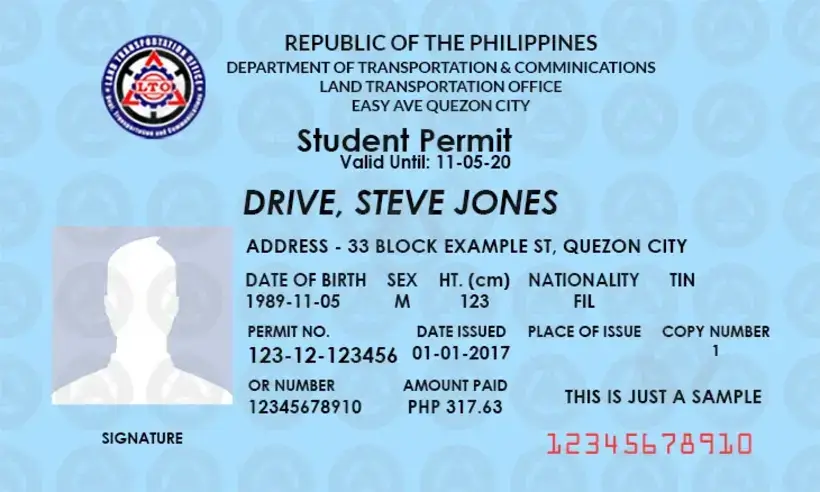
The application for a student permit marks the first essential step in the process of acquiring a driver’s license in the Philippines. This permit allows individuals to operate specific vehicles, provided a licensed driver accompanies them during driving sessions. It signifies a crucial learning phase, offering a year for aspiring drivers to gain practical experience before taking the written and practical driving exams.
Interested applicants can secure a student permit from various accessible locations, including LTO District Offices, Licensing Centers, and Extension Offices. However, it’s important to note that a student permit is not a full-fledged driver’s license. Driving alone with only a student permit may result in a ₱3,000 penalty and the risk of vehicle impoundment, emphasizing the necessity of a licensed driver’s presence during this phase.
1. Who Is Eligible to Apply for a Student Permit?
Eligibility for a student permit application involves meeting specific criteria established by the Land Transportation Office (LTO). Here are the key qualifications required for aspiring drivers:
- Citizenship and Age:
- Filipino Citizens: Individuals must be at least 16 years old to apply for a student permit.
- Foreigners: Non-Filipino citizens must be a minimum of 18 years old and have resided in the Philippines for at least one month, providing documented proof of a stay of at least six months.
- Validity of Previous License:
- If a previous driver’s license has expired for ten years or more, the LTO mandates the application for a student permit as a preliminary step.
- Language Proficiency:
- Applicants should demonstrate the ability to read and write in English, Filipino, or the relevant local dialect.
- Physical and Mental Fitness:
- Individuals must be physically and mentally fit to safely operate a motor vehicle, a crucial requirement for ensuring road safety.
- Traffic Violations:
- Prospective drivers should have no outstanding or unsettled traffic violations, showcasing a commitment to responsible and lawful driving practices.
- Theoretical Driving Lessons:
- Attendance of a minimum of 15 hours of theoretical driving lessons from an LTO-accredited driving school is a prerequisite. This training equips applicants with essential knowledge about road safety, traffic rules, and responsible driving practices.
Adhering to these qualifications is essential for prospective drivers seeking a student permit, serving as the foundation for a responsible and safe driving journey in the Philippines. Understanding and meeting these requirements are pivotal steps toward earning the privilege to operate a motor vehicle legally and responsibly.
2. What Are the Requirements for a Student Permit?
Standard Requirements
When applying for a driver’s license in the Philippines, it’s vital to ensure you have the necessary documentation in order. Here are the fundamental requirements:
- Duly-accomplished Application for Permits and License (APL) Form:
- This form is available on the official Land Transportation Office (LTO) website and serves as an initial step in the application process.
- PSA-authenticated birth certificate:
- You’ll need the original and a photocopy. If unable to secure a PSA birth certificate, an alternative is a birth certificate validated by the Local Civil Registry (LCR), with an attached Official Receipt. Additionally, a Philippine Identification Card, Passport, or PSA Certificate of Marriage can serve as alternatives.
- Government-issued ID:
- Original and photocopy of an ID displaying your photo and signature. Acceptable IDs include a Philippine passport, SSS or UMID Card, Philippine Identification (PhilID) Card, PhilHealth ID, TIN Card, Postal ID, Senior Citizen ID, OFW ID, Voter’s ID, PRC ID, Integrated Bar of the Philippines (IBP) ID, DSWD Certification, Home Development Mutual Fund (HDMF ID), GSIS e-Card, Seaman’s Book, GOCC ID, Voter’s Certification, Solo Parent ID, National Council of Disabled Affairs (NCDA) ID, and OWWA ID.
- Taxpayer’s Identification Number (TIN):
- This is required if you are employed.
- Medical examination certificate:
- Obtainable from an LTO-accredited clinic or physician. The medical exam, which includes tests for vision, blood pressure, and overall medical condition, must be electronically transmitted. The maximum fee set by the LTO for this certificate is ₱300, and it remains valid for two months.
- Theoretical Driving Course (TDC) certificates:
- These certificates demonstrate completion of the mandatory theoretical instruction. Certificates should be electronically transmitted by LTO or accredited driving schools.
Make sure you have these documents prepared before applying for a driver’s license in the Philippines. Having all the necessary paperwork ready will streamline the application process and ensure a smoother experience.
Additional Requirements for Specific Applicant Categories
The process for obtaining a driver’s license in the Philippines comes with additional requirements for certain applicant categories. Here’s a breakdown of the specific requirements for different applicant groups:
- Minors or Applicants Below 18 Years Old:
- Duly Notarized Parent’s Consent or Guardian’s Affidavit:
- An original, notarized document authorizing the minor to apply for a student permit.
- Government-issued ID of Consenting Parent/Guardian:
- An original and photocopy of a valid ID with a photo and signature of the consenting parent or guardian.
- Duly Notarized Parent’s Consent or Guardian’s Affidavit:
- For Married Women:
- PSA-Authenticated Marriage Contract:
- The requirement includes the original and a photocopy of the PSA-authenticated marriage contract.
- PSA-Authenticated Marriage Contract:
- For Foreigners:
- Passport Requirements:
- Original and photocopy of the applicant’s passport containing:
- Entry date of at least one (1) month.
- Visa duration of at least six (6) months from the application date.
- For individuals born in the Philippines, submission of an original and photocopy of a PSA-authenticated birth certificate, if available, is necessary.
- Original and photocopy of the applicant’s passport containing:
- Passport Requirements:
These specific additional requirements cater to different applicant categories, ensuring compliance with legal and documentary prerequisites, allowing applicants to progress through the driver’s license application process smoothly. Applicants falling under these categories need to furnish these specific documents to meet the necessary conditions for acquiring a driver’s license in the Philippines.
3. What Are the Costs Involved in Applying for a Student Permit?
When applying for a student permit in the Philippines, it’s crucial to comprehend the varied fees associated with the application process. Here’s a breakdown of the summarized costs:
- Birth Certificate:
- The cost of securing a birth certificate typically ranges from ₱330 to ₱365. However, if you possess an existing copy or plan to present a Philippine passport instead, there might be no additional cost.
- Medical Examination:
- The medical examination, a prerequisite for a student permit, has a fixed cost of ₱300 as stipulated by LTO regulations.
- Theoretical Driving Course:
- The expense for this course can range from being free to around ₱4,500.
- The LTO’s Driver’s Education Center might offer this course for free or at a lower fee of approximately ₱300+.
- Student Permit Fee:
- A fixed fee of ₱317.63 is required for the student permit application.
The overall cost for obtaining a student permit can fluctuate significantly, spanning between ₱1,000+ to ₱5,500+, contingent on various factors. These factors include the cost of the medical exam, the location or institution where the theoretical driving course is undertaken, and the method of obtaining the birth certificate, whether online or through a walk-in application.
Understanding these costs can assist applicants in budgeting and preparing financially for the student permit application process.
4. Guide for Manual/Walk-in Application: What Are the Step-by-Step Procedures?
For those planning to obtain a student permit through a manual or walk-in application at an LTO office, here’s a step-by-step guide to streamline the process:
- Complete Theoretical Driving Course (TDC):
- Make sure you’ve completed the mandatory 15-hour face-to-face or online Theoretical Driving Course before visiting the LTO office.
- Choose the Right LTO Office:
- Opt for an LTO District Office with a higher number of applicants for renewal to potentially expedite the process.
- Consider visiting less crowded LTO Driver’s License Renewal Offices in malls for quicker processing, often completed within a day.
- Arrive Early and Obtain Forms:
- Arrive early at the LTO office and proceed to the Customer Service Counter to request the Application for Permits and License (APL) Form and the Requirements Checklist.
- Receive a queue number for your transaction.
- Fill Out Forms and Prepare Documents:
- Complete the application form and organize all the required documents.
- Submission and Evaluation:
- Submit the filled-out application form and documents along with your queue number.
- An evaluator will verify the completeness and authenticity of your application and documents.
- Photo/Signature Processing:
- Proceed to the designated area for photo and signature taking. Wait for your turn.
- Application Review and Approval:
- An approving officer will review and approve your application.
- Payment of Fees:
- When your queue number is called, head to the cashier and pay the necessary fees.
- Issuance of Student Permit:
- A releasing clerk will provide your Student Permit as an Official Receipt.
- Upon receiving your Student Permit, sign your name on the log sheet.
Following these steps can facilitate a smoother and more efficient application process for obtaining a student permit through a manual or walk-in method at an LTO office.
5. Additional Points to Consider
Navigating the process of acquiring a student permit and progressing towards a driver’s license in the Philippines involves specific considerations and nuances. Here are some key additional notes and details crucial for a smoother application process:
- Student Permit Validity:
- The student permit remains valid for one year, specifically for practical driving courses. Beyond two years from its issuance, a new permit with the same number must be obtained.
- Dress Code for Application:
- It’s advisable to avoid wearing shorts and slippers when applying for a student permit or any driver’s license at an LTO office to ensure a more professional appearance.
- Medical Exam Considerations:
- Ideally, opt for a medical exam at an LTO-accredited clinic that issues two copies of the medical certificate. This avoids the need for another medical exam if applying for a non-professional driver’s license at a later stage.
- Theoretical Driving Course Details:
- The course duration may vary based on the driving school, ranging from three sessions of 5 hours each or two sessions totaling 8 hours + 7 hours.
- Mandatory Theoretical Driving Course:
- Completing a 15-hour course from an LTO-accredited driving school is necessary for a student driver’s permit. Automated logbooks and CCTV cameras monitor classes to prevent fraud.
- LTO’s Free Theoretical Driving Course (TDC):
- For individuals unable to afford a regular driving school, consider LTO’s free 15-hour TDC available at specific LTO-NCR West office with limited monthly slots. Regularly check slot availability updates via the LTO-NCR Facebook page.
- Use of Student Driver’s Permit:
- Generally, the student permit is not accepted as a valid form of identification due to its temporary nature, unless in card format for specific uses like passport applications or SSS transactions.
- Application Process for Driver’s License:
- Thirty-one days after receiving the student permit, the application for a Non-Professional Driver’s License can commence. Note that a Student Permit alone cannot be used for a Professional Driver’s License application, as the new policy mandates obtaining a Non-Pro License before applying for a Pro License.
These additional insights offer a comprehensive understanding of specific guidelines and intricacies involved in the application process for a student permit and the subsequent progression towards obtaining a driver’s license in the Philippines.
What Are the Steps to Get a Non-Professional Driver’s License in the Philippines?
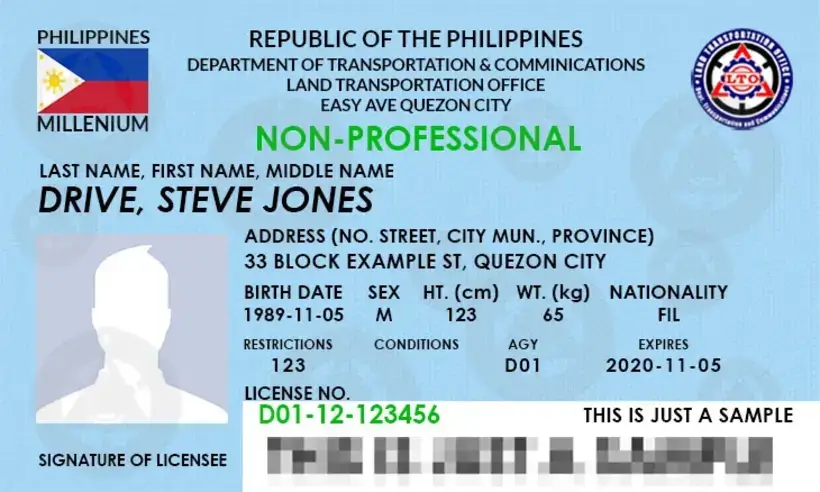
Applying for a Non-Professional Driver’s License in the Philippines involves several important considerations. This type of license authorizes individuals to drive private vehicles, encompassing various car types. However, it’s crucial to note that a Non-Professional Driver’s License doesn’t grant permission for driving commercially or for monetary gain.
For such purposes, obtaining a Professional Driver’s License is a requisite. To begin the application process for a new Non-Professional Driver’s License, individuals can submit their applications at any LTO District Office, Licensing Center, or Extension Office that manages Driver’s License transactions, ensuring accessibility and convenience for aspiring drivers.
1. Who Is Eligible to Apply for a Non-Professional Driver’s License?
Obtaining a Non-Professional Driver’s License in the Philippines involves specific qualifications and criteria that applicants must meet. Here are the essential qualifications needed for the application process:
- Citizenship and Age Requirement:
- Filipino citizens must be at least 17 years old, while foreigner applicants must be a minimum of 18 years old.
- Physical and Mental Fitness:
- Applicants must demonstrate physical and mental capabilities suitable for driving, although exceptions can be considered based on the results of the medical examination.
- Language Proficiency:
- The ability to read and write in English, Filipino, or the applicable local dialect is necessary.
- Valid Student Permit and Traffic Record:
- Applicants must hold a valid Student Permit issued at least one month before applying and should not have any unsettled traffic violations.
- Expired Licenses:
- Holders of expired foreign or Non-Professional driver’s licenses for more than two years must apply for a new license instead of a renewal.
- Practical Driving Lessons:
- Completion of a minimum of 8 hours of practical driving lessons from an LTO-accredited and TESDA-certified driving school is necessary.
- The LTO also offers similar services at a reduced rate for individuals unable to afford formal driving school education.
- Written and Practical Exam:
- Successful passing of the required written and practical exams after completing the 8-hour practical driving course is mandatory for obtaining the Non-Professional Driver’s License.
Meeting these qualifications is essential for individuals aspiring to acquire a Non-Professional Driver’s License. Comprehending and fulfilling these criteria is fundamental for a successful application process and ensuring safe and responsible driving practices in the Philippines.
2. What Are the Requirements for a Non-Professional Driver’s License?
Standard Requirements
Obtaining a Non-Professional Driver’s License in the Philippines necessitates specific documentation and compliance with essential prerequisites. Here’s a breakdown of the fundamental requirements for the application process:
- Duly-Accomplished Application Form:
- Submit the Application for Permits and Licenses (APL) Form, previously known as the Driver’s License Application Form (ADL Form).
- Valid Student Permit:
- Present the original copy of a valid Student Permit issued at least 31 days before the date of application.
- Taxpayer’s Identification Number (TIN):
- A TIN is required for applicants who are employed.
- Medical Examination Certificate:
- Obtain a medical examination certificate from an LTO-accredited clinic or physician, electronically transmitted, costing ₱300, and valid for two months. The examination encompasses vision, blood pressure, and overall medical condition, without the need for urine or stool samples.
- Practical Driving Course (PDC) Certificates:
- Provide evidence of completing the necessary practical instruction from the LTO or accredited driving schools.
- Starting August 3, 2020, certificates must be submitted electronically to the LTO-IT system for processing. The driving school issues a personal copy for verification.
Meeting these basic requirements is imperative for individuals applying for a Non-Professional Driver’s License. Ensuring the availability and completion of these essential documents and compliance with the prerequisites are pivotal for a successful application process and eventual acquisition of the Non-Professional Driver’s License in the Philippines.
Additional Requirements for 17-Year-Old Applicants
For applicants aged 17 seeking to obtain a driver’s permit, there are specific supplementary requirements to consider. Here’s a detailed breakdown of the additional documents needed for their application:
- Parent’s Consent or Guardian’s Affidavit:
- An original copy of the document duly notarized is required. This document serves as authorization for the applicant to secure or apply for a student permit.
- Government-issued ID of Parent/Guardian:
- Along with the consent or affidavit, an original and photocopy of a valid ID displaying the photo and signature of the consenting parent or guardian is essential. This ID is a crucial part of validating the authorization provided in the consent document.
These additional requirements are vital for applicants who are 17 years old intending to apply for a driver’s permit in the Philippines. Compliance with these prerequisites is necessary to facilitate the application process and ensure all necessary documents are provided for the issuance of the student permit.
3. What Are the Costs Involved in Applying for a Non-Professional Driver’s License?
Applying for a Non-Professional Driver’s License in the Philippines entails various costs that applicants need to consider. Here’s a detailed breakdown of the expenses involved in the application process:
- Practical Driving Course (PDC) Costs:
- The cost varies depending on the type of vehicle:
- Manual, four wheels: Costs around ₱3,500 or more.
- Automatic, four wheels: Approximately ₱5,500+.
- Combination AT/MT: Ranges from ₱8,000+ to ₱10,000+.
- Motorcycles: Typically around ₱3,000+.
- Prices may differ among driving schools, so comparing various schools can help find the best deal.
- The cost varies depending on the type of vehicle:
- Free or Affordable PDC Option:
- Some LTO regions provide free or affordable PDC at the Driver’s Education Center, offering an economical alternative for the required practical driving course.
- Examination and License Fees:
- Exam fee: Approximately ₱167.63, payable before the written and practical exams.
- License fee: Around ₱652.83, payable before receiving the non-professional driver’s license.
- Practical Exam Vehicle Costs:
- If applicants use their own vehicle for the practical exam, no additional fee is required.
- Renting an LTO-owned vehicle costs approximately ₱250 if applicants don’t bring their own vehicle for the practical exam.
Understanding these cost components is essential for individuals planning to obtain a Non-Professional Driver’s License. Being aware of the various fees involved aids in budgeting and preparing financially for a smooth and efficient application process.
4. Guide for Manual/Walk-in Application: What Are the Step-by-Step Procedures?
Applying for a Non-Professional Driver’s License in the Philippines through a manual or walk-in process involves specific steps. Here’s a detailed guide outlining the sequential process:
- Completion of Practical Driving Course (PDC) and LTO Client ID:
- Ensure the successful completion of an 8-hour PDC and obtain a PDC Certificate.
- Obtain an LTO Client ID by creating an account in the LTO Online Portal or Land Transportation Management System (LTMS).
- Document Submission at LTO Office:
- Submit all necessary documents for the Non-Professional Driver’s License application to the receiving personnel at the LTO office.
- Avoid LTO renewal offices in malls, as they primarily handle renewal and student permit applications only.
- Document Evaluation and Encoding:
- Receiving personnel will verify document completeness and forward them to the evaluator for review and encoding in the system if the applicant is deemed qualified.
- Payment of Fees:
- Pay all the required fees at the Cashier counter when called.
- Basic Driving Theory Test:
- Take the written exam, which might be either the old written exam (40 items, passing grade of 30) or the new digital/computerized exam (60 items, passing grade of 48).
- LTO provides online review materials for preparation.
- Practical Driving Test:
- After passing the written exams, undergo the practical driving test.
- Approval and Photo/Signature Processing:
- After approval by the Approving Officer, proceed to the designated area for photo and signature taking.
- Issuance of Non-Professional Driver’s License:
- Once approved, the Non-Professional Driver’s License and Official Receipt will be released.
- Applicants must sign the Release Form as acknowledgment.
Following these step-by-step procedures ensures a comprehensive and systematic approach to obtaining a Non-Professional Driver’s License through manual or walk-in application at an LTO office.
5. Additional Points to Consider
Securing a Non-Professional Driver’s License involves specific nuances and additional pointers that applicants should consider. Here’s a comprehensive breakdown of essential supplementary information relevant to the application process:
- License Validity:
- The Non-Professional Driver’s License retains its validity for five years from the date of issuance.
- Account Creation in LTO Online Portal (LTMS):
- Prior to the application, create an account in the LTO online portal (LTMS) to streamline the application process.
- Appointment and Protocol Consideration:
- Check with specific LTO offices for their application protocol; some may require online appointments, while others might accept walk-in applicants.
- Cost-Saving on Medical Exam Fees:
- Economize on medical examination fees by using the extra copy of the medical certificate acquired during the student permit application if the certificate is issued by a clinic offering two copies and the non-professional license application is after 31 days of the student permit.
- Mandatory Practical Driving Course (PDC) Updates:
- For applicants with student permits issued from August 3, 2020 onwards, the PDC is mandatory. However, those with permits issued before this date aren’t required to take the PDC if their permits are still valid.
- PDC Session Format:
- The PDC comprises eight 1-hour sessions or four 2-hour sessions, providing flexibility for learners to progress at their preferred pace.
- Written Exam Details:
- The written examination for the Non-Professional Driver’s License consists of 40 items, necessitating a passing score of 30.
- License Application Policy:
- The policy allows for the application of a Professional Driver’s License roughly one year after acquiring a Non-Professional Driver’s License.
Understanding these additional insights is crucial for individuals seeking to obtain a Non-Professional Driver’s License. Adhering to these specific guidelines ensures a smoother and more informed application process for aspiring drivers in the Philippines.
What Are the Steps to Get a Professional Driver’s License in the Philippines?
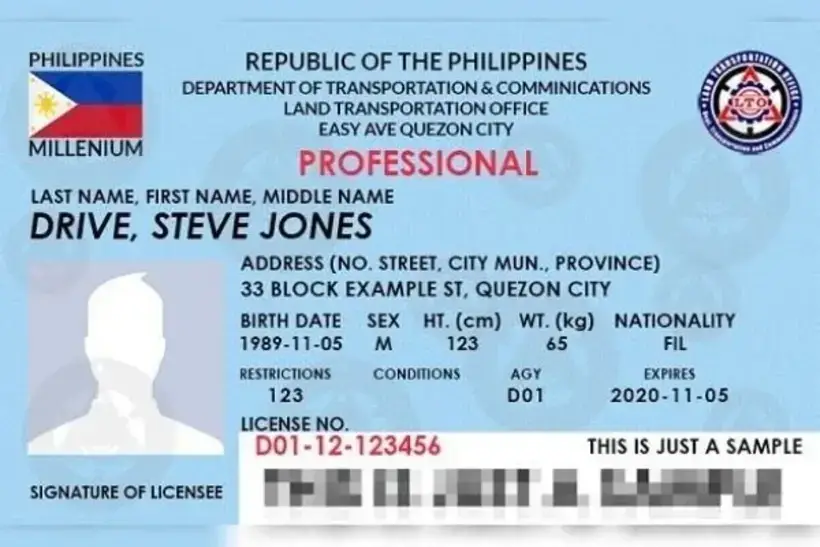
Applying for a Professional Driver’s License in the Philippines involves specific details to consider. This license grants the authority to drive vehicles classified under DL Codes C, D, BE, and CE.
To initiate the application process, individuals can submit their applications for a new Professional Driver’s License at any LTO District Office, Licensing Center, or Extension Office that manages Driver’s License transactions, ensuring accessibility and convenience for aspiring professional drivers.
1. Who Is Eligible to Apply for a Professional Driver’s License?
Obtaining a Professional Driver’s License in the Philippines demands specific qualifications and prerequisites for the application process. Here’s an in-depth breakdown of the qualifications required for aspirants seeking a Professional Driver’s License:
- Citizenship and Age Requirement:
- Filipino citizens must be at least 17 years old, while foreigner applicants need to be at least 18 years old to apply for a Professional Driver’s License.
- Physical and Mental Fitness:
- Applicants should exhibit the ability to drive a motor vehicle, considering medical conditions determined by a physician during the medical examination.
- Non-Professional Driver’s License Duration:
- Applicants must have held a Non-Professional Driver’s License for a specific duration:
- At least six months for DL Codes A and A1.
- A year for DL Codes B, B1, and B2.
- Applicants must have held a Non-Professional Driver’s License for a specific duration:
- Clear Traffic Record:
- An essential prerequisite is to have no unsettled traffic violations in the applicant’s record.
- Completion of Driving Lessons:
- Completion of a minimum of 8 hours of practical driving lessons from an LTO-accredited and TESDA-certified driving school is mandatory.
- Lower-rate services are offered by LTO for those unable to afford formal driving school education, ensuring accessibility to driving lessons.
Adherence to these qualifications is pivotal for individuals aspiring to acquire a Professional Driver’s License. Meeting these prerequisites is essential for a successful application process and eventual acquisition of the Professional Driver’s License in the Philippines.
2. What Are the Requirements for a Professional Driver’s License?
Standard Requirements
Securing a Professional Driver’s License in the Philippines mandates adherence to specific essential requisites. Here’s a comprehensive breakdown of the fundamental prerequisites for applicants seeking a Professional Driver’s License:
- Application Form:
- A duly-accomplished Application for Permits and License (APL) Form is required. This form was previously known as the Driver’s License Application or ADL Form.
- Medical Examination Certificate:
- A medical examination certificate obtained from an LTO-accredited clinic or physician is necessary. Costing approximately ₱300, the certificate remains valid for two months and focuses on assessing vision, blood pressure, and overall medical condition. While the certificate is electronically transmitted to the LTO, applicants receive a hard copy for presentation on the application day.
- Valid Non-Professional Driver’s License:
- An essential prerequisite is a valid Non-Professional Driver’s License that has been issued at least one year before the date of the application. The new policy mandates applicants to acquire a non-professional license before applying for a professional license.
Note: No presentation of a Practical Driving Course (PDC) Certificate is required for the Professional Driver’s License application. This certificate is previously submitted during the Non-Professional Driver’s License application.
Adhering to these fundamental requirements is crucial for individuals aspiring to obtain a Professional Driver’s License. Ensuring the completeness and accuracy of these prerequisites significantly aids in the successful application process for a Professional Driver’s License in the Philippines.
3. What Are the Costs Involved in Applying for a Professional Driver’s License?
The fees required for a Professional Driver’s License application are equivalent to those for a Non-Professional Driver’s License application. The costs remain identical, ensuring that applicants face the same fee structure as that of a Non-Professional Driver’s License application process.
4. Guide for Manual/Walk-in Application: What Are the Step-by-Step Procedures?
Acquiring a Professional Driver’s License in the Philippines requires following specific steps and procedures. Here’s a comprehensive guide delineating the sequential process for individuals pursuing a Professional Driver’s License:
- Preparation:
- Complete an 8-hour Practical Driving Course (PDC) and acquire a PDC Certificate. Obtain an LTO Client ID by creating an account in the LTO online portal or Land Transportation Management System (LTMS) for streamlined application.
- Document Submission:
- Submit all necessary documents for the Professional Driver’s License application to the receiving personnel at the LTO Office, avoiding LTO renewal offices in malls.
- Document Evaluation:
- The receiving personnel assesses the completeness of documents and forwards them for qualification assessment by an evaluator.
- Application Encoding:
- The evaluator reviews qualifications and, if deemed qualified, encodes the application into the system.
- Fee Payment:
- Applicants are required to pay all necessary fees at the Cashier when called during the application process.
- Basic Driving Theory Test:
- Undertake the written or computerized exam, with the items and passing grades varying based on the LTO office. The LTO provides online reviewers to aid in passing the exam.
- Practical Driving Test (Optional):
- Applicants seeking additional DL codes may opt for a practical driving test. If not, it’s not mandatory. Applicants can use their vehicles or rent one for the test.
- Approval Process:
- Approval by the Approving Officer is granted if the applicant successfully passes both the written exam and the practical driving test (if taken).
- Photo, Signature, and License Collection:
- At the designated area, applicants undergo photo and signature capture. Following approval, the Professional Driver’s License and Official Receipt are released. The applicant’s name and signature are required on the Release Form.
Following these sequential steps ensures a smooth and comprehensive application process for individuals aspiring to acquire a Professional Driver’s License in the Philippines.
5. Additional Points to Consider
Securing a Professional Driver’s License involves various essential details that applicants need to be aware of throughout the application process. Here are additional notes to consider:
- License Duration:
- A Professional Driver’s License maintains validity for a duration of five years, offering an extended period for the license holder’s use and compliance.
- Account Creation:
- Prior to visiting an LTO Office for a Professional Driver’s License application, it’s advisable to create an account in the LTO online portal (LTMS). This preliminary step can contribute to a swifter and more streamlined application process.
- Appointment and Protocol:
- Different LTO offices may have varying protocols. Some offices now necessitate online appointments, while others may still accept walk-in applicants. To prevent any issues or confusion during the application, it’s recommended to proactively contact the specific LTO office in advance. This ensures that applicants are well-informed about the specific protocols and procedures for the application process at their chosen LTO office.
Adhering to these additional notes can significantly streamline the application process and aid in a successful acquisition of the Professional Driver’s License in the Philippines.
What Are the Steps to Get an LTO Driver’s License Online in the Philippines?
The Land Transportation Office (LTO) embarked on the development of an online portal with the intention of enhancing efficiency and reducing corruption in transactions, a goal set even before the onset of the pandemic. Partnering with DERMALOG, a reputable German company, the LTO introduced the Land Transportation Management System (LTMS) Portal on May 18, 2020.
This online platform allows Philippine motorists to easily apply for or renew their driver’s licenses from the comfort of their homes using a computer, tablet, or smartphone. The introduction of this digital platform aims to minimize waiting times and create a more convenient process compared to the traditional manual system, offering a promising new approach to driver’s license applications in the Philippines.
1. Visit the LTMS Portal and Choose “Register Now”
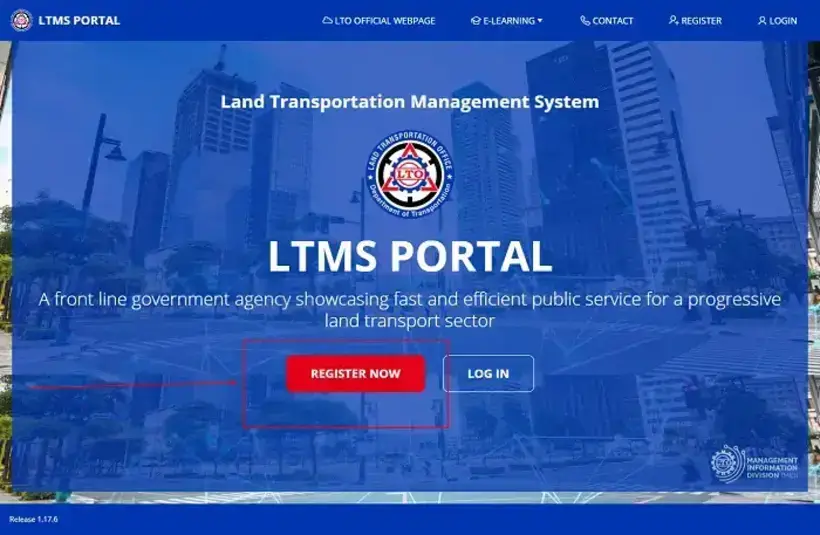
You can visit the new LTO website portal by clicking here.
For first-time users, the options to either register or log in are available. As this is your initial visit to the portal, choose “Register Now.”
2. Review and Agree to the Terms of Agreement
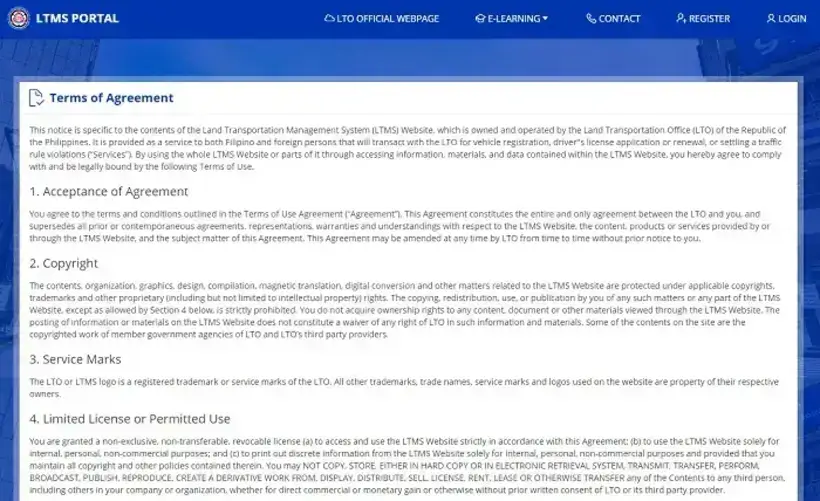
Thoroughly review the Terms of Agreement. If you agree, mark the box indicating “Yes, I accept” located at the bottom of the page.
Enter the security code in the provided blank box and proceed by clicking “Next.”
3. Choose ‘Enroll As An Individual’ to Advance With the Registration Process
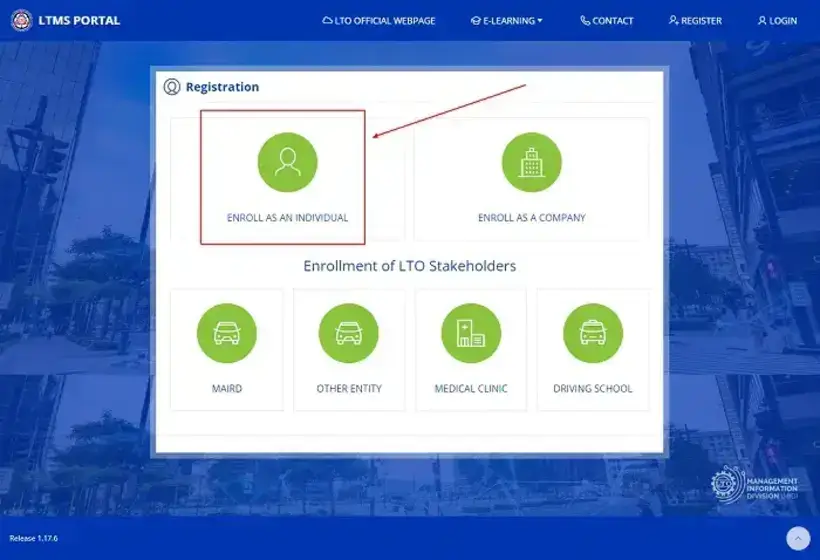
The LTMS portal provides a convenient registration process for both companies and individual motorists. For the purposes of this guide, targeting individual applicants, choose “Enroll As An Individual.”
4. Indicate Your Current License Status By Answering the Provided Question

The questionnaire for motorist-applicants comprises a series of specific inquiries designed to streamline the application process.
Existing License Inquiry: If the applicant already holds a current Philippine driver’s or conductor’s license, choose ‘Yes’ and furnish the license number, expiry date, along with addressing the security question. Verifying the accuracy of this information is crucial to avoid potential delays during the application process.
For First-Time Applicants: In case the applicant does not currently possess a license, opt for ‘No’ and proceed to the subsequent question by selecting ‘Next.’ This guidance assumes a first-time applicant status for this portion of the application guide.
5. Respond to the Inquiry About Your Nationality
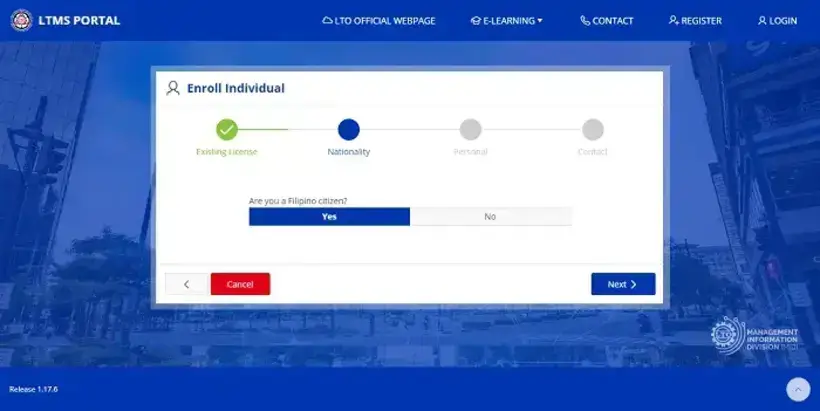
Choose ‘Yes’ if you are a Filipino citizen in response to the question “Are you a Filipino citizen?” Otherwise, select ‘No’.
Non-Filipino applicants are required to provide their nationality, Alien Certificate of Registration (ACR) Number, and its expiration date.
6. Enter Your Personal Information
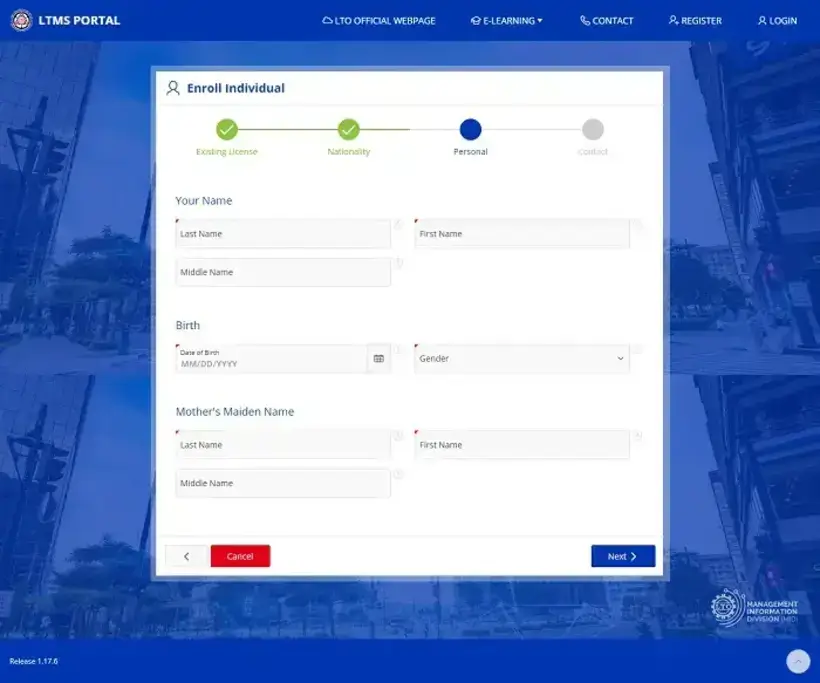
Proceed to the following section where you’ll be prompted to input your details. Fill in the requested information in the allocated boxes, which includes your name, birth date, gender, and your mother’s maiden name.
Upon completion, click ‘Next’ to proceed.
7. Submit Your Contact Information
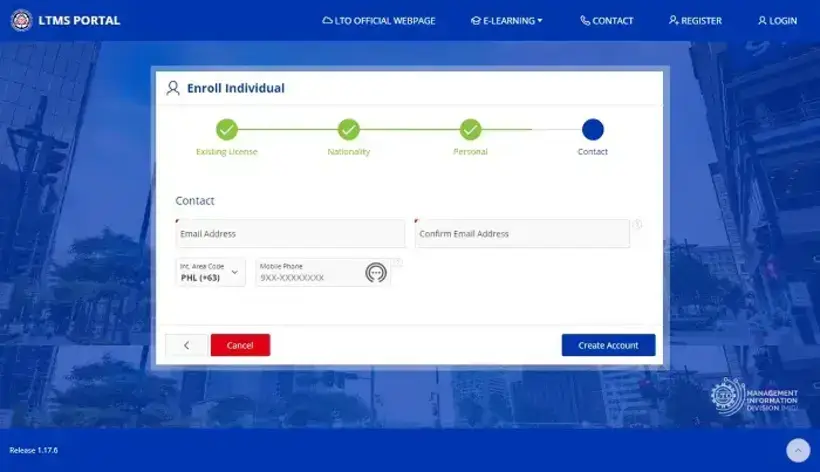
The final query will request your email address and phone number. Provide the necessary details and click ‘Create Account’ to advance to the subsequent step.
8. Click On the Link Sent to Your Email Address for Account Verification
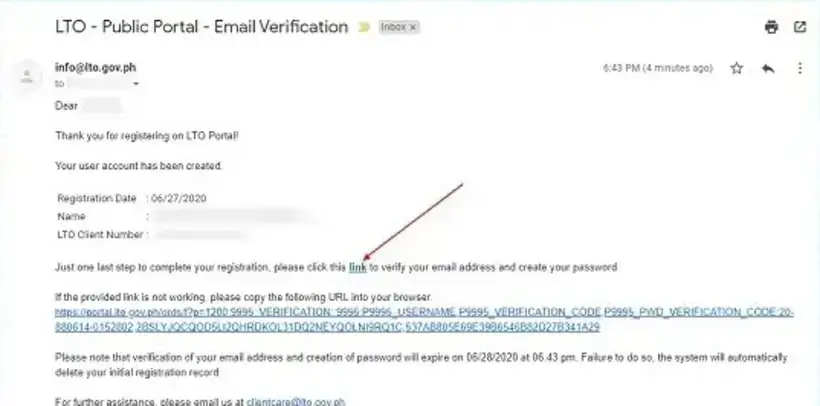
You should receive the email almost immediately. If you can’t locate it in your inbox, please check your SPAM folder.
Be sure to click the link within 24 hours; failure to do so will result in your account being automatically deleted.
9. Set Up Your Password
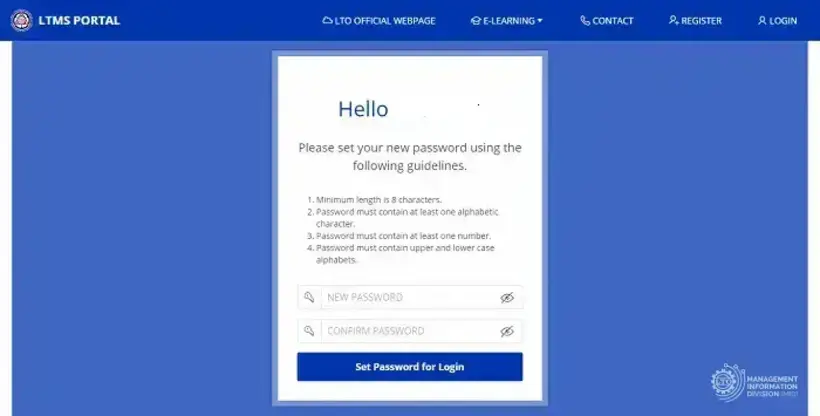
- Minimum Length: Your password needs to be a minimum of eight characters long.
- Alphabetic Character: Ensure your password includes at least one alphabetic character.
- Numeric Inclusion: It must contain at least one number.
- Alphabetic Case Combination: Your password should incorporate a mix of both upper and lower case alphabetic characters.
After meeting these requirements, click ‘Set Password for Login’ to continue.
10. Log in to Your Account With Your New Password
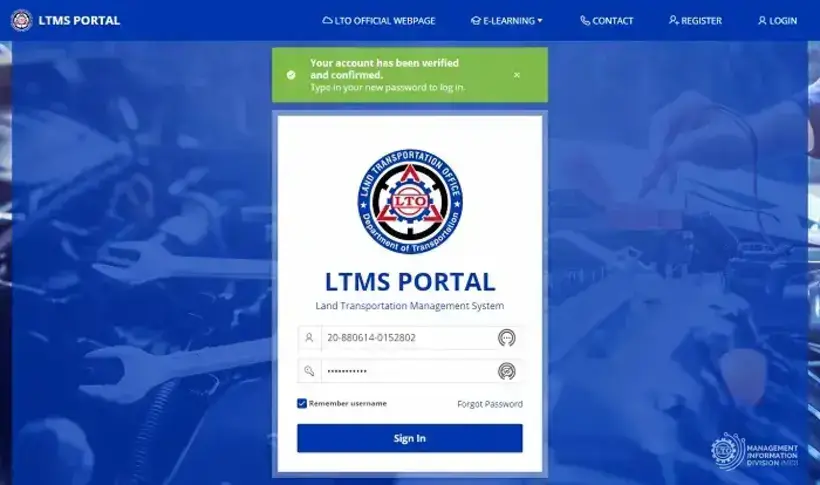
The system already provides the username. Don’t overlook selecting the “Remember username” checkbox to retain your prefilled username for future logins.
11. Choose ‘Licensing’ From Your Dashboard Menu
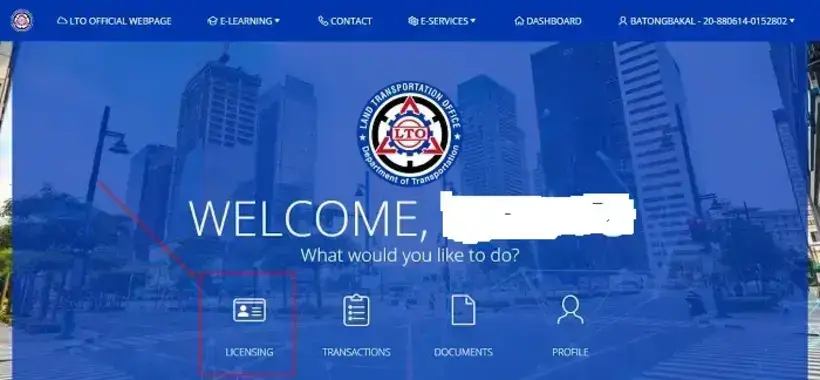
Four icons are available for selection, but for license application purposes, choose the ‘Licensing’ option.
12. Finish Filling Out the Online Application Form
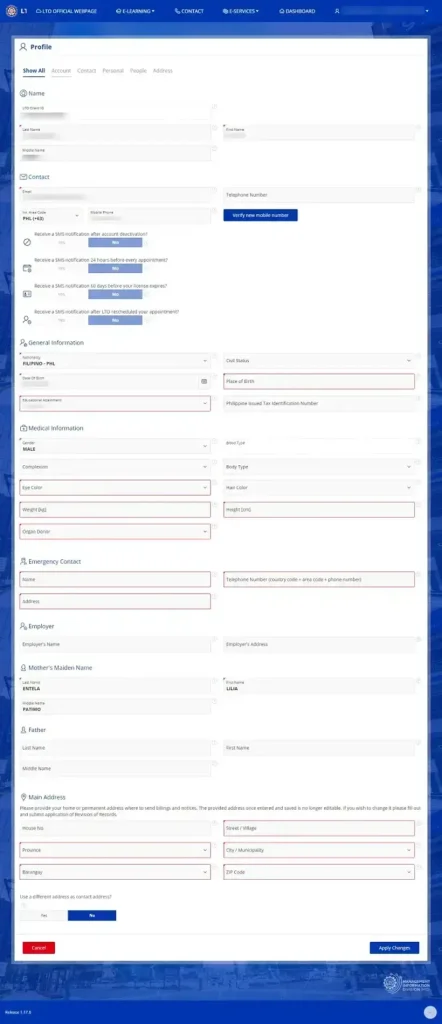
- Completing the Online Form Upon entering the LTO portal, navigate to the online application form. It’s crucial to fill out all fields marked in red, which are fundamental for the application. These fields might include educational attainment, place of birth, physical attributes (eye color, height, weight), emergency contact information, and full address. Once the form is completed, click “Apply Changes” to proceed.
- Accepting Terms of Use After submitting your application, you will be redirected to the dashboard. Click on the Licensing section and thoroughly read the provided Terms of Use. Once done, click “Accept” to acknowledge your agreement.
- Selecting License Type and Application Details Choose the specific license type (Student’s License, Driver’s License, Conductor’s License) and the corresponding application, whether it’s a new application, renewal, record revision, or additional code application. Additionally, schedule an appointment and select your preferred LTO office for further processing.
- Payment and Medical Certificate Entry The online payment of fees is available; however, some transactions, like new applications or renewals, may require entering the Medical Certificate Number. To ensure a smooth transaction, obtain the necessary medical certificate before commencing the online application process. This will help avoid delays or complications during the application.
What Steps Should You Take When Preparing for the LTO Driving Test?

The examination for both Professional and Non-Professional Driver’s License applicants comprises two segments, encompassing the Basic Driving Theory Examination, which is a written test, and the Practical Driving Test. To obtain the Driver’s License, passing both the written examination and the practical driving test is mandatory.
1. Written Exams
- Emergency Situations: The written examination for driving comprehensively covers various critical aspects, including how drivers should respond to emergency situations. This section assesses an individual’s understanding of handling unexpected events on the road, including proper protocols during accidents, breakdowns, and other unforeseen incidents.
- Handling and Driving: This segment evaluates a driver’s competence in vehicle operation and control. It covers fundamental driving techniques, such as steering, acceleration, braking, and gear shifting. The section aims to test the candidate’s ability to maneuver a vehicle safely and efficiently in diverse road conditions.
- General Information: Under the section of General Information, candidates are expected to demonstrate knowledge about traffic laws, regulations, and basic driving practices. It includes understanding right-of-way rules, speed limits, road etiquettes, and other essential information crucial for safe driving.
- Parking Rules and Restrictions: This part of the examination focuses on a driver’s understanding of parking regulations, techniques, and restrictions. It covers parallel parking, parking in designated areas, and restrictions related to specific zones or circumstances.
- Penalties and Violations: The examination includes an evaluation of the driver’s knowledge about traffic violations, penalties, and the consequences of breaching driving laws. It tests the candidate’s awareness of traffic offenses and the repercussions involved.
- Road Positioning: This section assesses a driver’s comprehension of maintaining proper road positioning. It encompasses understanding the correct lane usage, safe distances, and positioning concerning other vehicles.
- Signs and Markings: The examination evaluates a candidate’s knowledge of road signs and pavement markings, which are crucial for safe navigation on the road.
Resources for Test Preparation
To support candidates in their test preparation, various resources are available:
- Road traffic signs and pavement markings review link
- Tagalog Driver’s License Reviewer link
- English Non-Professional, Professional (Light Vehicles), and Professional (Heavy Vehicles) Driver’s License Reviewer link
Examination Rules
Reattempt Policy
The examination has strict rules regarding reattempting the test:
- One-month wait after failing Basic Driving Theory or Practical Driving Test: If an individual fails either the Basic Driving Theory or the Practical Driving Test, a one-month waiting period is mandated before a retest.
- One-year ban after failing twice within a year: Failing either test twice within a year results in a one-year ban from retesting.
- Two-year ban after failing three times in a row: Three consecutive failures in either test lead to a two-year ban from retesting.
Additional Restriction Codes
Failure in an exam for additional restriction codes does not prohibit the renewal of the current license without the additional codes. However, these failed attempts are recorded in the driver’s overall record, potentially affecting their driving history.
2. Practical Driving Test
The practical driving test is a pivotal step for individuals aiming to obtain their driver’s license. This assessment evaluates a candidate’s ability to apply their knowledge of road rules and driving skills in a real-world scenario. Here is an overview of what to expect and how to prepare for the practical driving test:
Additional Fee
To take the practical driving test, there might be an additional fee involved, which varies based on the vehicle used for the test. It’s essential to be aware of these fees:
- ₱250 for car rental
- ₱150 for motorcycle rental
- Alternatively, candidates can use their own vehicle for the test, eliminating the rental fee.
Test Details
The practical driving test typically involves completing one full driving round at the designated Land Transportation Office (LTO) course. Candidates will navigate through various road conditions, obstacles, and scenarios to demonstrate their driving proficiency.
Test Tips
Preparation is key to success in the practical driving test. Here are some tips for candidates:
- Stay Calm and Follow Instructions: Maintaining composure during the test is crucial. Candidates should carefully follow the instructions provided on their application form and by the examiners.
- Utilize Online Resources: YouTube videos can be valuable resources for preparation. Watching tutorials or demonstrations related to practical driving tests can offer insights into what to expect and how to handle different scenarios.
- Practice Reverse Parking: This skill is often evaluated during the test. Candidates should practice reverse parking to ensure proficiency in this area.
Passing Criteria
To successfully pass the practical driving test, candidates need to achieve a minimum score of 70 points out of 100. The evaluation is based on their performance during the driving round, encompassing various aspects of safe and responsible driving.
Understanding the components of the practical driving test and adequately preparing for it can significantly increase a candidate’s chances of success. Through practice, familiarity with driving techniques, and knowledge of the test criteria, individuals can confidently approach and excel in their practical driving examination.
Penalties and Charges All Drivers in the Philippines Must Be Aware Of
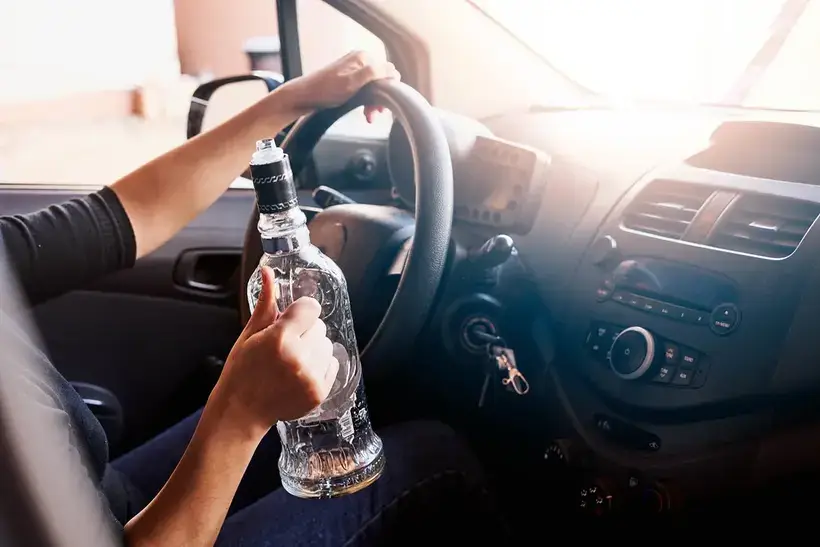
Comprehensive awareness of traffic rules and driving regulations is of utmost importance for all drivers. Violating these rules can significantly impact a driver’s record and potentially lead to severe consequences. The Land Transportation Office (LTO) employs a point system to manage and address various traffic violations.
Different infractions incur specific demerit points, directly impacting a driver’s record. Accumulation of significant demerit points could result in mandatory attendance in a reorientation course, license suspension, or even the potential revocation of the driver’s license. Therefore, maintaining a clean driving record by adhering to traffic rules is essential to avoid these adverse outcomes.
Understanding Traffic Violations and Corresponding Fines
Adherence to traffic regulations is crucial to ensure road safety and legal compliance. It’s important to be aware of various traffic violations and the corresponding fines associated with each offense.
- Driving without a Valid Driver’s License – ₱3,000: Individuals found driving without a valid driver’s license face a penalty of ₱3,000.
- Submitting Fake Documents for License Application – ₱3,000: Submitting falsified documents during the driver’s license application incurs a penalty of ₱3,000.
- Falsification of Documents, Misrepresentation – ₱20,000: Those involved in falsifying documents or misrepresentation in relation to driving documents face a significant penalty of ₱20,000.
- Driving without License, OR, or CR – ₱1,000: Driving without a license, Official Receipt (OR), or Certificate of Registration (CR) results in a fine of ₱1,000.
- Driving an Unregistered Vehicle – ₱10,000: Operating an unregistered vehicle carries a substantial penalty of ₱10,000.
- Various Traffic Violations – ₱1,000: A general fine of ₱1,000 is levied for unspecified traffic violations.
- Unauthorized Modification of Vehicle – ₱5,000: Unauthorized modification of a vehicle leads to a penalty of ₱5,000.
- Driving with Unauthorized or Defective Parts – ₱5,000: Operating a vehicle with unauthorized or defective parts incurs a fine of ₱5,000.
- Improperly Attached License Plate – ₱5,000: Failing to properly affix a license plate results in a fine of ₱5,000.
- Vehicle Renewal or Registration Fraud – ₱3,000: Engaging in fraudulent activities related to vehicle renewal or registration leads to a penalty of ₱3,000.
Serious Offenses with Higher Penalties
Driving Under the Influence of Alcohol/Drugs
- No Injuries or Death – ₱20,000 to ₱80,000
- Resulted in Injuries – ₱100,000 to ₱200,000
- Resulted in Death – ₱300,000 to ₱500,000
Reckless Driving
- First Offense – ₱2,000
- Second Offense – ₱3,000
- Subsequent Offense – ₱10,000
Violations Related to Safety Equipment
- Driving Without a Seat Belt or With a Child Below Six Years in Front:
- First Offense – ₱1,000
- Second Offense – ₱2,000
- Third Offense – ₱5,000 + 1-week license suspension
- Driving Without a Motorcycle Helmet:
- First Offense – ₱1,000
- Second Offense – ₱3,000
- Third Offense – ₱5,000
- Fourth and Subsequent Offenses – ₱10,000 + License Confiscation
Environmental Offenses
- Smoke Belching:
- First Offense – ₱2,000
- Second Offense – ₱4,000
- Third Offense – ₱6,000 + 1-year registration suspension
Knowing and understanding these fines is crucial for every driver in the Philippines to ensure compliance with traffic laws and regulations, thereby contributing to safer roads and responsible driving practices.
Consequences for Underage Drivers
Underage driving in the Philippines carries severe consequences, including penalties and restrictions aimed at discouraging minors from operating vehicles illegally. Here are the key repercussions faced by underage drivers caught in such situations:
Surrender of License
Underage drivers caught misrepresenting their age in order to obtain a driver’s license must surrender their current license immediately. This serves as an initial step in the enforcement of penalties.
Appeal and Fine
To address the issue and potentially obtain or renew a driver’s license in the future, an appeal process must be initiated. Alongside the appeal, a fine of ₱5,000, plus miscellaneous fees, is imposed as a penalty for the violation committed.
One-Year License Cancellation
Underage drivers also face the option of a one-year cancellation of their license, subject to strict conditions:
- Surrender of the Temporary License: The temporary license issued to the underage driver will need to be surrendered.
- Prohibition from Obtaining a New License: Following the surrender of the temporary license, the underage driver is prohibited from applying for or obtaining a new driver’s license for a period of one year from the date of surrender.
Underage driving poses serious legal and safety concerns, and the prescribed consequences are intended to deter such behavior while emphasizing the importance of abiding by the legal age requirements for operating a vehicle. These measures aim to instill responsibility and ensure compliance with driving regulations, promoting safer roads and lawful driving practices.
How Can I Get an International Driver’s License in the Philippines?
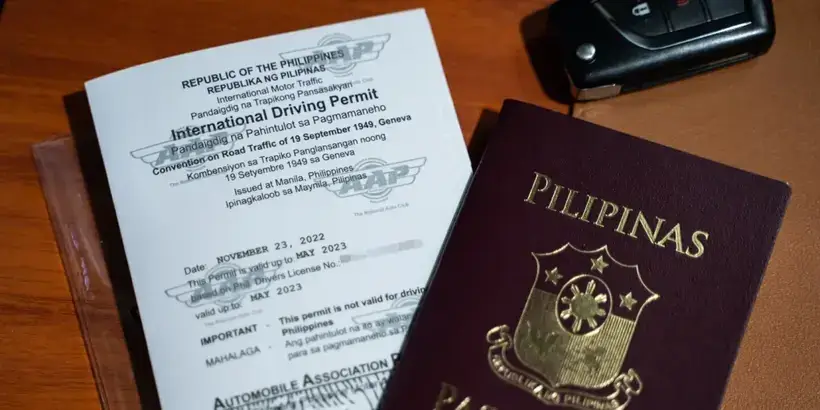
Individuals aspiring to obtain a Philippine International Driving Permit (PIDP) should be aware of the specific requirements, associated fees, application process, and the permit’s validity. Here’s a breakdown of the key aspects to consider when applying for a PIDP.
1. Requirements for PIDP Application
Securing a PIDP necessitates certain essential documents. These include:
- the original and a photocopy of either a Professional or Non-Professional Driver’s License, which must be valid for at least one year.
- Additionally, two 2×2 colored ID photos with a white background are required.
For foreign nationals, dual citizens, or Filipinos born abroad:
- the original passport
- along with photocopies is mandatory.
- Those with permanent residency status should submit the Alien Certificate of Registration.
2. Fees Associated with PIDP
Applicants need to be aware of the fees involved in the PIDP application process. These include:
- the AAP Joining Fee set at ₱300, although this fee is waived for Overseas Filipino Workers (OFWs) presenting valid proof.
- Additionally, there’s the AAP Annual Registration fee of ₱1,200,
- along with the PIDP Processing Fee, which amounts to ₱300.
3. Application Process and Validity Duration
To apply for a PIDP, individuals can submit the necessary documents at their nearest Automobile Association Philippines (AAP) office. Processing times vary based on the office’s location.
- In the National Capital Region (NCR) areas like Alabang, Makati, and Quezon City, the processing times range from 1 hour to 3 business days.
- In Luzon areas such as Batangas and Pampanga, the process takes approximately 2-3 business days.
- Offices located in Visayas (Cebu) and Mindanao (Davao) typically take about 4-5 business days for processing.
The PIDP remains valid for one year from the date of application if the local driver’s license has at least a year of validity. If the Philippine driver’s license has less than a year’s validity, the PIDP’s duration will align with the local license’s expiration date.
Understanding the prerequisites, fees, application process, and validity duration is crucial for individuals seeking a Philippine International Driving Permit. This facilitates legal and hassle-free driving while abroad, ensuring compliance with international driving regulations.
Important Tips and Warnings
- Online Medical Certificates: The LTO now accepts only online medical certificates with the doctor’s fingerprints to prevent fraudulent “pre-signed” certificates. When obtaining a medical certificate, visit a clinic near the LTO office. Verify that the clinic is accredited by the LTO to ensure legitimacy.
- Validity of Medical Certificate: Medical certificates hold a validity period of two months. If you plan to apply for a permit or license within this duration, a single medical certificate will suffice.
- Early Completion of Medical Examinations: To expedite your application process, complete the necessary medical examinations at least 15 days before your intended application date. This proactive approach ensures smoother proceedings.
- Early Arrival and Timings: Arriving early at the LTO branch is advisable to avoid long queues. Different branches have varying opening times, some opening as early as 7:00 AM, while others may open at 10:00 AM. Additionally, visiting an hour before closing time may lead to shorter processing times.
- Online Appointments: Schedule your appointment online for faster processing and gain access to special lanes designated for online appointments. This method can significantly expedite your transaction.
- License Renewal and Dress Code: To avoid penalties, renew your license before its expiry date. When applying for a new license, ensure appropriate attire for the photo session to avoid any issues.
- Avoid Fixers and Prepare Cash: Steer clear of fixers as their services can be costly and might lead to complications with your license application. Bring smaller bills and coins for payment, as LTO offices may have limited cash available.
- Application Form Preparation: For a smoother submission at the LTO office, download and complete the application form at home. This proactive step saves time during the application process.
- Foreign Driver’s License Conversion: Foreigners can convert their driver’s license to a Philippine one. Valid foreign licenses do not require additional exams, while expired licenses mandate written and practical tests.
- Car Purchase without License: A driver’s license is a significant requirement for purchasing a car. However, discuss alternative identification options with your dealer if the vehicle’s purpose is different from driving.
- Driving School Fees and Verification: Before enrolling in a driving school, verify that the fees align with the maximum rates prescribed by the LTO for different vehicle categories. The LTO, in Memorandum Circular No. JMT-2023-239011, has set maximum fees for driving school sessions. The Theoretical Driving Course (TDC) rates for Motorcycle, Light Vehicle, and Heavy Vehicle categories are fixed at ₱1,000 each, ensuring fair pricing for theoretical instruction. The Practical Driving Course (PDC) rates for Motorcycle, Light Vehicle, and Heavy Vehicle sessions are capped at ₱2,500, ₱4,000, and ₱8,000 respectively. These prescribed rates prevent individuals from being overcharged during their driving training.
These tips and warnings are designed to assist individuals in navigating the processes and requirements associated with the Land Transportation Office in the Philippines. Following these guidelines can streamline your experience and help avoid potential issues during the application or renewal of licenses and permits.
Frequently Asked Questions
1. What are the steps to apply for additional Driver’s License (DL) codes?
Applying for additional Driver’s License (DL) codes involves a structured process managed by the Land Transportation Office (LTO). To ensure a smooth application, individuals must adhere to specific steps and requirements as outlined below:
Submission of Requirements
Initiate the process by completing the Application for Permits and Licenses (APL) Form, available at an LTO Licensing Center or District Office. Additionally, submit the necessary documents and undergo a medical examination at an LTO-accredited clinic. Different DL codes (C, D, BE, CE) might require additional qualifications, and applicants must meet these criteria.
Fees for Additional Restriction Codes
Various fees are applicable for both valid and expired Professional and Non-Professional Driver’s Licenses. These fees cover application, computer, replacement, renewal, and penalty charges. Moreover, there are specific Additional Restriction Fees for each additional code applied for.
Step-by-Step Guide for Additional DL Code Application
- Obtain Queue Number: Start by securing a queue number at the LTO office to initiate the application process.
- Submit Eligibility Documents: Submit all necessary documents for eligibility verification.
- Pay Test Fees: Proceed to the Cashier Window to settle test fees.
- Computerized Theoretical Exam: Successfully pass the Computerized Theoretical Exam as part of the application process.
- Practical Driving Test: Pass the practical driving test specifically related to the desired additional DL code(s).
- Complete Payment: Return to the Cashier Window to complete the necessary payments.
- Provide Information to LTO-IT System: Supply required details and biometric information to the LTO-IT system.
Receipt of New License
Upon approval, the applicant will receive an official receipt and the newly issued DL card. To finalize the process, the applicant needs to sign the Release Form for the new Professional or Non-Professional License Card.
2. How can Overseas Filipino Workers (OFWs) retrieve unclaimed driver’s licenses without returning to the Philippines?
For Overseas Filipino Workers (OFWs) who have unclaimed driver’s licenses in the Philippines, there’s a specific process facilitated by the Land Transportation Office (LTO) that allows them to retrieve their licenses without needing to physically return to the country. This step-by-step guide outlines the requirements and process to efficiently claim unclaimed driver’s licenses.
Requirements for Unclaimed License Retrieval
To initiate the process, certain scanned documents are required:
- Application Form for Unclaimed Driver’s License: Completely fill out this form, ensuring all details are accurate and up-to-date.
- LTO Driver’s License Official Receipt: Provide a copy of the official receipt issued by the LTO.
- 2 x 2 Picture with a Blue Background: Submit a recent photo adhering to the specified requirements.
- Passport Profile Page: Include the page displaying identification and a photo.
- Passport Page Showing Arrival Stamp: This should exhibit the arrival stamp in the current country of residence.
Step-by-Step Process
- Application Form: Download and meticulously complete the application form for unclaimed driver’s licenses, ensuring all fields are accurately filled.
- Document Scanning: Scan the filled-out application form and all the required documents for submission.
- Submission: Send the scanned documents to the specified email address provided by the LTO: LTOofwDL@yahoo.com.
- Await Notification: Wait for an email notification from the LTO, confirming the successful delivery date of your documents.
- Claim Process: Once notified, visit your chosen Philippine embassy, where you can claim your Professional or Non-Professional Driver’s License.
3. What are the steps to convert a Non-Professional driver’s license to a Professional driver’s license (and vice versa)?
From Non-Professional to Professional (and vice versa)
- Application Form and Documents:
- Fully accomplished Application for Permits and Licenses (APL) Form.
- Electronically submitted Medical examination certificates from an LTO-accredited clinic.
- Original valid or expired Driver’s License.
- Additional Requirements for Non-Professional to Professional:
- Age criteria for the Non-Professional License.
- Automated Theoretical Exam.
- For expired Non-Professional licenses: Practical Driving test.
- Tax Identification Number (TIN).
- Note on Adding DL Codes: If intending to add DL codes alongside the classification change, a Practical Driving Course (PDC) Certificate is required.
Fees for Classification Change
Valid Non-Professional to Professional & Professional to Non-Professional:
- Application Fee: ₱100
- Computer Fee: ₱67.63
- Replacement Fee: ₱225
- Additional Computer Fee: ₱67.63
- Change Classification Fee: ₱100
Expired Non-Professional to Professional & Professional to Non-Professional (with penalties):
- Application Fee: ₱100
- Computer Fee: ₱67.63
- Renewal Fee: ₱585
- Additional Computer Fee: ₱67.63
- Change Classification Fee: ₱100
- Penalty Fee for 1 day to 1 year expired: ₱75
- Penalty Fee for more than 1 year to 2 years expired: ₱150
- Penalty Fee for more than 2 years expired (re-exam): ₱225
Delinquent License (Pro to Non-Pro & Non-Pro to Pro; with re-exam):
- Application Fee: ₱100
- Computer Fee: ₱67.63
- Renewal Fee: ₱585
- Additional Computer Fee: ₱67.63
- Change Classification Fee: ₱100
- Penalty Fee for more than 2 years expired (re-exam): ₱225
Step-by-Step Guide for Change of Classification
- Submission of Documents: Submit all necessary documents to LTO personnel for Change of Classification Application.
- Document Verification and Encoding: Verification and encoding of qualifications by the evaluator after document review.
- Photo and Signature Process: Provide photo and signature at the designated area upon request.
- Payment of Fees: Pay all required fees at the cashier when called.
- Basic Driving Theory Test: Take the theory test; immediate results will be communicated.
- Practical Driving Test: Proceed to the practical driving test if you pass the written exams. If not, reapplication is possible after a month.
- Approval Process: Upon passing both exams, the Approving Officer will approve your application.
- Receiving the New License: Collect the new Driver’s License with the Official Receipt after approval and sign the Release Form.
4. How do I update my driver’s license and obtain a new one after changing my name, citizenship, marital status, etc.?
When you need to update your Driver’s License due to changes in personal information like name, citizenship, marital status, etc., the Land Transportation Office (LTO) provides a systematic process. Follow these steps to facilitate the necessary revisions to your Driver’s License:
Application for Revision of Records
- Location for Application: Visit any LTO District Office, Licensing Center, or Extension Office handling Driver’s License transactions.
- Basic Requirements:
- Fully accomplished Driver’s License Application Form.
- Professional or Non-Professional Driver’s License.
- Medical examination certificates (electronically transmitted).
- Additional Requirements:
- For Incorrect Name or Birth Date: PSA-authenticated birth certificate, Affidavit of Discrepancy.
- For Change in Name: Court Order authorizing the name change.
- For Change in Marital Status: Marriage Contract (photocopy) OR Court Order for Annulled or Divorced Applicants.
- For Change in Citizenship: Foreign License, Alien Certificate of Registration.
- Fees:
- For Valid Professional or Non-Professional Driver’s License:
- Replacement Fee: ₱225
- Revision Fee: ₱100
- Computer Fee: ₱67.63
- For Expired Professional or Non-Professional Driver’s License:
- License Fee: ₱585
- Computer Fee: ₱67.63
- Replacement Fee: ₱225
- Revision Fee: ₱100
- Additional Computer Fee: ₱67.63
- Penalty Fee for 1 day to 1 year expired: ₱75
- Penalty Fee for more than 1 year to 2 years expired: ₱150
- Penalty Fee for more than 2 years expired (re-exam): ₱225
- For Dormant Professional or Non-Professional Driver’s Licenses:
- License Fee: ₱585
- Computer Fee: ₱67.63
- Replacement Fee: ₱225
- Revision Fee: ₱100
- Application Fee: ₱100
- Additional Computer Fee: ₱67.63
- Penalty Fee for more than 2 years expired (re-exam): ₱225
- For Valid Professional or Non-Professional Driver’s License:
Step-by-Step Guide for Revision of Records
- Document Submission: Submit all required documents for the Revision of Records Application to LTO personnel.
- Document Verification: Documents will be checked for completeness and license details retrieved from the system.
- Completion of Application Form: Fill out another Driver’s License Application Form for desired revisions if needed.
- Evaluation and Encoding: Qualification review and encoding by the evaluator if eligible.
- Approval Process: Approval of the application by the Approving Officer.
- Photo/Signature Process: Provide a photo and signature as required.
- Payment of Fees: Pay all necessary fees at the cashier.
- Receiving the New License: Collect the new Driver’s License and Official Receipt at the Releasing Counter and sign the Release Form.
5. How can I obtain a driver’s license certificate for the job/visa application I’m pursuing?
When in need of a Driver’s License Certificate for employment, visa application, or government agency requirements, the Land Transportation Office (LTO) offers a clear procedure. Follow these steps for a smooth process of obtaining your Driver’s License Certificate:
Application for License Certification
- Location for Application: You can visit the LTO Central Office Licensing Section, or any LTO Licensing Center or District Office handling Driver’s License transactions.
- Requirements:
- If requested by an individual:
- Current or expired driver’s license (photocopy).
- Fully accomplished Request Slip (indicating the purpose).
- Notarized Affidavit of Loss OR Letter Request for Verification of License Data (indicating the purpose).
- If requested by a government agency:
- Current or expired driver’s license (photocopy).
- Letter of Request from the government agency.
- If requested for employment abroad purposes:
- Current or expired driver’s license (original and photocopy).
- Fully accomplished Monitoring Slip.
- Taxpayer’s Identification Number (TIN).
- If requested by an individual:
Step-by-Step Guide
- Document Submission: Submit all required documents at the Customer Service Counter in the LTO Office for checking.
- Completion of Monitoring Slip: Fill out a monitoring slip as required.
- Queue and Waiting: Obtain a queue number and wait for your turn.
- Payment of Fees: Proceed to the cashier when your number is called, pay the necessary fees, and obtain the Official Receipt.
- Receiving the License Certification: Visit the Releasing Counter, present the Official Receipt, and collect the License Certification. Sign the Release Form upon receiving the document.
6. Is it possible to use my foreign driver’s license in the Philippines?
Foreigners visiting the Philippines can utilize their valid foreign driver’s license for driving purposes during the initial 90-day period after their arrival in the country. However, if their stay surpasses the 90-day limit, it becomes mandatory to convert their foreign driver’s license to a Philippine driver’s license to continue driving legally within the country.
This process ensures compliance with Philippine regulations and is essential for prolonged stays in the country, ensuring individuals continue to drive without any legal issues.
7. What are the steps to convert a foreign driver’s license to a Philippine one?
Converting a foreign driver’s license to a Philippine one involves a structured process at an LTO Office, ensuring that applicants meet specific qualifications and comply with necessary requirements.
Qualifications
To be eligible for the conversion, certain qualifications need to be met:
- Minimum Age: Applicants must be at least 18 years old.
- Capability: Individuals should be physically and mentally capable of operating a motor vehicle.
- Language Proficiency: Proficiency in English or Filipino is required.
- Residency: Applicants should have resided in the Philippines for at least one month and intend to stay for a minimum of one year from the application date.
Requirements
- Fully accomplished Application for Permits and License (APL) Form.
- Online or electronically transmitted medical examination certificate.
- Valid Visa for a minimum of 120 days from arrival.
- If holding a valid Foreign Driver’s License:
- Valid Foreign Driver’s License (original and photocopy).
- Official English translation (if not in English) from the Embassy of the issuing country (original and photocopy).
Step-by-Step Guide
- Acquiring Forms and Queuing: Obtain a Driver’s Application Form and Requirements Checklist from the Customer Service Counter. Get a queue number. The application form can be downloaded and filled a day before visiting the LTO Office.
- Document Submission: Present all necessary documents to receiving personnel. Documents are checked for completeness and authenticity.
- Photo/Signature Process: Have your picture and signature taken at the designated area.
- Payment of Fees: Pay the application fee at the cashier and obtain the Official Receipt.
- Receiving the New License: Visit the Releasing Counter, present the Official Receipt, and claim your new Driver’s License. Complete the Release Form by writing your name and affixing your signature.
8. How can I replace a lost/stolen/damaged/mutilated driver’s license with a new one?
When your driver’s license gets mutilated or damaged, obtaining a replacement in the Philippines involves specific requirements and steps for a hassle-free process.
Requirements
To replace a mutilated or damaged driver’s license, the following documents are required:
- Proof of identity.
- Notarized Affidavit of Mutilation.
- Completed Application form for Driver’s License (ADL).
- Mutilated driver’s license.
- Medical examination certificate (if the mutilated license is due for renewal, available online or transmitted electronically).
Fees
The total cost for replacing a mutilated or damaged driver’s license sums up to Php 472.63, broken down as follows:
- Replacement Fee: Php 225
- Certification Fee: Php 100
- Clearance Fee: Php 30
- Duplicate Fee: Php 50
- Computer Fee: Php 67.63
- Revision of Records (applicable to duplicates with revisions): Php 100
Step-by-Step Guide
Here’s a step-by-step guide to facilitate the replacement process:
- Obtain a Driver’s License Application Form and Checklist of Requirements for Mutilated Driver’s License Replacement from the LTO Office or online.
- Get a queue number and wait for your turn at the LTO office.
- Submit the necessary documents at the Evaluator Counter for an authenticity and completeness check.
- Proceed to the photo/signature area for assessment fee details.
- Pay the required fees at the cashier and obtain the Official Receipt.
- Finally, head to the Releasing Counter, present the Official Receipt, and collect the new Driver’s License. Sign the Release Form upon receiving the document.
9. Why should drivers strive to avoid accumulating demerit points? and what are demerit points?
The Land Transportation Office (LTO) has recently introduced a new point system following Republic Act No. 10930, aimed at enhancing driver responsibility and improving overall driving standards in the country.
Under this system, drivers accumulate demerit points for each traffic violation, with the severity of the offense determining the number of points imposed. The more serious the violation, the higher the demerit points assigned.
These violations are categorized into three specific groups, each linked to a predefined number of demerit points, allowing a structured approach to regulating and monitoring traffic offenses.

Understanding the Classification of Demerit Points in the Traffic Violation System
The demerit point system, recently introduced by the Land Transportation Office (LTO) in adherence to Republic Act No. 10930, plays a pivotal role in categorizing traffic violations based on their severity. These classifications are crucial as they correlate with the corresponding demerit points assigned to each category. Here’s an insight into the classifications along with examples for better understanding:
- Grave Violations (Highest Points): This category encompasses violations that pose a substantial threat to safety and property. Some examples include driving under the influence, failure to use a seat belt, smoke-belching vehicles, driving without a valid license, illegal overtaking, and driving against traffic.
- Less Grave Violations: These are violations that pose a certain level of risk but are comparatively less severe. Examples include failure to dim headlights, not yielding to pedestrians, and not applying the handbrake when unattended.
- Light Violations (Lowest Points): Minor breaches of traffic rules, regulations, laws, and ordinances fall into this category. Examples include unsafe towing, fare overcharging/undercharging, and not displaying a “No Smoking” sign.
- Special Cases: It’s worth noting that Public Utility Vehicle (PUV) drivers and unauthorized private vehicle PUV drivers accrue double demerit points for violations while operating a “For Hire” motor vehicle.
To access the complete list of traffic violations and their respective demerit points, individuals are encouraged to refer to the implementing rules and regulations of Republic Act No. 10930. Understanding these classifications and their associated examples is crucial for drivers to maintain responsible and safe practices while on the road.
Understanding the Ramifications of Accumulating Demerit Points
Accumulating demerit points under the recently established system by the Land Transportation Office (LTO), pursuant to Republic Act No. 10930, bears significant consequences for drivers at various stages of licensure. These consequences are designed to encourage responsible driving practices and prioritize road safety. Here’s an overview of the outcomes based on the accumulation of demerit points:
- For Student Permit Holders: Accumulating at least five demerit points leads to the confiscation and revocation of the Student Permit. Individuals are barred from reapplying for a permit for one year. Receiving three revocations results in a perpetual disqualification from obtaining a license.
- Driving Enhancement Program (DEP) Requirement: Accumulating between five and nine demerit points mandates participation in the DEP from an accredited LTO service provider.
- DEP and Theoretical Exam for Higher Demerit Points: Reaching ten or more demerit points or committing the same violation at least three times results in the requirement to attend the DEP and undertake a Theoretical Exam.
- Special Training for PUV Drivers: PUV drivers facing franchise-related violations must undergo training by the PUV Driver’s Academy of the Land Transportation Franchising and Regulatory Board (LTFRB).
- Driver’s License Suspension for Non-attendance: Failure or refusal to attend the DEP within 30 days after the last apprehension can lead to driver’s license suspension.
- Restrictions on License Upgrades and Applications: Accumulated demerit points may restrict drivers from applying for additional license codes or changing their license classification for a specific period based on the points amassed.
- License Revocation for Excessive Demerit Points: Reaching 40 demerit points leads to license revocation, disqualifying individuals from obtaining a new license for two years after settling fines and penalties.
- Non-Carryover of Demerit Points: Notably, demerit points do not carry over after license renewal, providing drivers with a fresh start, beginning anew with zero points upon obtaining a new license.

The consequences of accumulating demerit points are stringent and vary based on the number amassed, influencing eligibility for licenses, obligating participation in programs, and potentially leading to license suspension or revocation. These measures underscore the significance of responsible and law-abiding driving practices for individuals holding driver’s licenses in the Philippines.