
When embarking on your first job journey in the Philippines, whether you’re a Filipino national or a foreigner, one crucial step in the pre-employment process is registering with the Bureau of Internal Revenue (BIR). This ensures that you comply with the country’s tax regulations and officially become a taxpayer.
To initiate this vital process, you’ll need to complete BIR Form 1902, marking your formal entry into the realm of taxation. It’s important to note that the information provided here is of a general nature and should not be considered a replacement for professional advice regarding your specific tax situation. Understanding and fulfilling your tax obligations is an essential part of starting your career in the Philippines.
The Objective of BIR Form 1902: What Does It Serve?
BIR Form 1902 plays a pivotal role in the employment landscape of the Philippines by serving as the vehicle for registering new employees. This form is applicable to individuals with either a single or multiple employers, encompassing a wide range of employment scenarios.
To ensure compliance with tax regulations, it’s crucial to file this form promptly, within 10 days of hiring, or before the employee is required to pay income tax or submit their tax return. This proactive step in the employment process ensures that both employees and employers adhere to their respective tax obligations in a timely and accurate manner, contributing to a more efficient and transparent tax system.
Who Is Obligated to Submit BIR Form 1902?
BIR Form 1902 is a crucial requirement for newly employed Filipinos and foreigners receiving salary income in the Philippines. It’s important to note that individuals who already possess a Tax Identification Number (TIN) from previous employments should refrain from filing this form, as doing so can lead to the creation of multiple TINs, which can result in administrative issues.
Employers play a pivotal role in facilitating this process, as they can assist new employees in both BIR registration and TIN application, streamlining the onboarding process and ensuring that tax-related obligations are met efficiently and accurately. This collaborative effort between employees and employers helps maintain the integrity of the taxation system while minimizing potential issues associated with duplicate TINs.
What Is the Cost of Registration?
Obtaining BIR registration and a Tax Identification Number (TIN) for employees comes at no cost.
Where Can You Initiate Registration?
When it comes to registering as an employee with the Bureau of Internal Revenue (BIR), the Regional District Office (RDO) jurisdiction is determined primarily by the location of your employer’s office. If you work for multiple employers, it’s important to note that you should select the RDO of your main or primary employer for the registration process.
This ensures that your tax affairs are properly managed and coordinated, streamlining the tax registration procedure and allowing for efficient tax compliance. Choosing the correct RDO based on your primary employer is essential for maintaining a clear and organized taxation record.
What Documentation Is Needed for BIR Form 1902 Submission?
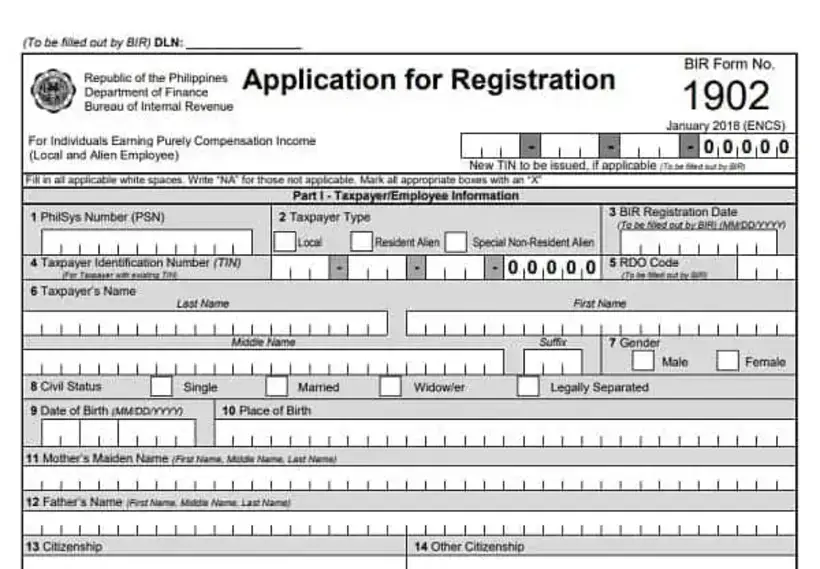
To ensure a smooth and accurate completion of BIR Form 1902, it’s important to have the following documentation prepared:
- Two copies of BIR Form 1902: These forms should be duly filled out by both the employee and the employer, or their authorized representative.
- For local employees:
- Birth certificate, which serves as proof of birth date and personal identification.
- Community tax certificate (also known as a cedula) or a valid ID that displays the employee’s name, date of birth, and current address.
- For married local employees: A copy of the marriage certificate is required to validate the marital status.
- For foreign employees:
- Passport: To establish their identity.
- Working permit or a photocopy of the received Application for Alien Employment Permit (AEP) from the Department of Labor and Employment (DOLE). This documentation is crucial for foreign nationals working in the Philippines to demonstrate their legal right to be employed in the country.
Procedures for Submitting BIR Form 1902 for Domestic and International Workers in the Philippines
Employee Registration Process
1. Notifying Your Employer
Before initiating your Tax Identification Number (TIN) registration, it is crucial to notify your employer of your need for a TIN. Your employer plays an instrumental role in facilitating this process, so clear communication is key.
2. Requesting BIR Form 1902
To begin the registration process, reach out to your Human Resources (HR) department or relevant personnel in your organization to obtain two copies of BIR Form 1902. Ensure that these forms are completed with the necessary employer information.
3. Completing and Submitting BIR Form 1902
With the forms in hand, proceed to fill out BIR Form 1902 accurately and thoroughly. Once completed, you can then submit all the required documentation and forms to the Regional District Office (RDO) that corresponds to your employer’s location.
4. Verification and TIN Generation
After submission, the RDO will verify your application, and upon successful verification, your TIN will be generated. This process may take some time, so patience is essential.
5. Receiving Your TIN
Once your TIN is generated and the verification process is complete, you will receive your TIN and an official copy of your BIR Form 1902 from the RDO.
6. Submission to Your Employer
Lastly, it is important to provide a copy of BIR Form 1902 to your employer, ensuring that they have a record of your registration.
Employer Registration Process for Employees
1. Filling Out Part IV of BIR Form 1902
Employers must complete Part IV of BIR Form 1902 and sign it personally or designate an authorized representative within the organization for this purpose. This is a crucial step as it enables the employer to facilitate their employees’ TIN registration.
2. Providing BIR Form 1902 to Employees
Employers should then provide two copies of the completed BIR Form 1902 to employees who do not possess a TIN. These forms are necessary for the employees to complete their TIN registration.
3. Submitting Employees’ Documentation
Accomplished copies of BIR Form 1902, along with the TIN application requirements received from newly hired employees, should be submitted to the RDO that corresponds to the employer’s location. This ensures that the employees’ TIN registration process is properly initiated.
4. Receiving Employees’ TINs
Once the registration process is completed by the employees, the RDO will generate their TINs and return these, along with copies of their BIR Form 1902, to the employer.
This structured approach to TIN registration benefits both employees and employers, ensuring compliance with tax regulations and facilitating a streamlined registration process.