

The DOST scholarship program holds a coveted status in the Philippines, boasting a remarkable reputation for its esteemed benefits that captivate the aspirations of countless Filipino students. Year after year, a multitude of eager candidates engage in fierce competition, all seeking to secure a coveted spot among the limited scholarship opportunities.
In this article, we endeavor to offer invaluable guidance and insights for those aspiring to become DOST scholars, illuminating the path to academic excellence and personal growth that this prestigious program offers.
What Do the DOST Scholarship Programs Entail?
The Department of Science and Technology-Science Education Institute (DOST-SEI) in the Philippines offers a range of prestigious scholarships for both college and graduate students pursuing studies in the fields of science and technology.
These scholarships provide significant financial support and open doors to academic and research opportunities. In this section, we will delve into the eligibility criteria and the two main undergraduate scholarships offered by DOST-SEI.
Eligibility for Graduating Senior High School Students
DOST-SEI scholarships begin by targeting the country’s promising students while they are still in senior high school. To be eligible for these scholarships, students must meet specific criteria, including a strong aptitude for science and mathematics. It’s a crucial starting point for young talents to embark on a journey of academic and career excellence in the fields of science and technology.
Two Main DOST-SEI Undergraduate Scholarships
The DOST-SEI offers two primary undergraduate scholarships, each designed to support different types of students in science and technology fields:
RA 7687 Scholarship for Financially Challenged Students in Science, Math, or Engineering
This scholarship is aimed at students with a passion for science, mathematics, or engineering who come from financially disadvantaged backgrounds. It provides essential financial support to help these students pursue their dreams of higher education and contribute to the development of the Philippines through their scientific knowledge and skills.
DOST-SEI Merit Scholarship for High Aptitude in Science and Math
Unlike the RA 7687 scholarship, the DOST-SEI Merit Scholarship doesn’t consider family income exceeding the poverty threshold. Instead, it focuses on high-achieving students who demonstrate exceptional aptitude in science and mathematics.
This scholarship recognizes and nurtures the best scientific and mathematical talents in the country, providing them with the resources they need to excel academically and make valuable contributions to the field of science and technology.
Who Meets the Qualifications for Applying to the DOST Scholarship Program?
DOST scholarships offer invaluable opportunities for Filipino students to pursue their academic dreams in the fields of science and technology. There are two main scholarship programs, each with its own set of qualifications, designed to cater to different groups of aspiring scholars.
For R.A. 7687 Scholarship
- Natural-born Filipino Citizen: To be eligible for the R.A. 7687 scholarship, an applicant must be a natural-born Filipino citizen, emphasizing the commitment to support local talent in the field of science and technology.
- Socio-economic Criteria: The applicant’s family must meet specific socio-economic criteria, which include annual income, properties, and the employment status of the parents. This criterion ensures that scholarships are directed towards financially challenged students who are passionate about science, math, or engineering.
- Academic Excellence: Applicants should be graduating senior high school students specializing in STEM (Science, Technology, Engineering, and Mathematics) or be among the top 5% of their class in non-STEM senior high school programs. This highlights the importance of academic prowess in securing the scholarship.
- Good Moral Character and Health: Applicants must exhibit good moral character and maintain good health to be considered for the scholarship program. These qualities reflect the holistic development of scholars.
- DOST-SEI Examination: Only first-time takers of the DOST-SEI examination are eligible to apply for the R.A. 7687 scholarship, emphasizing fairness and equal opportunities for all students.
- Residency Verification: Applicants must be residents of a municipality verified by the barangay, ensuring that the scholarships primarily benefit students in specific geographical areas.
- Passing the S&T Scholarship Examination: Being a qualifier of the S&T scholarship examination is an essential qualification for the R.A. 7687 scholarship, demonstrating a high level of competence and knowledge in science and technology.
For DOST-SEI Merit Scholarship
- Natural-born Filipino Citizen: Like the R.A. 7687 scholarship, the DOST-SEI Merit Scholarship also requires applicants to be natural-born Filipino citizens.
- Socio-economic Status Not Considered: One significant difference between the two scholarship programs is that the DOST-SEI Merit Scholarship does not consider socio-economic status, making it available to a wider range of students.
- Academic Excellence: Just like the R.A. 7687 scholarship, applicants should be graduating senior high school students specializing in STEM or be among the top 5% of their class in non-STEM senior high school programs.
- Good Moral Character and Health: Good moral character and good health remain important qualifications for the DOST-SEI Merit Scholarship, ensuring that scholars represent a well-rounded and exemplary group of students.
- DOST-SEI Examination: Similar to the R.A. 7687 scholarship, only first-time takers of the DOST-SEI examination are eligible for the DOST-SEI Merit Scholarship.
- Residency Verification: Applicants must be residents of a municipality as attested by the barangay, making sure that the scholarships reach students in specific areas across the Philippines.
- Passing the S&T Scholarship Examination: Qualifying for the S&T scholarship examination is a fundamental requirement for the DOST-SEI Merit Scholarship, emphasizing the importance of academic excellence and a deep passion for science and technology.
Which Schools Are Accredited by DOST Scholarship for DOST Scholars?
DOST scholarships provide students with a valuable opportunity to pursue their education in accredited institutions that excel in the fields of science and technology. These scholarships can be utilized at a range of esteemed institutions, including:
- State Universities and Colleges: DOST scholars have the privilege of studying at state universities and colleges, which are known for their commitment to quality education and research in science and technology.
- CHED Centers of Excellence or Centers of Development: The Commission on Higher Education (CHED) designates certain institutions as Centers of Excellence or Centers of Development in specific fields. DOST scholars can benefit from the expertise and resources offered at these designated centers, fostering their academic and research potential.
- Institutions with FAAP Level III Accreditation: Institutions accredited by the Federation of Accrediting Agencies of the Philippines (FAAP) at Level III maintain the highest standards of academic excellence. DOST scholars can choose to enroll in these accredited institutions to receive a top-tier education and research opportunities in science and technology.
What Are the Priority Courses for DOST Scholarships?
The DOST-SEI Scholarship offers invaluable opportunities for students in specific priority programs that are crucial for the nation’s development. However, the specific list of priority courses may vary and is subject to change over time.
To ensure accuracy and up-to-date information, it is advisable to refer to official DOST sources for the most current list of priority courses, which will provide aspiring scholars with a clear understanding of the fields and programs eligible for the scholarship.
This ensures that students are well-informed about the courses that align with the DOST’s mission and vision for the advancement of science and technology in the Philippines.
- Aeronautical Engineering
- Aerospace Engineering
- Agribusiness
- Agribusiness Management
- Agricultural and Biosystems Engineering
- Agricultural Biotechnology (UP Systems only)
- Agricultural Chemistry
- Agricultural Economics
- Agricultural Engineering
- Agricultural Technology
- Agriculture
- Animal Husbandry
- Animal Science
- Applied Mathematics
- Applied Physics
- Architecture
- Astronomy
- Biochemistry
- Biology
- Ceramics Engineering
- Chemical Engineering
- Chemistry
- Civil Engineering
- Clothing Technology
- Community Nutrition
- Computer Engineering
- Computer Science
- Doctor of Veterinary Medicine
- Electrical Engineering
- Electronics and Communications Engineering
- Electronics Engineering
- Environmental Science
- Fisheries
- Food Technology
- Forestry
- Geodetic Engineering
- Geography
- Geology
- Geothermal Engineering
- Health Science
- Human Biology
- Industrial Design
- Industrial Engineering
- Information and Communications Technology
- Information System
- Information Technology
- Instrumentation and Control Engineering
- Life Sciences
- Management Information Systems (4 years)
- Manufacturing Engineering
- Marine Biology
- Marine Science
- Materials Engineering
- Mathematics
- Mechanical Engineering
- Mechatronics Engineering
- Medical Laboratory Science
- Medical Technology
- Metallurgical Engineering
- Meteorology
- Microbiology
- Mining Engineering
- Molecular Biology and Biotechnology
- Nutrition
- Nutrition and Dietetics
- Packaging Engineering
- Petroleum Engineering
- Pharmaceutical Sciences
- Pharmacy (4 years)
- Pharmacy Major in Clinical Pharmacy (5 years)
- Physics
- Psychology (BS program)
- Public Health
- Science Teaching (Biology, Chemistry, Physics, Physical Science, Biology and Chemistry, Science)
- Speech Pathology
- Statistics
These are just a selection of the priority courses available for DOST scholars. It’s important to note that pursuing a non-priority program, even if you qualify for the scholarship, would mean you are ineligible for the benefits of the DOST-SEI Scholarship. So, aspiring scholars should carefully choose their field of study from the official list of priority courses to maximize the advantages offered by this prestigious scholarship.
What Are the Benefits of the DOST Scholarship Program?
The DOST scholarship program offers a comprehensive range of financial support and benefits to college students pursuing studies in science and technology fields. These incentives aim to alleviate the financial burdens that students often face during their academic journey, fostering an environment where scholars can fully focus on their education and research.
Financial Support for College Students
- Tuition Fee Subsidy: DOST scholars in private Higher Education Institutions receive an annual subsidy of Php 40,000, significantly reducing the cost of tuition.
- Book Allowance: Students are provided with a Php 10,000 book allowance per academic year, ensuring they have the necessary learning materials and resources.
- Group Health and Accident Insurance: The premium for health and accident insurance is covered, assuring scholars’ well-being in case of unforeseen circumstances.
- Transportation Allowance: For students studying outside their home province, the program offers a valuable economy-class round trip fare, making education more accessible.
- Monthly Living Allowance: DOST scholars receive a monthly living allowance of Php 7,000, which eases the financial strain and allows them to cover essential expenses.
- Thesis Allowance: A thesis allowance of Php 10,000 is provided to support scholars in their research endeavors.
- Graduation Allowance: Upon completion of their studies, scholars receive a graduation allowance of Php 1,000, recognizing their academic achievements.
- PE/MS Uniform Allowance: For Physical Education and Military Science uniforms, students receive a Php 1,000 allowance, ensuring they have the appropriate attire for their coursework.
Additional Benefits for Summer Classes
For scholars who include summer classes in their curriculum, the DOST scholarship program extends its support with these benefits:
- Tuition and Other School Fees: A subsidy of Php 1,500 for tuition and other school fees during summer classes, lightening the financial load during this additional academic period.
- Book Allowance: An additional book allowance of Php 500 for summer classes helps cover the cost of supplementary learning materials.
- Monthly Living Allowance: During summer sessions, scholars continue to receive their monthly living allowance of Php 7,000, enabling them to maintain their focus on their studies.
These comprehensive benefits provided by the DOST scholarship program demonstrate the government’s commitment to nurturing the nation’s future scientists and technologists, ensuring they have the necessary resources to excel in their academic pursuits and contribute to the advancement of science and technology in the Philippines.
Advantages and Disadvantages of DOST Scholarship Recipients
Advantages of Being a DOST Scholar
Being a recipient of the DOST scholarship offers a multitude of advantages, shaping not only your academic journey but also your future career and personal development. Here are some key benefits:
- Enhanced Credibility: The DOST scholarship enhances your credibility, adding a prestigious accolade to your resume and CV. This recognition can provide a significant advantage when applying for jobs, internships, or admission to graduate school, setting you apart as a high-achieving student in the field of science and technology.
- Financial Independence: The financial support provided by the DOST scholarship encourages financial independence by teaching budgeting and prudent money management. It empowers scholars to make responsible financial decisions and prepares them for financial challenges they may face in the future.
- Scholar Community: DOST scholars have the opportunity to connect with other scholars through dedicated scholars’ organizations. These communities offer invaluable support for academics, personal development, and well-being, creating a sense of belonging and camaraderie among like-minded individuals.
- Networking Opportunities: The DOST scholarship program provides scholars with networking opportunities, allowing them to connect with alumni who have established careers in various companies and industries. These connections can be instrumental in future job hunting and career advancement, as they open doors to mentorship, guidance, and potential employment opportunities.
Disadvantages of Being a DOST Scholar
While the DOST scholarship program offers numerous benefits, there are certain challenges and restrictions that scholars should be aware of. Here are some of the drawbacks associated with being a DOST scholar:
- Academic Pressure: DOST scholars often face intense pressure to maintain their scholarships by consistently achieving high grades, particularly in challenging and demanding courses. This can lead to academic stress as scholars strive to meet the program’s academic expectations while juggling coursework and other responsibilities.
- Return Service Agreement (RSA): One significant drawback is the requirement to fulfill the Return Service Agreement (RSA). This agreement commits scholars to serve the country for a specific number of years after completing their studies, limiting the possibility of working abroad or pursuing international opportunities. While this serves the national interest, it can be a constraint on personal and career choices for some scholars, restricting their ability to explore global employment prospects.
What Are the Requirements for the DOST Scholarship?
To ensure a successful application for the DOST scholarship, you’ll need to provide specific documents and information. Meeting these requirements is crucial to your eligibility for this prestigious scholarship program. Here’s a breakdown of the essential documents and online application information you’ll need:
Documentary Requirements
- Certificate of Good Moral Character (Form C): A document attesting to your good moral character, indicating your ethical and behavioral conduct.
- Certificate of Good Health (Form D): A certificate verifying your overall health, ensuring that you are physically fit for your academic pursuits.
- Principal’s Certification (Form E1 or E2): Certification from your school’s principal that acknowledges your eligibility for the scholarship.
- Certificate of Residency (Form F): A document confirming your place of residence.
- Parent’s Certification (Form G): A certification provided by your parents, indicating that they have no pending immigration applications.
- Applicant’s Certification (Form H): A certification from you, the applicant, confirming that you have not previously been a DOST scholar.
- Declaration of the Applicant and the Parent/Legal Guardian (Form I): A document attesting to your commitment to abide by the DOST scholarship guidelines.
- Certified Copy of Permanent Student Record (Form 137): This record should include your grades for the 9th, 10th, and 11th grades.
- Recent Passport Size Picture: Ensure it adheres to specific formatting and positioning requirements.
- Photocopy of Birth Certificate: A copy of your birth certificate for verification purposes.
- Parent’s or Legal Guardian’s Financial Documents: Documents like Income Tax Returns and Employment Contracts may be required to assess your family’s financial status.
Instructions for Document Submission
To streamline the document submission process for your DOST scholarship application, follow these instructions:
- Download Requirements #1 to #7: Access and download the specified forms (requirements #1 to #7) via the E-Scholarship Application System to ensure you have the necessary documents at your disposal.
- Print on A4 Size Bond Paper: Print each form on A4 size bond paper to maintain the required document format.
- Authorized Signatures: Make sure that each form is duly signed by the authorities indicated on the forms. This step is crucial to validate the authenticity of the documents.
- Scanning or Clear Photos: After completing and obtaining the required signatures, scan the documents or take clear photos of each form. These scanned or photographed copies will be uploaded during the online application process. Ensure that the images are of high quality and legible to facilitate a smooth application experience. By following these steps, you’ll be well-prepared to submit the necessary documentation for your DOST scholarship application.
Online Application Information
- Father’s and Mother’s Annual Gross Income (or Legal Guardian’s Income): Providing accurate income details is essential for determining eligibility.
- Contributions from Outside Sources to Your Family: Include the amount, source, and purpose of any financial contributions your family receives from outside sources.
- Details about Any Agricultural Lands Owned by Your Family (if applicable): This information helps in assessing your family’s assets.
- Information about Vehicles Owned by Your Family (if applicable): Include details about the type, year, and model of any vehicles your family owns.
For the online application process, you’ll also need:
- A valid email address
- An active mobile number
- A stable internet connection
Make sure to download and complete the required forms through the E-Scholarship Application System and upload them during the online application process. Complying with these documentary requirements and online application details is essential to ensure your eligibility for the DOST scholarship.
How Do I Apply for the DOST Scholarship Program?
Option 1: Manual Application for DOST Scholarship
For applicants who prefer the traditional approach, a manual application process for the DOST scholarship is available. Here’s a step-by-step guide on how to apply for the scholarship manually:
1. Obtain an Application Form
- NCR Applicants: If you reside in the National Capital Region (NCR), you can obtain the application form at the Science Education Institute (SEI), located on the 2nd level of the Science Heritage Building within the DOST Compound in Bicutan, Taguig City.
- Applicants from Other Regions: If you are applying from regions outside the NCR, you can obtain the application form at any DOST Regional Office or Provincial Science and Technology Center in your respective region.
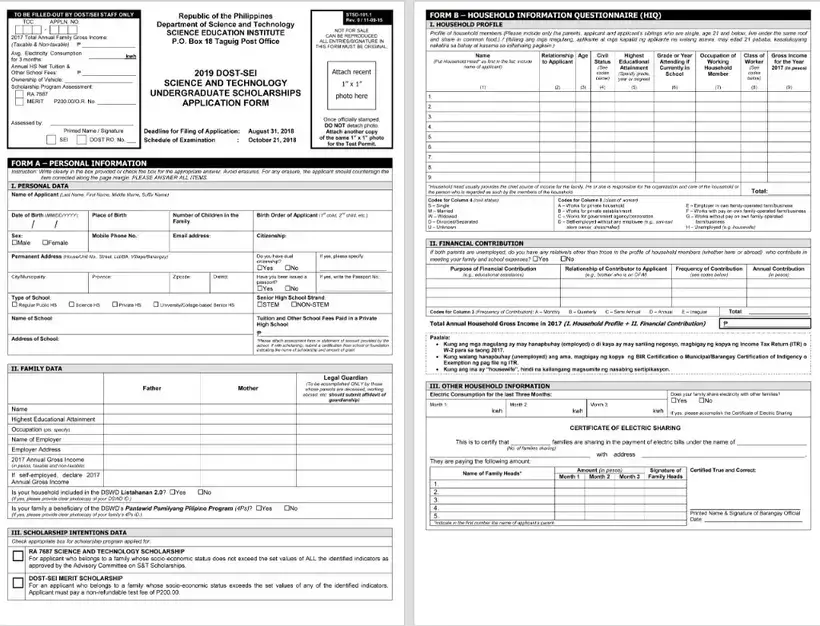
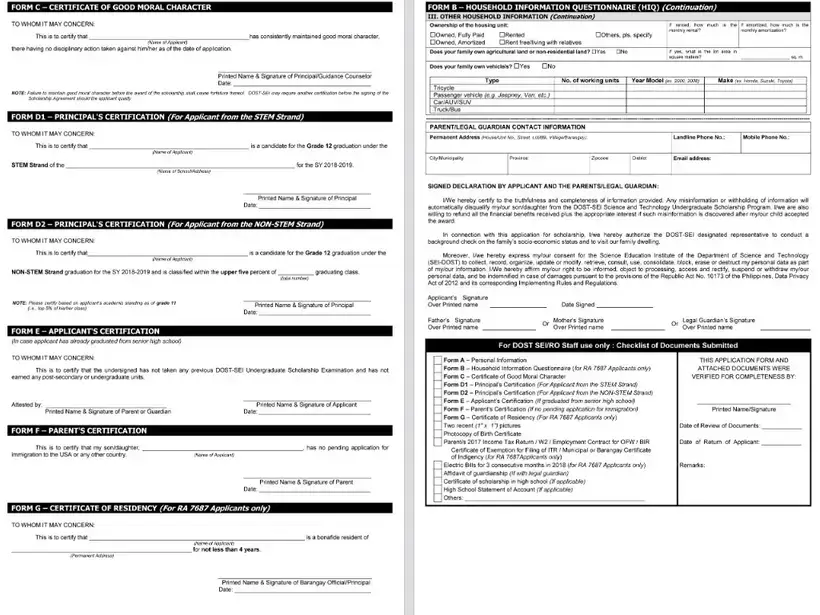
2. Submit the Accomplished Form
- Complete the application form with the required information and documentation.
- Submit the accomplished form, along with all necessary attachments, either at the Science Education Institute or the nearest DOST Regional Office/Provincial Science and Technology Center in your region. This ensures that your application is in the hands of the relevant authorities.
3. Wait for Your Test Permit
- After submitting your application, you will need to patiently wait for your test permit.
- The test permit will be sent to you or your school principal, confirming the details of your examination.
- If you have not received your test permit a week before the scheduled examination, make inquiries at the DOST Regional Office or the designated test center, ideally a day before the examination date.
This manual application option offers a traditional way of applying for the DOST scholarship, ensuring that your application reaches the right authorities for processing. It’s important to adhere to the specified guidelines to avoid any complications in the application process.
Option 2: Apply for the DOST Scholarship Online

Applying for the DOST scholarship online is a streamlined and convenient process. Here’s a step-by-step guide on how to submit your application electronically:
1. Access the DOST-SEI Undergraduate E-Scholarships Application System
Begin the application process by accessing the DOST-SEI Undergraduate E-Scholarships Application System, available online.
2. Register Using Your Valid Email Address
Register for an account using your valid email address. Upon registration, a verification message will be sent to the provided email.
3. Enter the Eligibility Module
Access the link provided in the email notification to enter the Eligibility Module. It’s essential to ensure your eligibility, as you may receive a disqualification notice if you do not meet the specified criteria.
4. Provide Required Information
In the subsequent modules, provide all the required information, including personal data, family data, financial contributions, household information, details about your school, and your academic grades. Ensure that all the information is accurate and complete.
5. Upload Documentary Requirements
Upload the necessary documentary requirements in the accepted file formats, which include .jpeg, .png, .bmp, and .pdf files. Make sure to adhere to the specified formats and ensure the documents are clear and legible.
6. Submit Your Application
After completing all modules and uploading the required documents, press the “Submit” button to finalize your application. It’s crucial to double-check the accuracy of your documents and information before submission.
7. Confirmation Email
Expect to receive an email confirming the receipt of your application. This confirmation ensures that your application has been successfully submitted.
8. Await Scholarship Qualification Announcement
Scholarship qualifiers will be announced on the DOST-SEI website, typically around May of the following year, providing applicants with the outcome of their scholarship application.
Applying for the DOST scholarship online streamlines the process, making it accessible to a wider range of students. By following these steps and adhering to the specified guidelines, you can ensure a smooth and successful application for this prestigious scholarship program.
Additional Information
Applying for the DOST scholarship in 2022 involves some additional information and considerations. Here’s what you need to know:
Requesting Inclusion of Your School
- If your school from Grade 9 to Grade 12 is not listed in the E-scholarship system, you can take steps to have it included. Here’s how:
- Contact DOST Staff in Your School Region: Reach out to a DOST staff member in your school’s region to request the inclusion of your school.
- Provide Essential Information: When making the request, include details such as the Scholarship Program (Undergraduate), the complete name and address of your school, the name of the School Registrar, and contact information, including a landline, mobile number, and email address.
- Send the Information: Send this information to the designated email address for your school’s region. The contact information for your specific region will be listed in the provided table.
- Once your school’s details are added to the system, you’ll be informed of the successful inclusion.
Here are the contact details for each region:
- CAR (Cordillera Administrative Region): dostcarscholarshipunit@gmail.com
- Region 1: scholarship@region1.dost.gov.ph
- Region 2: dost02scholarship@gmail.com
- Region 3: dost3scholarship.undergrad@gmail.com
- Region 4A: dostscho4a@gmail.com
- Region 4B (Mimaropa): scholarship@mimaropa.dost.gov.ph
- Region 5: dost5.scholarship@gmail.com
- Region 6: scholarship@ro6.dost.gov.ph
- Region 7: dost7scholarship@gmail.com
- Region 8: dost8scholarshipunit@gmail.com
- Region 9: scholarship@ro9.dost.gov.ph
- Region 10: scholarship@region10.dost.gov.ph
- Region 11: scholarshipxirecords2021@gmail.com
- Region 12: scholarship@region12.dost.gov.ph
- CARAGA: dost13scholarship@caraga.dost.gov.ph
- BARMM (Bangsamoro Autonomous Region in Muslim Mindanao): aabdularahim71@gmail.com
- NCR (National Capital Region): ncrundergrad@gmail.com
Note: If your school is not available in the system, avoid selecting a different school to proceed with your application. Such a practice will hinder your ability to advance to the next stages of the application process. It’s vital to ensure that your school information is accurately recorded to prevent complications during your application process.
Use of Certified Downloadable Grades
For your scholarship application, you can utilize certified downloadable grades from your school’s portal. However, it’s essential that these grades reflect your name, strand (e.g., STEM, ABM, HUMSS), and the school’s name. Ensuring that this information is accurately reflected in the grades you submit is crucial.
Keeping Hard Copies of Requirements
While the submission of documentary requirements is online for the 2022 DOST Scholarship, it’s recommended that you maintain a hard copy of your requirements. This precaution is advised in case the circumstances change, and hard copies are requested later due to unforeseen health situations or other reasons. Having physical copies readily available can help you meet any unexpected requirements.
By following these guidelines and making the necessary requests for school inclusion, you can ensure a smooth application process and have the assurance of preparedness in case of unforeseen circumstances.
What Does the DOST Qualifying Exam Cover?
The DOST qualifying exam encompasses a wide range of subjects and topics to assess the knowledge and aptitude of examinees. Here’s an overview of what the exam covers:
1. Science
This subtest evaluates your scientific understanding through situational scenarios, graph interpretation, and calculations. Topics include Chemistry, Physics, Biology, and Earth Science.
- Chemistry: Atoms, Elements, Compounds, Periodic Table, Mixtures, Chemical Bonds, Balancing Equations.
- Physics: Distance, Velocity, Work, Energy, Heat, Mechanics, Waves, Gravity, and more.
- Biology: Cell Biology, Genetics, Biomes, Photosynthesis, and more.
- Earth Science: Layers of the Earth, Plate Tectonics, Atmosphere, Weather, and more.
2. Mathematics
This subtest measures quantitative abilities based on high school mathematics curriculum, covering Algebra, Geometry, Trigonometry, Combinatorics, Probability, Business Mathematics, Set Theory, and Logic.
3. English
This subtest assesses English language proficiency, including grammar, vocabulary, and reading comprehension.
- Grammar and Syntax: Subject-Verb Agreement, Parts of Speech, Verb Tenses, and more.
- Vocabulary: Context Clues for Word Meaning.
- Reading Comprehension: Main Ideas, Paraphrasing, and Pattern of Paragraph Development.
4. Logical Reasoning
Critical thinking skills are tested, including verbal analogies and visual pattern recognition (2D and 3D).
5. Mechanical-Technical
Evaluates understanding of physics and mechanical relationships, with questions like gear rotation scenarios.
For success in the DOST qualifying exam, thorough preparation, practice, and familiarity with these subject areas are essential. Regular practice can help you become adept at recognizing common patterns and solving problems in the various subtests.
How Can I Succeed in the DOST Scholarship Qualifying Exam?
When aspiring to secure the prestigious DOST scholarship, meticulous preparation and the right approach to the qualifying exam are paramount. To enhance your likelihood of success in this competitive examination, it’s imperative to go beyond merely depending on your existing knowledge or luck.
As you embark on this crucial journey, prioritize diligent preparation and consider seeking guidance from experienced DOST scholars who can offer invaluable insights and effective strategies. With these key elements in mind, you’ll be well-equipped to take on the challenge and increase your chances of attaining the DOST scholarship.
Preparation Tips Before the Exam
Preparing for the DOST scholarship qualifying exam requires a well-structured approach. Here are essential steps and tips to optimize your readiness:
- Start Early – Utilize Your Summer Break: Don’t wait until the last minute. Begin your preparation during your summer break, giving you ample time to review and cover the necessary subjects.
- Strengthen Basic Concepts with Online Resources: Utilize free online resources to reinforce your understanding of basic concepts. There are various educational websites, video tutorials, and study materials available that can aid in your preparation.
- Practice Under Time Pressure: Familiarize yourself with the format of the exam by practicing answering sample questions under time pressure. This will help you get accustomed to the pacing required during the actual exam.
- Identify Weaknesses and Focus on Challenging Topics: Identify your weaknesses by evaluating challenging subjects or topics. Allocate more time to review and practice in these areas to ensure comprehensive preparation.
- Create a Formula Sheet for Quick Reference: Create a concise “formula sheet” containing key formulas, equations, and concepts that you can quickly reference during the exam. This can be especially helpful for math and science sections.
- Record What You Learn: Writing down what you’re learning can aid in memory retention, particularly for conceptual topics. Summarize important points, key terms, and concepts in your notes.
- Enhance English Reading Skills: To handle the English section effectively, practice reading and scanning long English texts. Develop the skill to quickly grasp the main ideas and details within passages.
- Utilize Available Study Materials: Take advantage of free study materials, including the DOST Undergraduate Scholarship Primer, SIYENSYA-bilidad, and college entrance exam reviewers. These resources are designed to assist you in your preparation and provide valuable insights into the exam’s content.
By following these preparatory steps and tips, you can enhance your readiness and increase your chances of success in the DOST scholarship qualifying exam. Effective preparation and a structured approach will be your keys to achieving your academic goals.
Maximizing Your Performance on the Day of the DOST Scholarship Qualifying Exam
On the day of the DOST scholarship qualifying exam, it’s crucial to be well-prepared not only in terms of your knowledge but also in your approach and mindset. Here are essential guidelines to help you perform at your best:
- Arrive Early and Stress-Free: Arriving at your testing center well in advance is essential to minimize stress and distractions. Aim to reach the venue early, ensuring you have ample time to complete registration procedures and settle in. By doing so, you can start the exam with a calm and focused mindset.
- Maintain Composure and Manage Your Time: Stay calm throughout the exam, and maintain a steady pace when answering questions. The DOST scholarship qualifying exam questions are designed to be manageable. If you encounter a particularly challenging question, don’t panic. Instead, consider skipping it temporarily and returning to it if time permits. Effective time management is crucial to ensure you can answer as many questions as possible within the allocated time.
- Fuel Your Brain with Healthy Snacks and Hydration: Proper nutrition is key to maintaining mental alertness and preventing fatigue during the exam. Before the test, consume a healthy, energy-releasing snack and drink water to keep your brain active and hydrated. Avoid heavy or greasy foods that could lead to sluggishness. Opt for options that provide sustained energy, such as fruits, nuts, or whole-grain snacks.
By adhering to these guidelines, you can optimize your performance on the day of the DOST scholarship qualifying exam. Being punctual, maintaining composure, and ensuring your brain is adequately fueled will contribute to a smoother and more productive testing experience. Remember that staying focused and staying hydrated are key to your success on this important day.
How Can You Maintain Your DOST Scholarship?
Maintaining your DOST scholarship is just as crucial as obtaining it. To ensure your continued eligibility and benefit disbursement, consider these valuable recommendations from experienced DOST scholars:
- Submit Necessary Documents Promptly: Each semester, make it a priority to submit the required documentary requirements, such as the University Registration Form, within the specified deadlines. This proactive approach ensures the timely disbursement of your scholarship benefits and avoids any unnecessary complications.
- Cultivate Effective Study Habits: Consistency and discipline in your academic endeavors are essential for maintaining good grades. Embrace a study routine that involves daily review, avoiding procrastination, and effectively organizing your notes. These practices can help you stay on top of your coursework and excel in your studies.
- Prioritize Your Well-Being: Striking a balance between academic performance and personal well-being is crucial. While your studies are paramount, it’s equally important to take breaks and reward yourself for your accomplishments. This approach will help you avoid burnout and maintain your motivation throughout your academic journey.
- Uphold Academic Integrity: Upholding the principles of academic integrity is not just ethical but also vital for retaining your DOST scholarship. Avoid engaging in academic dishonesty, such as cheating and plagiarism, as these actions can lead to the loss of your scholarship. It’s essential to maintain the highest ethical standards in your academic work.
By following these tips, you can ensure the continued success of your DOST scholarship. Timely document submission, effective study habits, a balance between academic and personal life, and academic integrity are all essential components of a fruitful and sustainable scholarship experience.
Is There a DOST Scholarship Available for Studying Abroad?
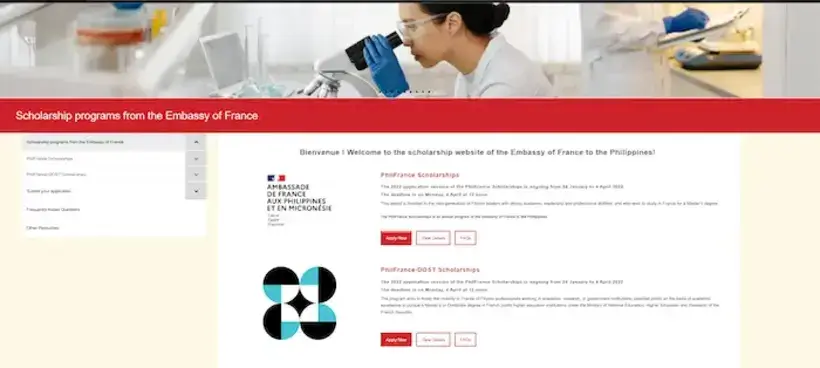
For Filipino students aspiring to pursue their postgraduate studies abroad, there is a specific DOST scholarship opportunity available known as the PhilFrance-DOST Scholarship. This program offers the chance to study in France, providing exceptional opportunities for Filipino professionals to pursue Master’s or Ph.D. degrees at French public universities, with a focus on various fields like agriculture, bioengineering, health and medical research, and many more.
Benefits of the PhilFrance-DOST Scholarship
The PhilFrance-DOST Scholarship offers a range of benefits to support Filipino scholars during their overseas education journey. These benefits are provided by both the DOST-SEI and the French Embassy to ensure a conducive and rewarding academic experience:
From DOST-SEI
- Monthly Allowance: Scholars receive a monthly financial allowance to cover living expenses and day-to-day costs while studying in France.
- One Round-Trip Ticket: The scholarship includes a round-trip ticket to facilitate scholars’ travel to and from France.
- Relocation Allowance and Pre-Travel Expenses: Scholars receive financial assistance to help cover the expenses associated with relocating to France, including pre-travel arrangements.
From the French Embassy
- Exemption from Public University Registration Fees: The scholarship covers the cost of public university registration fees, making higher education in France more accessible.
- Health Care Package: Scholars are provided with access to a health care package to ensure their well-being during their stay in France.
- Priority for Student Housing Facilities: The program offers priority for student housing facilities, simplifying accommodation arrangements for scholars.
- French Visa Application Exemption: Scholars are exempt from certain French visa application requirements, streamlining the administrative aspects of their overseas education.
The PhilFrance-DOST Scholarship is a valuable opportunity for Filipino students seeking to pursue advanced studies in a range of fields while benefiting from financial support and other assistance to make their international academic experience successful and fulfilling.
How Can I Apply for the PhilFrance-DOST Scholarship?
If you’re interested in pursuing postgraduate studies in France through the PhilFrance-DOST Scholarship, follow these steps for a successful application:
Step 1: Complete the Requirements
To kick-start your application, make sure you have the necessary documents and materials in order. These include:
- DOST Application form
- Birth Certificate
- Endorsement from two former college professors
- Medical certificate
- NBI clearance
- Budgetary requirements
- Re-entry plan
Additionally, the French embassy will require:
- A two-page CV
- A 500-word academic essay explaining your motivation to study in France and its potential benefits to the Filipino community
- Transcript of records
- Program of study
- Letter of acceptance from a French public university
Detailed information on documentary requirements is accessible through the provided link.
Step 2: Apply Online
Complete the online application form and upload the required documents to the PhilFrance-DOST scholarship online portal.
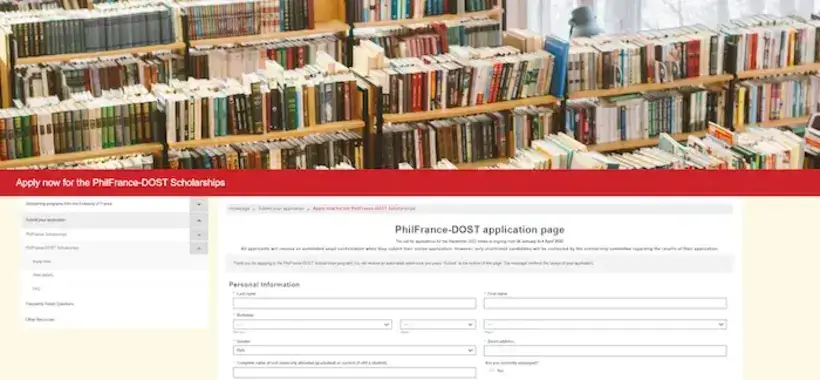
Upon successful submission, you’ll receive an automated email confirmation. The scholarship committee will contact only the shortlisted candidates for further proceedings.
Additional Information
Applicants who are granted the scholarship must commit to returning to the Philippines and serving their institution within their specialization for a period that’s twice the length of the scholarship duration upon completing their degree. The qualified candidates should pursue either an MS or Ph.D. program on a full-time basis, with a maximum duration of 24 months for an MS degree and 36 months for a Ph.D.
Is There a DOST Scholarship Program for Medical Students?
If you aspire to become a Physician-Scientist and are pursuing an MD-PhD in Molecular Medicine, DOST offers a specialized scholarship program designed to support your academic journey. Here are the essential qualifications and requirements for this program:
Qualifications
- Cumulative Grade Point Average (GWA) of 1.75 or Higher: To be eligible for this scholarship, you must maintain a GWA of 1.75 or higher in your previous academic pursuits.
- Background in the Biomedical Field: Applicants must hold a bachelor’s or master’s degree in a biomedical-related field, demonstrating their commitment to the medical and scientific disciplines.
- Successful Entrance Interview: A successful entrance interview with the UP College of Medicine is a crucial part of the application process. The interview helps gauge your readiness and suitability for the MD-PhD in Molecular Medicine Program.
Application Process
- Obtain the Application Form: Start your application by obtaining the necessary forms. You can get the application form from the UP College of Medicine Graduate Office or download it from their official website.
- Submit the Required Documents: Prepare the essential documents, which include the completed application form with an ID picture, photocopy of your admission to graduate school, University Evaluation Sheet, Certified True Copy of Transcript of Records, PSA Birth Certificate, NBI Certificate, Medical Certificate, endorsement letter from two former professors, and a Certificate of Employment if you are currently employed.
- Program of Study/Curriculum: Outline your intended program of study or curriculum for the MD-PhD in Molecular Medicine Program.
By meeting these qualifications and submitting the required documents, you can apply for the DOST scholarship dedicated to future Physician-Scientists. For comprehensive details on this scholarship opportunity, please refer to the official source for additional guidance and instructions.
Exploring DOST Scholarship Programs for Graduate Students
If you’re an aspiring graduate student, you’ll be pleased to know that DOST offers various scholarship programs tailored to support your academic journey. Here’s a quick overview of some of the options available:
- Accelerated Science and Technology Human Resource Development Program (ASTHRDP): This program aims to develop future leaders in science and technology by providing financial assistance and other forms of support to graduate students pursuing advanced degrees in these fields. The ASTHRDP covers a wide range of disciplines and is offered through numerous partner institutions.
- PhilFrance-DOST Fellowship Program: If you dream of pursuing your graduate studies abroad in France, this scholarship program provides an excellent opportunity. It enables Filipino professionals to pursue master’s or Ph.D. degrees in various scientific and technical fields. The scholarship comes with benefits like monthly allowances and exemption from university registration fees.
- Foreign Graduate Scholarship Program: For those considering graduate studies in foreign countries, DOST offers the Foreign Graduate Scholarship Program. This initiative aims to develop a pool of highly-trained scientists and engineers who can contribute to the country’s research and development efforts.
How to Apply for DOST Graduate Scholarships?
The application process for DOST graduate scholarships may vary depending on the specific program you’re interested in. Here’s a general overview of how to get started:
- Choose the Appropriate Program: First, identify the DOST graduate scholarship program that aligns with your academic and career goals.
- Check Application Requirements: Review the specific application requirements and procedures for the selected scholarship program. Each program may have unique criteria and guidelines.
- Obtain Application Forms: Depending on the program, you’ll need to acquire the relevant application forms. These forms can typically be obtained from designated institutions or universities associated with the scholarship program.
- Submit Required Documents: Prepare and submit all necessary documents, which usually include transcripts, recommendation letters, and other supporting materials as specified in the application requirements.
- Follow Program-Specific Procedures: Be sure to follow the instructions provided by the program for submission and other relevant details.
For more detailed information and specific application guidelines, please refer to the official sources or websites related to the DOST graduate scholarship program of your choice. These resources will provide comprehensive details about eligibility, deadlines, and application procedures.
Can College Students Apply for DOST-SEI S&T Undergraduate Scholarships?
To qualify for DOST Junior Level Science Scholarships, incoming third-year college students enrolling in a DOST priority course should consider the following scholarship programs:

- RA 10612 Program: This scholarship aims to improve Science and Mathematics education in the Philippines by supporting future educators of these subjects. Eligible applicants should express a commitment to teach Science and Mathematics in secondary schools.
- RA 7687 Program: Designed to assist financially disadvantaged students pursuing priority fields in Science and Technology, this scholarship provides support to students facing economic challenges.
- Merit Program: This scholarship is available to students with outstanding proficiency in Science and Mathematics, regardless of their socioeconomic status. Exceptional aptitude in these subjects is the primary qualification for this program.
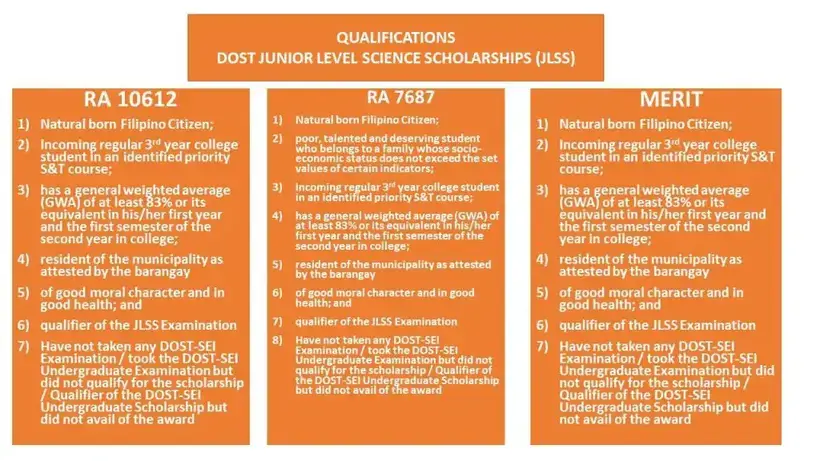
Applicants interested in these scholarships must fulfill specific criteria aligned with their chosen scholarship type.
Navigating the DOST Scholarship Application Process: Tips and Warnings
Applying for the DOST scholarship can be a significant step in your academic journey, but it’s essential to approach the process with a clear understanding of what it entails. Here are some valuable tips and warnings to help you navigate the application process effectively:
Tips for DOST Scholarship Applicants
- Seek Guidance and Study Materials: Don’t hesitate to reach out to your teachers or mentors for guidance and study materials. They can provide valuable insights into the scholarship requirements and help clarify challenging concepts. Utilizing their expertise can enhance your preparation for the qualifying exam.
- Assess Your Commitment: Before diving into the application process, take a moment to reflect on your commitment to becoming a DOST scholar. Understand the responsibilities and trade-offs associated with the scholarship, as it comes with certain academic and service obligations. Ensuring that you are genuinely committed will help you make the most of this opportunity.
Warnings for DOST Scholarship Applicants
Beware of Misinformation: In the age of social media, it’s essential to exercise caution when exploring online resources related to the DOST scholarship. Be particularly wary of Facebook pages and groups that may disseminate fake information about the scholarship and related employment opportunities. Verify information through official DOST channels to avoid falling victim to misinformation.
These tips and warnings aim to guide you through the DOST scholarship application process and protect you from potential pitfalls. By seeking assistance and understanding the commitment required, you can enhance your chances of success while staying vigilant against misinformation in online spaces.
Frequently Asked Questions
1. Duration of DOST Scholarship Support: How Long Does It Last?
DOST-SEI provides invaluable support to scholars throughout their academic journey. The duration of DOST scholarship support is directly aligned with your approved Program of Study (POS) for your chosen degree. For example, if you’re enrolled in a four-year DOST priority program, you can expect continuous support for the entire four-year duration of your degree program.
2. Timing of DOST Qualifying Exam: When Is It Conducted?
Aspirants often wonder about the timing of the DOST qualifying exam. Typically, the DOST qualifying exam is held in the month of October. However, it’s important to stay updated as the schedule might be subject to change due to various factors and current circumstances.
3. Duration of the DOST Qualifying Exam: How Much Time Is Allotted?
The DOST scholarship exam is a significant step in your journey. The good news is that it’s not overly time-consuming. On average, the DOST qualifying exam lasts for approximately 4 hours. Many examinees find this time frame more than sufficient to comfortably complete the exam, provided they have prepared adequately.
4. Use of Calculators in the Exam: Are Calculators Allowed?
It’s essential to know the rules for the DOST scholarship exam. Calculators are not permitted during the exam. All calculations and mathematical tasks must be completed manually. This is a crucial detail to keep in mind when preparing for the exam.
5. Difficulty Level of the DOST Scholarship Exam: How Challenging Is It?
Prospective scholars often inquire about the difficulty level of the DOST scholarship exam. The exam is designed to assess your knowledge and skills across various subjects. It’s known for its balanced mix of easy and difficult questions. Generally, it’s considered somewhat easier than the UPCAT but more challenging than many standard college entrance exams. Success in the DOST scholarship exam often depends on thorough preparation and access to high-quality review materials. Adequate preparation can significantly boost your chances of excelling in the exam and securing the scholarship.
6. Can DOST scholars change their courses, and if so, what are the conditions?
DOST scholars can shift to another DOST-SEI-approved course no later than the second semester of their second year. If they decide to shift to a 5-year priority course from a 4-year course, the scholarship duration is adjusted to 5 years, including the period spent in the first course. However, shifting to a DOST non-priority course comes with the requirement to refund the total benefits received with 12% interest.
7. Are DOST scholars allowed to receive scholarships from other government agencies?
If a DOST scholar is granted a scholarship by another National Government Agency, they must choose between it and the DOST-SEI scholarship. However, if the scholarship is from a Local Government Unit and its terms do not conflict with the DOST-SEI Scholarship Agreement, scholars can avail of both.
8. How does the DOST scholarship program handle incomplete (INC) or failed grades?
For INC (incomplete) grades, scholars may contact their regional DOST office. Usually, one INC grade is allowed for the first semester, assuming it can be completed in the next semester. If at least two INC grades are incurred, DOST may withhold benefits until they are completed. In the case of failed grades, scholars can file an appeal and may be placed on probation without benefits until they pass the subject in which they failed.
9. What happens if a DOST scholar fails multiple classes in one semester?
Incurring two or more failing grades in a semester is grounds for scholarship termination. However, if the failing grades are due to health problems, scholars may appeal to the DOST-SEI National Technical and Selection Committee (NTSC) for reconsideration.
10. Can DOST scholars take a leave of absence?
Continuing students may file a leave of absence (LOA) by seeking permission from DOST, but they will not receive benefits during the LOA semester.
11. What should DOST scholars do if they wish to pursue graduate studies?
Scholars who wish to pursue graduate studies or enter medical school must send a letter of intent to DOST to defer their Return Service Agreement (RSA). This deferral is pending DOST approval.