

Registering your business with the Department of Trade and Industry (DTI) is often considered the simplest and quickest step in a comprehensive four-step process. This crucial initial phase can be swiftly accomplished, whether you prefer the traditional manual approach or the convenience of online registration, often taking just a day or even less.
The ongoing pandemic posed unique challenges, yet the DTI efficiently managed a notable increase in online business registrations. Prior to the global health crisis, the DTI had registered a mere 1,848 online businesses in March 2020. However, from April to December of the same year, a staggering 86,726 new online businesses joined the DTI’s records.
Whether you’re aspiring to launch a small business or embark on an online selling venture, registering with the DTI is a prudent first step, and there’s even a simplified guide available to facilitate easy business name registration right from the comfort of your own home.
What Constitutes a Business Name?
A business name, according to the DTI’s definition, is a unique identifier for your enterprise, distinct from your birth name. This name serves a pivotal role in all business-related activities, including transactions, receipts, documentation of business dealings, and signage. To successfully register your business with the DTI, it must adhere to a specific structure, consisting of two essential components:
- The Dominant Name: This is the primary and most distinctive part of your business name, which sets your business apart and makes it recognizable. For example, in “Stone Press Content Writing Services,” “Stone Press” serves as the dominant name.
- The Business Name Descriptor: This part of your business name provides a clear description of your business’s nature, products, or services. In the same example, “Content Writing Services” acts as the descriptor, elaborating on the specific offerings of the business. These components work in tandem to create a comprehensive and unique business name that not only identifies your enterprise but also conveys what it does.
Is a Business Name Distinct from a Trade Name?
Businesses often operate under different names for various purposes, which can lead to confusion for entrepreneurs and customers alike. Here, we clarify the distinctions between a business name and a trade name, offering insights into their roles, examples, and the critical protection mechanisms associated with each.
Business Name vs. Trade Name: Unveiling the Definitions
- Business Name: The business name is the formal, legal name under which a company is registered and recognized by government authorities. This name is used in official documents, contracts, and government filings. It serves as the core identifier for the company within the regulatory framework.
- Trade Name (or Brand Name): In contrast, the trade name, often referred to as the brand name, is the name used for marketing, advertising, and public recognition. It is the name that customers associate with the company and its products or services. Trade names are essential for building brand identity and recognition in the marketplace.
Business Name and Trade Name Examples
- Kodak: The business name for the iconic photography company is the Eastman Kodak Company, while the trade name that consumers instantly recognize is simply “Kodak.”
- McDonald’s in the Philippines: The business name for the famous fast-food chain in the Philippines is the Golden Arches Development Corporation, but it is commonly known and marketed as “McDonald’s.”
Different Protection Mechanisms for Business Names and Trade Names
- DTI Permit for Business Names: Business names are protected through registration with the Department of Trade and Industry (DTI). This protection safeguards the exact registered business name, ensuring that others cannot use it in the same jurisdiction or industry.
- Trademark Protection for Trade Names: Trade names, logos, product names, and brand marks require trademark protection, which is granted by the Intellectual Property Office of the Philippines (IPOPHIL). Trademarks offer broader protection and prevent others from using similar names or designs in connection with similar goods or services.
The Significance of Aligning Legal and Brand Identities
It is imperative for businesses to align their legal and brand identities. This alignment not only ensures legal compliance but also safeguards the reputation and recognition of the brand. In practice, IPOPHIL may require details of DTI business name registration when evaluating trademark applications. By registering the business name before pursuing trademark protection, businesses can establish a strong foundation for both their legal and brand identities, ultimately strengthening their presence and protection in the marketplace.
Why is it Important to Register My Business Name with DTI?
When starting a business in the Philippines, registering your business name with the Department of Trade and Industry (DTI) is a fundamental step. It’s essential for a variety of reasons, from distinguishing your enterprise from your personal name to ensuring compliance with legal requirements and protecting your business identity.
Using a Name Other Than True Given Name
- Personal vs. Business Identity: Many entrepreneurs opt to register their business name with DTI to distinguish it from their personal name. This separation allows for clear branding and identification, especially when your business name carries significance in your industry.
Legal Requirement
- Mandatory Compliance: The Business Name Law (Act No. 3883) in the Philippines mandates that any business operating under a name other than the owner’s personal name must register that business name with DTI. Compliance with this legal requirement is vital to avoid legal issues and penalties.
Protection from Name Conflicts
- Name Exclusivity: Registering your business name with DTI grants you exclusive rights to use that name in your specified industry and location. This protection ensures that no other business can use the same name, which is crucial for maintaining your brand identity and reputation.
Exclusion of Trademark Protection
- Separate Trademark Protection: It’s important to note that DTI registration primarily protects your business name for registration and usage within the Philippines. If you want broader protection for your business name, logo, or products, you’ll need to pursue trademark registration with the Intellectual Property Office of the Philippines (IPOPHIL) separately.
Use for Business Operations
- Initial Business Identity: DTI registration allows you to establish your initial business identity by permitting the use of the registered business name in your operations. However, it’s important to understand that DTI registration alone doesn’t cover all aspects of business operations. Additional permits, licenses, and documents may be required, depending on the nature of your business, such as barangay clearances, mayor’s permits, and BIR registration.
Registering your business name with DTI is not just a legal obligation but a strategic move to protect your business identity, ensure exclusivity, and distinguish your enterprise from your personal name. While it’s a significant step in the process, you must also be aware of other requirements to run your business smoothly and in full compliance with local laws and regulations.
Who is Eligible to Apply for DTI Business Registration?
DTI business registration in the Philippines is accessible to a range of individuals and entities, each subject to specific eligibility criteria:
- Sole Proprietors: If you’re an individual operating a sole proprietorship and are at least 18 years old, you are eligible to apply for a DTI business permit. This process allows you to distinguish your business name from your personal name and establish a unique brand identity.
- Foreign Nationals: Foreign nationals keen on conducting business in the Philippines must furnish a “Certificate of Authority to Engage in Business in the Philippines.” This requirement ensures that foreign business activities align with Philippine laws and regulations.
- Partnerships or Corporations: Business name registration for partnerships and corporations, including one-person corporations, is managed through the Securities and Exchange Commission (SEC). DTI business registration may not be applicable in these cases, as SEC oversees the registration and regulation of these business entities.
- Freelancers and Professionals: Freelancers and professionals who earn income by providing services to clients, such as writers, designers, and consultants, typically do not necessitate DTI business registration. However, they should consider other requirements, such as BIR registration, to comply with tax and regulatory obligations associated with their income-earning activities.
Understanding the specific eligibility criteria for DTI business registration is essential for business owners and entrepreneurs in the Philippines, ensuring they adhere to the correct registration process in accordance with their business structure and objectives.
What Are the Requirements for DTI Business Registration?
When seeking to register your business with the Department of Trade and Industry (DTI) in the Philippines, the specific requirements may vary depending on whether you choose to complete the process online or in person.
Online Applications: Streamlined and Hassle-Free
For entrepreneurs opting for online applications, the process is designed to be convenient and straightforward, with no specific requirements to be presented during the online registration. This online option aims to reduce unnecessary paperwork and streamline the registration process.
Walk-In Applications: Personal Verification and Identification
If you prefer to register your business in person, you’ll be required to present a valid government ID for verification purposes. The acceptable government IDs include:
- Passport
- Unified Multi-Purpose ID (UMID)
- Driver’s License
- Professional Regulation Commission ID (PRC ID)
- Government Office ID
- Persons with Disabilities (PWD) ID
- Senior Citizen ID
- Postal ID
- Voter’s ID
- Overseas Workers Welfare Administration (OWWA) ID
For Foreign Nationals: Additional Documentation
Foreign nationals seeking DTI business registration should be prepared to provide the following documents:
- Clear certified copy of the Alien Certificate of Registration
- Certificate of Registration for Sole Proprietorship or Certificate of Authority to engage in business in the Philippines
For Recognized Refugees or Stateless Persons: Special Considerations
Recognized refugees or stateless individuals should follow a distinct process:
- Clear certified copy of the Certificate of Recognition issued by the Department of Justice – Refugee and Stateless Persons Protection Unit (DOJ-RSPPU)
- Alternatively, they can present the original Certificate of Recognition and submit a duplicate copy.
Additional Note: Personal Submission for Certain Applicants
Even if you choose to register online, foreign nationals, recognized refugees, or stateless persons must personally submit the additional required documents to a local DTI branch. This ensures that their registration is in full compliance with regulations and that all necessary verification steps are undertaken.
Understanding the specific requirements for DTI business registration, whether you opt for an online or walk-in approach, is crucial to ensure a smooth and legally compliant registration process. These requirements are in place to maintain the integrity of business registration and uphold legal standards for operating a business in the Philippines.
How Much Does DTI Business Name Registration Cost?
DTI business name registration fees are structured to accommodate different territorial scopes, enabling businesses to establish branches or sales offices as required. The registration fee varies based on the territorial scope selected, which ultimately defines the geographical reach of your business operations. Here are the options available, each with its associated fee:
- Barangay: For businesses with a local focus or limited presence within a specific barangay, the registration fee is PHP 230.
- City/Municipality: If your business operates across a city or municipality, the registration fee is PHP 530, expanding your reach beyond a single barangay.
- Regional: Businesses seeking a broader regional presence can register for PHP 1,030, allowing them to establish branches and sales offices across a designated region.
- National: For businesses aiming to operate nationwide, the registration fee is PHP 2,030, offering the widest territorial scope and the flexibility to expand across the entire country.
It’s important to note that all registration fees include an additional 30-peso documentary stamp tax, ensuring that the legal documentation associated with your business name registration is complete and compliant with regulatory requirements. These tiered fee structures enable businesses to select the territorial scope that best aligns with their expansion plans and operational needs.
What Guidelines Should I Follow When Choosing a Business Name?
Selecting the right business name is a crucial step when registering with the Department of Trade and Industry (DTI) in the Philippines. To ensure compliance and appropriateness, here are the key guidelines you should adhere to:
- Descriptive Nature: Your business name should clearly describe the nature of your business, giving potential customers an immediate idea of what you do.
- Alphanumeric and Punctuation Characters: Business names can include alphabets, numbers, and punctuation marks in English or Filipino, providing flexibility in naming.
- Avoiding Unlawful or Scandalous Connotations: The chosen name should not suggest unlawful, immoral, scandalous, or activities contrary to societal norms.
- Quality Implication: Business names should not imply the quality of goods, articles, merchandise, products, or services to prevent potential misleading connotations.
- Non-Registration: Your business name must not already be registered as a trade name, trademark, or business name by any authorized government agency to avoid conflicts.
- Security of the State: Names that are inimical to the security of the state or national interests are prohibited.
- Avoiding Generic Terms: Business names must not be purely composed of generic words, as this can lead to confusion and lack of distinction.
- Legal Restrictions: Names should not be restricted by law or regulation, and they cannot be appropriated. For instance, using names like “Red Cross” or “Red Crescent” without authorization is not allowed.
- Government Names: Business names should not use the official name of the government in non-proprietary functions to prevent any confusion or misrepresentation.
- National or International Names: The name or abbreviation of any nation, intergovernmental, or international organization cannot be used without proper authorization.
- Administrative Decrees: Names that have been ordered or declared by administrative agencies or regular courts not to be registered should be avoided.
- Uniqueness: Your business name should not be the same as or closely resemble the names of other persons or businesses to prevent confusion.
- Non-Deceptive Nature: It should not be deceptive, misleading, or misrepresent the nature of the business. For example, if your business is not related to construction services, you should not use a name like “GOLD Construction Services.”
Following these guidelines ensures that your business name aligns with legal and ethical standards while helping to create a strong and distinctive brand identity in the marketplace.
What is the Validity Period of the DTI Business Name Registration?
Ensuring the continuous legality and recognition of your business name is crucial. To understand the validity period and renewal process for DTI business name registration, consider the following key details:
Validity Period
Your DTI business name is initially valid for a period of 5 years from the date of registration. This period provides you with a substantial timeframe to establish and operate your business under the registered name.
Renewal Window
To maintain your business name’s validity, it’s essential to renew it within specific timeframes. The renewal process offers flexibility through various filing options:
- Early Filing: You can initiate the renewal process as early as 180 calendar days before the expiration date, ensuring a seamless transition into the next registration period.
- Regular Filing: If you miss the early filing window, don’t worry. You still have the opportunity to renew your business name within 90 calendar days following the expiration date, allowing for a reasonable grace period.
Renewal Fee
The renewal fee for your DTI business name remains the same as the initial registration fee, and it is based on the territorial scope you select. This fee covers the administrative costs associated with updating your registration and ensuring your business name remains legally recognized.
Late Filing/Grace Period
While the renewal period is typically 90 calendar days following the expiration date, there is a grace period that extends up to 90 calendar days beyond the regular filing deadline. However, during the late filing period, a 50% penalty is applied, making it advisable to renew promptly to avoid additional costs.
Cancellation
If you fail to renew your business name within the grace period, the DTI may cancel it. It’s essential to adhere to renewal deadlines to prevent any disruption to your business operations and to maintain the legal status of your business name.
Understanding the validity period and renewal options is essential for business owners in the Philippines. Staying on top of the renewal process ensures that your business name remains legally protected and recognized, providing continuity for your business activities.
What is the Step-by-Step Process for Applying for DTI Business Registration?

If you’re looking to register your business name with the Department of Trade and Industry (DTI) in the Philippines, the online registration process offers convenience and accessibility. Here’s a step-by-step guide to help you through the online registration journey:
1. Visit the DTI Website and Accept Terms
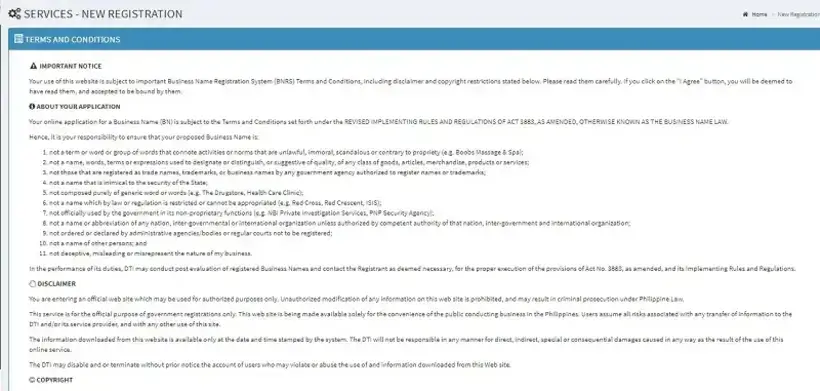
Begin by visiting the DTI website and read and accept the provided Terms and Conditions to initiate the registration process.
2. Fill Out ‘Owner’s Information’
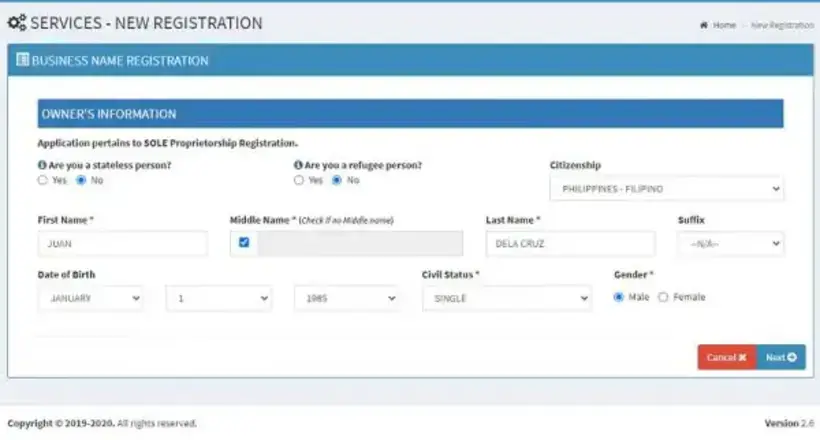
Complete the ‘Owner’s Information’ form, which includes details such as your citizenship, full name, date of birth, civil status, and gender. For non-Philippine nationals, recognized refugees, and stateless persons, further supporting documentary requirements are needed and can be submitted at any DTI Office.
3. Proceed to Business Name Selection

Click ‘Proceed’ after addressing any pop-up messages during the registration process.
4. Identify the Business Scope (Territorial Scope)

The territorial scope of your business plays a pivotal role in defining where and how your operations can take place. There are two primary options for territorial scope in the Philippines: National and Barangay.
A National scope affords you the flexibility to conduct business anywhere in the country, making it ideal for enterprises with physical branches or those seeking widespread market reach. On the other hand, a Barangay scope, while more cost-effective, is better suited for home-based or online businesses, allowing you to focus your efforts within a specific community.
It’s important to note that you can modify your territorial scope at a later stage, akin to submitting a new application. However, this change requires obtaining a new business name certificate and may come with an altered validity period. To make the right choice, consider your budget constraints; if resources are not limited, opting for a broader scope upfront can help you avoid additional reprocessing procedures and fees.
Conversely, if you have financial constraints, beginning with a smaller scope and expanding as your business grows may be the prudent approach, even if it involves paying fees to upgrade to a larger territorial scope at a later stage.
5. Select a ‘Dominant Name’ and Business Descriptor
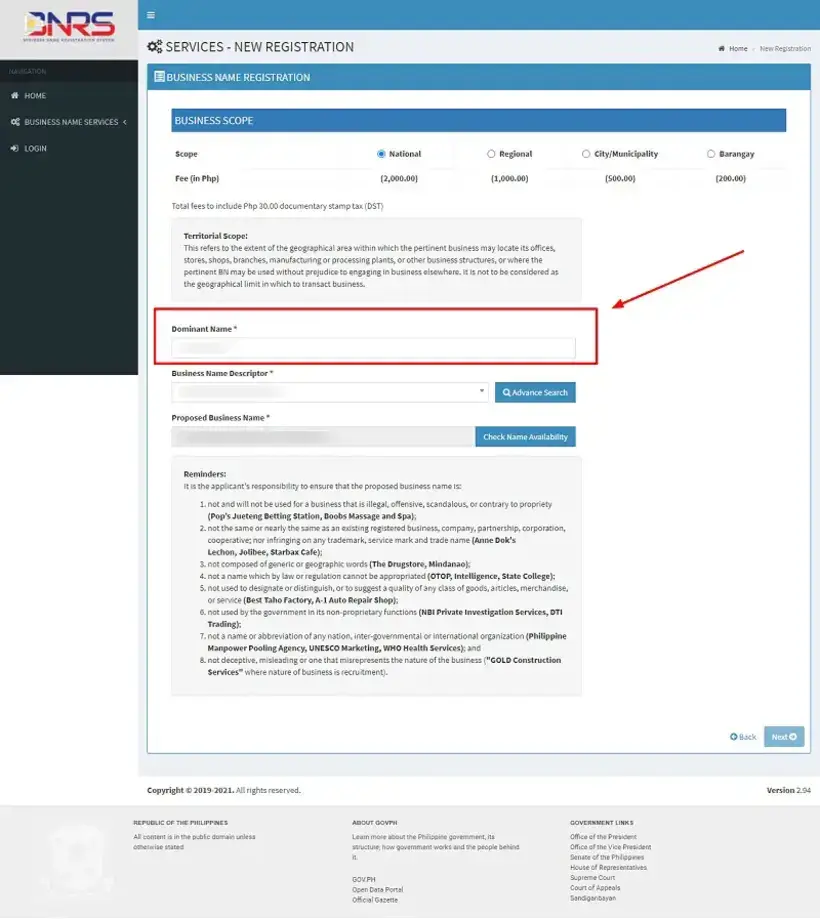
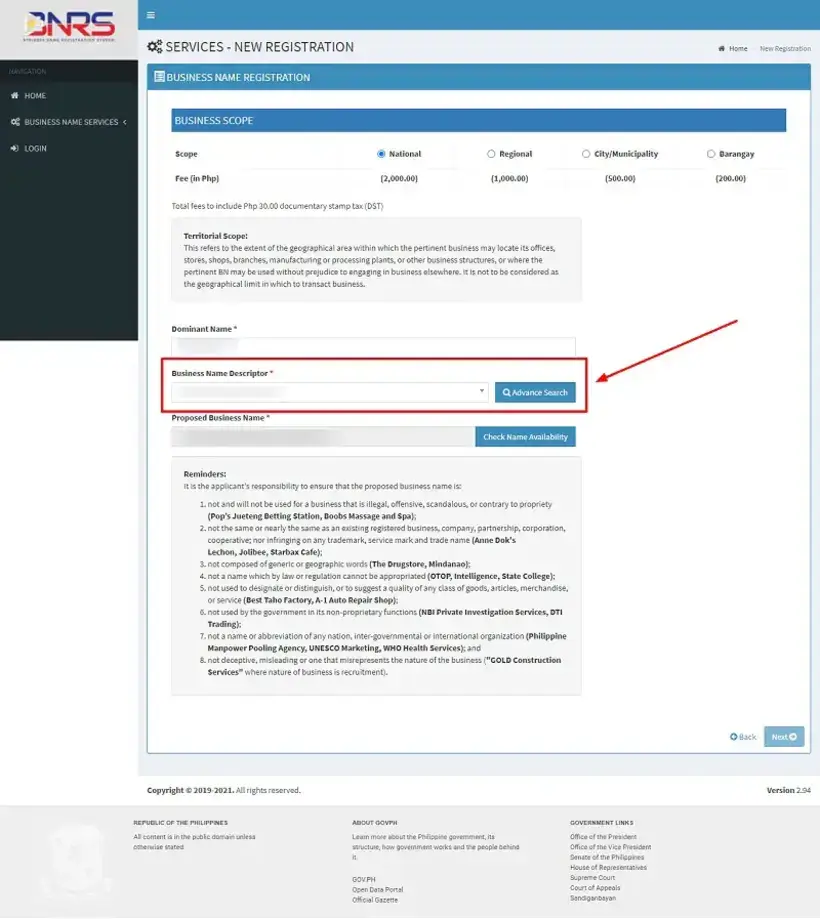
Decide on a ‘Dominant Name,’ which serves as the primary identifier for your business, and choose a Business Descriptor to describe the nature of your business.
6. Check Name Availability

Verify the availability of your proposed business name by clicking the ‘Check Name Availability’ button. This quick check helps ensure that your chosen name is unique and available for registration.
7. Confirm Details and Receive Reference Code

After confirming the availability of your chosen business name, you’ll receive a reference code. Keep this code handy, as you’ll need it throughout your transaction.
8. Fill Out Business Details
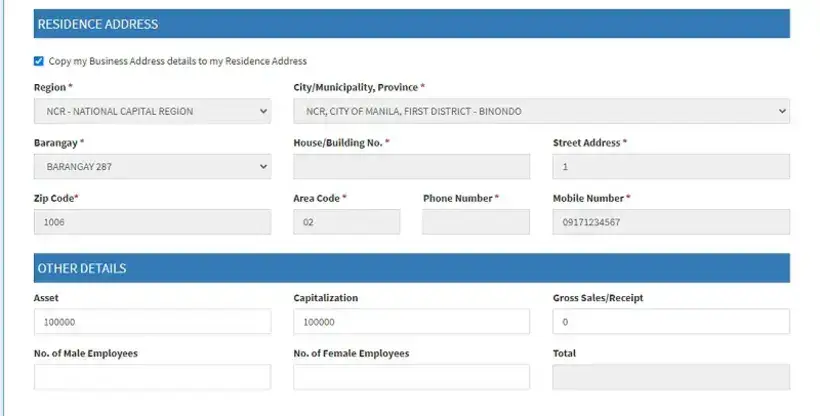
Provide information about your business’s assets and capitalization, which include the properties owned by the business and the amount of cash you’re investing in the company.
9. Review and Confirm
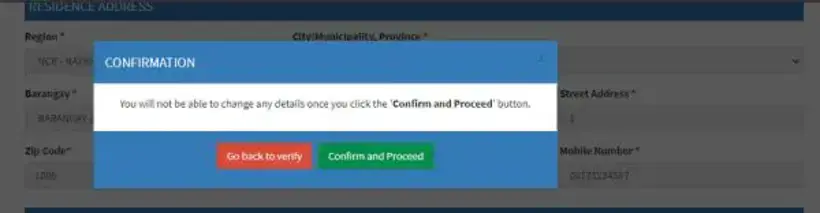
Thoroughly review all the details you’ve entered to ensure accuracy. Once you’re satisfied, confirm the information.
10. Payment
Make the necessary payments for registration and transaction fees within 7 days of your application. GCash or PayMaya are recommended for real-time processing. If you encounter issues with payment status, you can contact bnrshelpdesk@dti.gov.ph with your proof of transaction and valid government ID.
11. Download Certificates
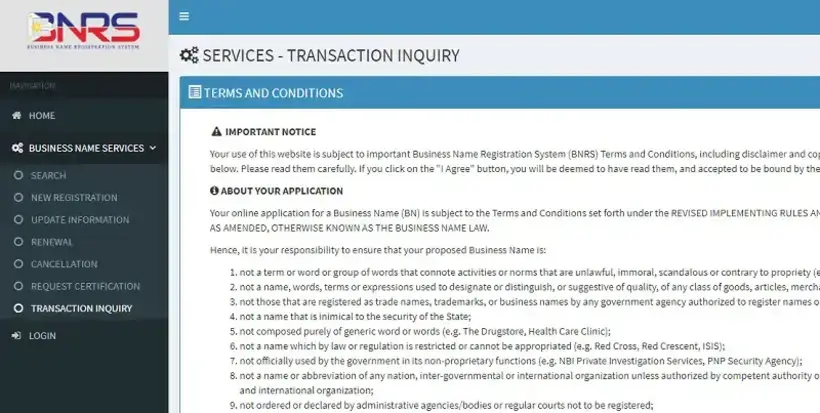
Access your certificates in the ‘Transaction Inquiry’ section by using the reference code you received. A verification code sent to your provided email address will help you access your certificates in the ‘Downloadable Contents’ section.
12. Print the DTI Certificate
Ensure that you print the DTI Certificate using colored ink, which serves as official evidence of your registered business name.
Following these steps, business owners can complete the DTI business name registration process conveniently and efficiently online, minimizing the need for in-person transactions and paperwork.
Frequently Asked Questions (FAQs) About DTI Business Registration
Navigating the Department of Trade and Industry (DTI) business registration process can raise several common questions for entrepreneurs and business owners. Here are some frequently asked questions to provide clarity and guidance:
1. Do I need to authenticate my certificate at the DTI office after printing it?
No, once you’ve successfully registered your business name online, you can immediately use the certificates and permits for various business transactions. There’s no need for additional authentication at a DTI office.
2. I’m a freelancer/online seller, do I need to register my business?
Yes, if you earn income regularly, especially if it’s not from an employer-employee relationship, you should register your business. However, professionals providing services can skip DTI registration and proceed directly to Bureau of Internal Revenue (BIR) registration and obtain a business permit.
3. How can I check if a company name is available with DTI?
You can easily check the availability of a company name by visiting the DTI website and using the name availability search feature. Make sure to include the descriptor (e.g., “Captain Barbell Online Shop”) to check for specific business names.
4. What else should I secure to start my business correctly besides DTI registration?
Beyond DTI registration, there are several other steps to ensure you’re starting your business correctly, including:
- Registering with the Bureau of Internal Revenue (BIR).
- Obtaining a business permit from your Local Government Unit (LGU).
- Registering employees with the Department of Labor and Employment (DOLE), Social Security System (SSS), PhilHealth, and Pag-IBIG. Refer to a more detailed guide for the entire business registration process to ensure you cover all necessary aspects of your business’s legality.
5. How can I make corrections in my business name registration?
For minor corrections like typographical errors, you can simply email bnrshelpdesk@dti.gov.ph with your information and government ID. However, this option is available only for new registrations.
If you need to make changes to the owner’s name, address, or civil status, visit your local DTI office or Negosyo Center and complete an application form to address these changes.
6. Can I apply manually through a physical office?
Yes, if you prefer in-person registration, you can apply at a DTI office. Bring a valid government ID and fill out the necessary application form. Alternatively, representatives can apply on your behalf with an authorization letter and their valid government ID. You can check the list of DTI offices and Negosyo Centers for their locations to find the one most convenient for you.
These frequently asked questions provide essential information to help you navigate the DTI business registration process with confidence and ensure that your business operates legally and smoothly.