
When calamities strike, the impact reverberates, inflicting severe damage to both lives and livelihoods. In such tumultuous times, the provision of government support becomes pivotal, offering a lifeline through financial assistance for affected individuals.
Whether the catastrophe is a natural disaster or man-made, the government’s role in extending aid holds immense importance. Among the various support systems available, the Pag-IBIG Calamity Loan stands out as a form of crucial aid designed to assist Filipinos in rebuilding their lives and properties following such tragedies.
This guide will focus on elucidating the essential steps required to avail the Pag-IBIG Calamity Loan, encompassing the intricacies from the application process to approval, offering a beacon of hope amidst the aftermath of calamities.
What Exactly Constitutes a Pag-IBIG Calamity Loan?
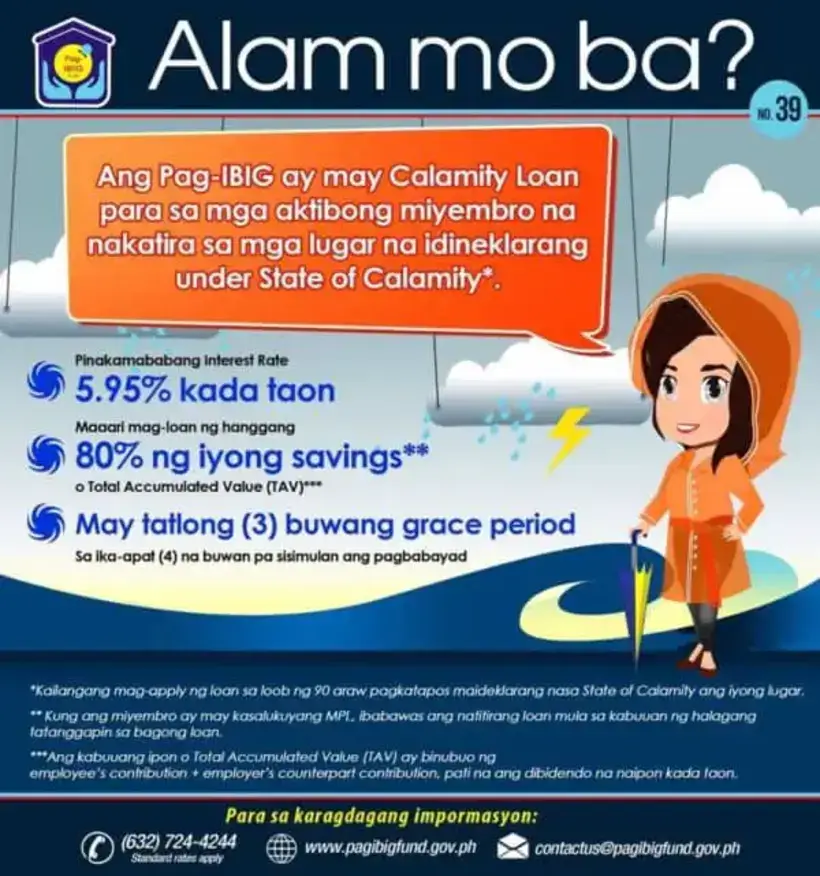
The primary purpose of the Pag-IBIG Calamity Loan is to swiftly extend financial assistance to members of the Pag-IBIG Fund who have been adversely affected by calamities.
To qualify for this support, the affected area must be formally declared under a State of Calamity, a declaration made either by the President or the Sangguniang Bayan (local government unit) upon the recommendation of both the National Disaster Risk Reduction Management Council (NDRRMC) and the Local Disaster Risk Reduction Management Council (LDRRMC).
This support is specifically available to Pag-IBIG Fund members residing in regions impacted by calamities. Designed to provide immediate aid, the loan aims to offer rapid financial relief to members residing in calamity-stricken areas, assisting them in coping with the aftermath and facilitating their recovery.
Who Meets the Criteria for Availing the Pag-IBIG Calamity Loan?
Being eligible for the Pag-IBIG Calamity Loan involves meeting specific membership requirements to access this financial support.
1. Active Pag-IBIG Fund Membership and Savings
To qualify, individuals must be actively contributing Pag-IBIG Fund members, having maintained a minimum of twenty-four (24) monthly savings contributions. Members who withdrew their savings are required to replenish the necessary 24 monthly savings to be eligible.
Furthermore, individuals who haven’t made contributions for 24 consecutive months can still qualify if their total savings match the required 24 monthly savings.
2. Recent Contributions
A crucial criterion is making at least one (1) monthly saving within the last 6 months preceding the loan application. This recent contribution demonstrates an active and continuous commitment to the fund.
3. Proof of Income and Loan Status
Applicants are required to provide sufficient evidence of their income. Additionally, for those with existing Pag-IBIG loans (housing loan, multi-purpose loan, or other calamity loans), being up to date with payments and ensuring the account is not in default is necessary to be considered for a new calamity loan.
4. Residence or Workplace under State of Calamity
Another crucial qualifier for the Pag-IBIG Calamity Loan is the location of the member’s present or permanent address or workplace. These areas must be officially declared under a State of Calamity, as stipulated by the relevant authorities. This declaration ensures that the individual’s immediate surroundings have been significantly impacted by the calamity, thus justifying their need for financial assistance.
Meeting these stringent criteria ensures that Pag-IBIG Fund members can access the Calamity Loan, providing vital financial assistance during times of crisis.
What is the Eligibility Timeline for Availing the Pag-IBIG Calamity Loan?
Upon confirmation of meeting all previously listed qualification requirements, eligible members can proceed to apply for the calamity loan within a period of ninety (90) days from the official declaration of a State of Calamity. This timeframe allows qualified individuals to access the financial support provided by the Pag-IBIG Calamity Loan, facilitating prompt assistance in times of crisis following the calamity’s official announcement.
What Does the Pag-IBIG Calamity Loan Program Cover?
The Pag-IBIG Calamity Loan Program extends its coverage to assist qualified members affected by various natural and man-made disasters. Eligible events for the program include a range of natural calamities such as:
- typhoons,
- storm surges,
- tornadoes,
- landslides,
- earthquakes,
- tsunamis,
- volcanic eruptions,
- and weather phenomena like El Niño or La Niña.
Moreover, the program also caters to individuals impacted by man-made hazards, recognizing the diverse spectrum of crises that can affect the lives and livelihoods of its members. This comprehensive coverage aims to provide necessary financial assistance to those enduring the aftermath of calamitous events, both natural and human-induced.
What is the Borrowing Limit for the Pag-IBIG Calamity Loan Program?
When applying for the Pag-IBIG Calamity Loan, the borrowed amount is computed based on several factors to ensure an appropriate and manageable sum.
1. Calculation Methods for Loan Amount
The Pag-IBIG Calamity Loan amount is determined by the lowest figure among three factors: the desired loan amount, the loan entitlement of 80% of the member’s Total Accumulated Value (TAV), excluding MP2 contributions, and the capacity to pay.
The capacity to pay criterion is crucial, ensuring that the net take-home pay after loan deductions doesn’t fall below a minimum specified amount based on the individual’s earnings.
2. Loan Amount Ranges Based on Monthly Savings
Another method to calculate the loan amount depends on the number of membership contributions made. The varying ranges are as follows:
- 24-47 months: PHP 5,000
- 48-83 months: PHP 10,000
- 84-95 months: PHP 15,000
- 96-119 months: PHP 20,000
- At least 120 months: PHP 25,000
3. Consideration of Existing/Outstanding Loans and Net Pay Calculation
For those with existing or outstanding calamity loans from Pag-IBIG, the loaned amount is calculated as the difference between 80% of their total savings and the outstanding loan balance. Moreover, the loan amount also factors in the borrower’s net take-home pay to ensure it meets the minimum specified amount after loan deductions, based on company policy or the General Appropriation Act, whichever is applicable.
This structured approach ensures that the Pag-IBIG Calamity Loan amount is computed prudently, considering the member’s financial capacity and contribution history, to provide an appropriate and manageable financial aid during calamitous situations.
What Is the Interest Rate Applied to the Pag-IBIG Calamity Loan?
The Pag-IBIG Calamity Loan provides members with a favorable interest rate of 5.95% per annum, ensuring an affordable borrowing option during challenging times. Even during the three-month grace period for this specific loan, the interest rate remains consistent at 5.95%, offering borrowers a stable and manageable repayment structure while dealing with the aftermath of calamities.
What Are the Essential Requirements for Pag-IBIG Calamity Loan Application?
To apply for the Pag-IBIG Calamity Loan, applicants must gather essential documents and forms as detailed below:
1. Duly Accomplished Pag-IBIG Calamity Loan Application Form (CLAF)
The initial step involves completing the Pag-IBIG Calamity Loan Application Form (CLAF), which can be acquired from the Pag-IBIG website or local offices. This form is pivotal to initiate the loan application process.
2. Photocopy of Valid Identification
Various acceptable valid identification documents are recognized to substantiate the applicant’s identity. These include but are not limited to:
- Passport,
- Driver’s License,
- Professional Regulation Commission (PRC) ID,
- National Bureau of Investigation (NBI) Clearance,
- Police Clearance,
- Postal ID,
- Government Service Insurance System (GSIS)/Social Security System (SSS) card,
- Senior Citizen card,
- Overseas Workers Welfare Administration (OWWA) ID,
- Overseas Filipino Worker (OFW) ID,
- Seaman’s book,
- Alien Certificate of Registration (ACR),
- Government or Government-Owned and Controlled Corporation (GOCC) ID,
- Persons With Disabilities (PWD) ID,
- Department of Social Welfare and Development (DSWD) certification,
- Integrated Bar of the Philippines (IBP) ID,
- and Company ID issued by institutions regulated by the;
- Bangko Sentral ng Pilipinas (BSP),
- Securities and Exchange Commission (SEC),
- or Insurance Commission (IC).
These identification documents play a crucial role in validating the applicant’s identity and are vital for processing the Pag-IBIG Calamity Loan application.
3. Proof of Income Documentation
Providing the necessary documentation to validate income is crucial. Here are the specific requirements based on different employment statuses:
For Formally Employed Individuals:
To substantiate income for those formally employed, the following documents are required:
- Latest payslip, duly authenticated by the company’s authorized signatory (photocopy),
- or a completed “Certificate of Net Pay” at the back of the application form by the employer.
For Self-Employed Applicants:
Self-employed individuals need to present an array of documents to validate their income:
- Income Tax Return (ITR), audited financial statements, and official receipts of tax payments from the bank, supported with Department of Trade and Industry (DTI) registration and Mayor’s permit (photocopy).
- Original copies of commission vouchers for the last 12 months.
- Original bank statements for the last 12 months.
- Certificate of True copy of Transport Franchise (original).
- Certificate of Engagement issued by the business owner (original).
- Affidavit of Income (original).
For Those Employed Overseas:
Individuals employed overseas must provide specific documentation to validate their income status:
- Employment contract
- or Certificate of Employment and Compensation
- or Income Tax Return (ITR) filed with the host country.
These stringent yet varied document requirements ensure that the Pag-IBIG Fund can assess the income of applicants based on their employment status, enabling a comprehensive evaluation of financial capacity for the Pag-IBIG Calamity Loan application.
4. Declaration of Being Affected by Calamity for Formal Employees
For formally employed members seeking the Pag-IBIG Calamity Loan, a crucial document, the “Declaration of Being Affected by Calamity,” is specifically required, accessible through Pag-IBIG offices or their website. This declaration serves as an attestation of the individual’s status as being impacted by a calamitous event.
The document substantiates the member’s eligibility for the calamity loan, ensuring that those affected by the disaster are provided necessary financial assistance.
5. Proof of Payment Account for Newly Opened Accounts
In the case of utilizing a recently opened account to receive the loan proceeds, applicants are required to provide specific documentation. This includes submitting a photocopy of the payroll account, disbursement card, or deposit slip for the newly established account.
Loan proceeds are channeled through various means, such as the Loyalty Card Plus, Landbank, Development Bank of the Philippines (DBP), or United Coconut Planters Bank (UCPB) cash card. This documentation validates the new account’s readiness to receive the loan amount.
6. Authorization Letter for Representative Applications
In situations where the loan application is facilitated through a representative, an authorization letter is mandatory. This letter serves as official permission from the loan applicant to the designated representative, authorizing them to act on their behalf throughout the loan application process.
The representative, once authorized, can proceed to submit the necessary documents and fulfill the application requirements on behalf of the applicant. This letter ensures a transparent and authorized application process when applying through a proxy.
What Steps Are Involved in Filing for the Pag-IBIG Calamity Loan?
Option 1: Walk-in Application Process for Pag-IBIG Calamity Loan
The walk-in application process for the Pag-IBIG Calamity Loan involves specific steps to follow at the Pag-IBIG Fund branches.
1. Branch Availability
Despite the pandemic, most Pag-IBIG Fund branches have reopened due to relaxed protocols. For instance, branches in the National Capital Region (NCR) are open from 9 AM to 3 PM and have implemented measures such as providing drop boxes for loan applications. These measures are in place to facilitate the submission of necessary documents and forms for the loan application.
2. Application Timing
Applicants are encouraged to file their loan application within 90 days after their residence or work area is officially declared under a State of Calamity. However, this is subject to the operational status of Pag-IBIG offices and the absence of a nationwide lockdown. It’s essential to consider these factors before initiating the application process.
3. Application Steps
The application process involves several steps, including:
- Downloading and completing the required forms for the calamity loan application, as listed in the previous section.
- Submission of the completed forms and necessary documents to any Pag-IBIG Fund office.
- Loan processing begins only upon the full submission of the required documents. A designated representative will verify the loan application and issue an STL-Acknowledgement Receipt.
- After approval, a text notification will be sent to claim the loan proceeds through the designated payroll account or disbursement card.
4. Representation
If necessary, applicants can designate a representative, such as their employer, to submit the loan application on their behalf. To do so, an authorization letter is required, granting permission for the employer to file the application on behalf of the applicant. This option offers flexibility in handling the application process, ensuring that the necessary documents are submitted even if the applicant is unable to do so personally.
Option 2: Online Application Process for Pag-IBIG Calamity Loan
The online application process for the Pag-IBIG Calamity Loan serves as an alternative method for individuals seeking financial aid, particularly during times of nationwide calamities or closures of Pag-IBIG offices.
During periods when all Pag-IBIG offices are temporarily closed and circumstances necessitate people to stay at home due to a nationwide calamity, online submissions for loan applications become a recommended avenue.
This scenario was notably observed during the 2020 pandemic, when Proclamation 929 placed the country under a State of Calamity, prompting the encouragement of online applications for various services, including the Pag-IBIG Calamity Loan.
Necessary Requirements
The online application process involves specific requirements and steps for submission. Applicants must prepare the necessary documentation, which includes:
- Duly-accomplished Pag-IBIG Calamity Loan Application Form, which can be downloaded, filled in digitally using software like Adobe Acrobat Reader, signed, and then saved as a scanned document or photo. Employers or authorized signatories are required to sign the Application Agreement portion.
- One valid ID.
- Front and back images of the Loyalty Card Plus, LandBank, United Coconut Planters Bank (UCPB), or Development Bank of the Philippines (DBP) cash card. If an individual doesn’t possess a card, Pag-IBIG will provide instructions on receiving the loan proceeds.
- A selfie photo showing the individual’s valid ID alongside the cash card, serving as additional validation.
Applying for Pag-IBIG Calamity Loan via Virtual Pag-IBIG Platform
The process of applying for the Pag-IBIG Calamity Loan through the Virtual Pag-IBIG portal is straightforward and doesn’t necessitate having a Virtual Pag-IBIG account. Here’s a detailed breakdown of the steps involved in the online application process:
1. Application Steps
The step-by-step process entails the following actions:
- Downloading the calamity loan application form from the Virtual Pag-IBIG site.
- Following the provided guides to complete the form and proceeding by clicking the “Proceed” button when all necessary fields are filled.
2. Loan Type Selection and Information Input
Applicants are required to:
- Choose the relevant calamity loan type from the drop-down list, corresponding to the specific calamity, for instance, selecting “Cir 449 Odette Cebu” for typhoon “Odette” in Cebu.
- Enter vital information, such as the Pag-IBIG membership ID (MID) number and essential contact details, including the mobile number and email address.
3. Verification, Card Details, and Document Upload
Essential steps involve:
- Verifying the MID number and entering the One-Time Password (OTP) sent to the mobile number.
- Choosing the preferred cash card, entering its number, and validating it for loan disbursement purposes.
- Uploading scanned copies or photos of the duly accomplished Calamity Loan Application Form, a valid ID, and a selfie with the cash card and valid ID.
4. Submission and Loan Reference
Upon completion, applicants can submit the application, subsequently receiving a loan reference number. This reference number serves as a crucial identifier for tracking the loan status, ensuring a straightforward method to monitor the progress of the loan application.
This efficient online process through Virtual Pag-IBIG ensures an accessible and user-friendly means for individuals to apply for the Pag-IBIG Calamity Loan, simplifying the application process and ensuring financial aid for those in need.
Applying for Pag-IBIG Calamity Loan via Email
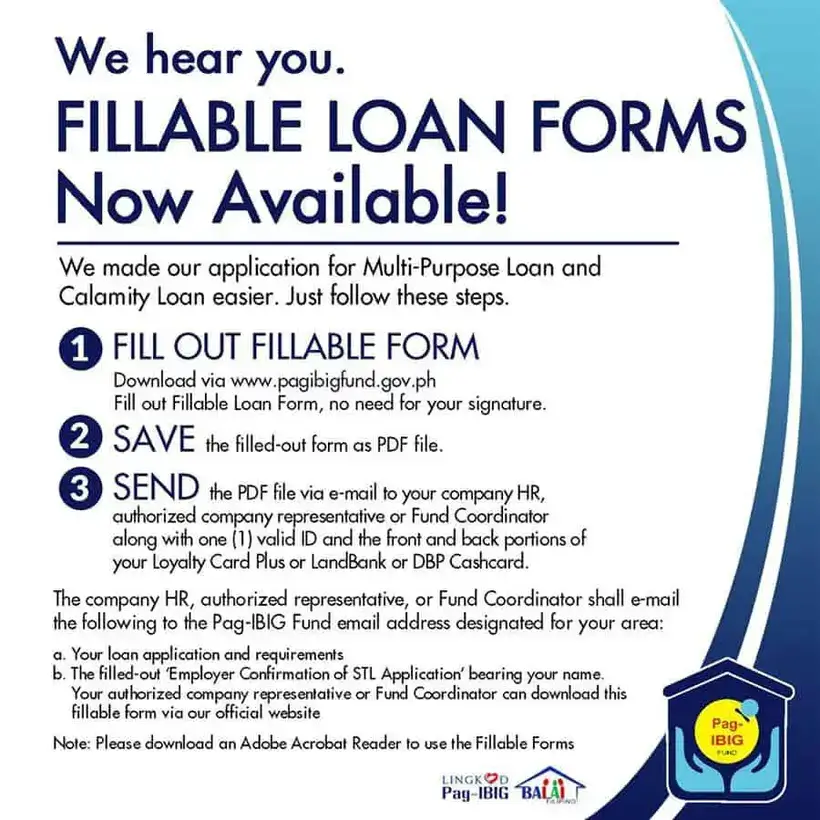
Applying for the Pag-IBIG Calamity Loan via email involves a structured series of steps for a successful submission process.
- Initially, applicants should download and complete the Pag-IBIG Calamity Loan Application form.
- Once the form is filled out, individuals should then share it with their company’s HR or authorized personnel to obtain their signature on the Application Agreement Portion.
- Additionally, applicants need to organize scanned copies or clear photos of essential documents, including a valid ID, the front and back images of the Landbank/UCPB/DBP Cash Card or Loyalty Card Plus, and the completed Calamity Loan Application form signed by the company’s authorized personnel.
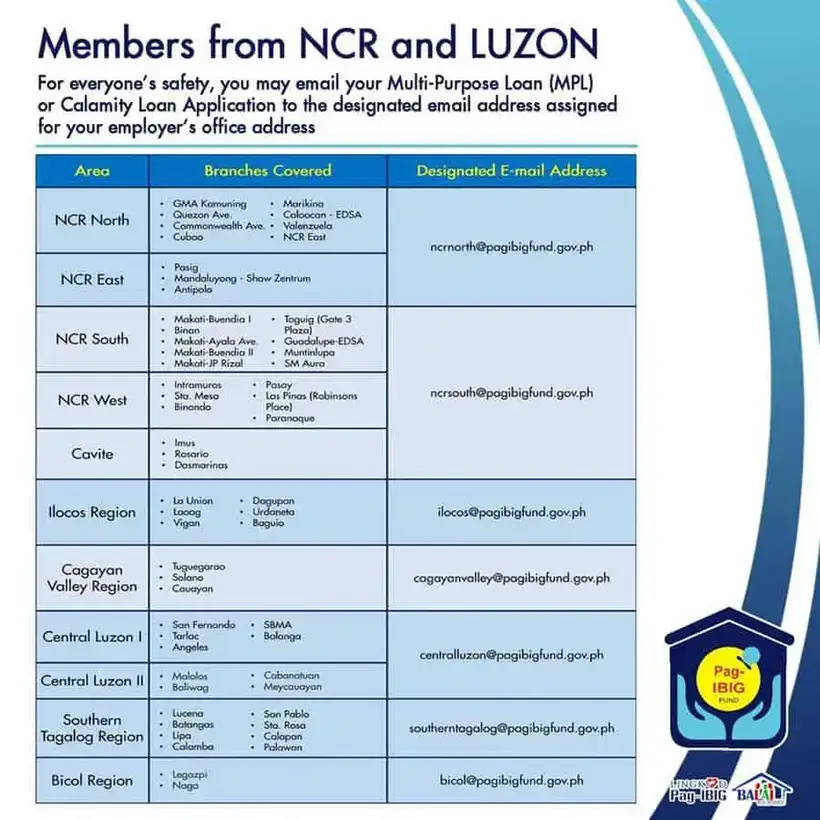
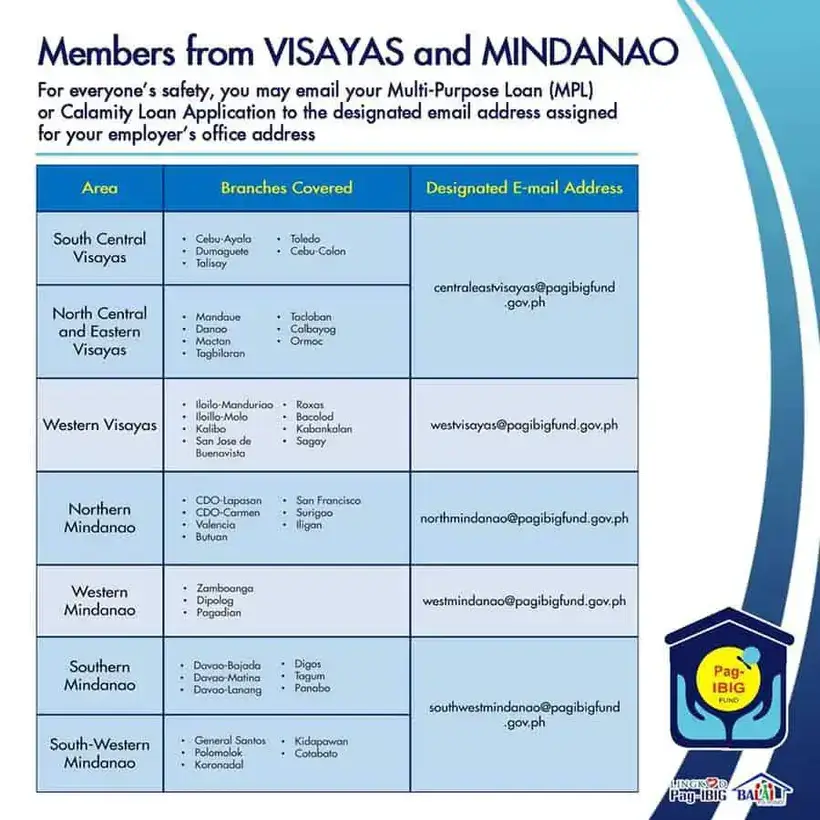
- Following this preparation, applicants should send the compiled documents, as detailed in step 3, to the specific email address designated for the Pag-IBIG fund office linked to their employer’s office address.
This method ensures an organized and systematic approach to submitting the necessary paperwork for the Pag-IBIG Calamity Loan application via email.
What Is the Duration of the Processing Period for the Calamity Loan Application?
Once the required documents are submitted, the standard processing period for the Calamity Loan Application typically spans less than two days. During this brief period, the application is processed, evaluated, and, upon approval, the loan proceeds are swiftly released to the qualified applicants. This efficient processing duration ensures timely access to financial aid for those in need.
How Do I Claim/Receive the Pag-IBIG Calamity Loan?
When receiving the Pag-IBIG Calamity Loan proceeds, there are various methods available for borrowers:
- Disbursement Card: One option for receiving the loan funds is through a disbursement card, such as the Pag-IBIG Loyalty Card Plus, enabling a convenient way to access the approved loan amount.
- Bank Account: Loan funds can be credited to a bank account through LandBank’s Payroll Credit Systems Validation (PACSVAL), providing an efficient and direct deposit option for borrowers.
- Check Payment: Another mode of receiving the loan proceeds is through a check payable to the borrower. It’s crucial to note that unclaimed checks not processed within 30 days from the DV/Check date may result in loan cancellation, emphasizing the importance of timely collection.
- Other Modes (as announced): The Pag-IBIG Fund may announce additional acceptable modes for receiving the loan proceeds, ensuring flexibility and varied options for borrowers. These alternative methods will be communicated by Pag-IBIG Fund to provide further convenience and accessibility for borrowers.
What Are the Payment Procedures for the Pag-IBIG Calamity Loan?
This section provides comprehensive details regarding the process of paying the Pag-IBIG calamity loan and outlines the penalties associated with late payment or non-payment.
1. What Is the Duration of Payment for the Pag-IBIG Calamity Loan?
The repayment terms for the Pag-IBIG calamity loan offer flexibility, allowing borrowers to choose between a 24-month or 36-month payment period based on their preference at the time of application. Following the loan release, an initial grace period of 3 months is provided before the start of repayments, with the first installment becoming due on the 4th month.
In cases where the borrower does not specify their preferred repayment term, the default payment schedule of 36 months will automatically apply. These provisions ensure that borrowers have the choice to tailor their repayment duration and comprehend the timelines involved in settling the Pag-IBIG calamity loan.
2. What are the Payment Methods for my Pag-IBIG Calamity Loan?
For Formally-Employed Members
For those employed in formal sectors, payments through salary deductions serve as the primary method for repaying the Pag-IBIG Calamity Loan. However, if deductions become unfeasible due to work suspension, leave without pay, insufficient take-home pay, or any related circumstances, payments should be made directly to the Pag-IBIG office. This ensures timely settlement of the loan to avoid any default scenarios.
For Self-Employed Members, OFWs, and Individual Payors
Self-employed individuals, overseas Filipino workers (OFWs), and individual payors can make payments in various ways. They have the option to settle their Pag-IBIG Calamity Loan over the counter at Pag-IBIG Fund offices or through other approved payment methods provided by Pag-IBIG.
Additionally, online payment facilities like Virtual Pag-IBIG offer a convenient alternative for these members to clear their calamity loans, ensuring flexibility and ease in repayment.
By offering diverse payment avenues for different membership categories, Pag-IBIG accommodates the varied circumstances and preferences of its borrowers, ensuring they have accessible and feasible means to honor their loan commitments and maintain a good standing with the institution.
3. What Is the Payment Deadline for the Pag-IBIG Calamity Loan?
Monthly Payment Due Date
The Pag-IBIG Calamity Loan requires amortizations to be settled on or before the 15th day of each month, starting from the 4th month following the loan release. This ensures a consistent payment schedule for borrowers to meet their obligations within the stipulated time frame.
Non-Working Day Payment
In cases where the monthly payment deadline coincides with a non-working day or a holiday, borrowers are advised to complete the payment on the first working day following the original due date. This policy aims to accommodate instances where the payment deadline falls on days where financial transactions might be hindered due to non-working hours or holidays.
Early Settlement
Borrowers have the flexibility to pay off the entire outstanding loan balance before the scheduled maturity date. This early settlement option allows individuals to clear their loan obligations in advance, should they have the means to do so, potentially saving on interest and concluding the loan commitment ahead of the original timeframe.
These measures grant borrowers both a set due date for monthly payments and necessary flexibility to manage payments effectively, providing guidance for regular repayments while allowing room for adjustments when faced with non-working days and the possibility of settling the loan early if feasible.
4. What are the Penalties for Late Payment of my Pag-IBIG Calamity Loan?
Late payments for the Pag-IBIG Calamity Loan incur penalties calculated at a rate of 1/20 of 1% of the unpaid amount for each day of delay. This fine is applied to the overdue sum, ensuring borrowers are aware of the cost incurred for late settlements.
However, for formally-employed members paying through salary deduction, if the delay in payment is a result of the employer’s fault, providing evidence can lead to the reversal of penalties. In such instances, the penalties will be charged subsequently to the employer, allowing the member to rectify the situation without bearing the penalty burden if the delay is due to employer-related issues.
5. What are the Consequences of Non-Payment for the Pag-IBIG Calamity Loan?
Deduction from Total Accumulated Value (TAV)
Defaulting on your Pag-IBIG Calamity Loan results in the outstanding loan amount being deducted from your Total Accumulated Value (TAV) within your regular Pag-IBIG savings account. This deduction is an essential step to ensure the loan’s settlement and protect the financial integrity of the institution.
Conditions for Deduction
Deductions from TAV are permitted upon request in specific circumstances verified and approved by the Pag-IBIG Fund. These conditions include:
- Unemployment: If non-payment results from unemployment, borrowers can request deductions from their TAV to cover the loan amount. This measure acknowledges the challenges faced during job loss and provides a way to meet loan obligations.
- Illness: Non-payment due to illness, whether it affects the borrower or an immediate family member, can be addressed by deductions from the TAV. This provision recognizes the financial strain that health issues can impose and offers a solution for those dealing with such situations.
- Death of an Immediate Family Member: In cases where the non-payment is linked to the death of an immediate family member, deductions from the TAV can be requested to address the financial implications of such an event. This compassionate approach ensures that members facing familial loss can still manage their loan responsibilities.
These conditions for deduction from the TAV serve as a safety net for borrowers facing non-payment challenges, aligning with Pag-IBIG’s commitment to assist its members during difficult times while maintaining financial sustainability.
Managing Pag-IBIG Calamity Loan: Tips and Warnings
1. Loan Balance Calculation in Case of Member’s Death
When a member passes away, the outstanding loan balance is computed only up to the date of death. Any payments received after the date of death are refunded to the member’s beneficiaries, considering they were paid in advance. This practice ensures a fair calculation of the final balance and refunds any surplus funds, recognizing the circumstances that led to the premature conclusion of the loan.
2. Deduction Upon Membership Termination
In instances where a member’s Pag-IBIG membership is terminated before the loan matures, the outstanding balance is deducted from the Total Accumulated Value (TAV) or the total savings accumulated in the regular Pag-IBIG Savings.
This process aims to ensure that any remaining obligations are met even if the membership is concluded prematurely. It serves as a safeguard to cover any pending liabilities, ensuring that the loan is settled or partially covered, maintaining the financial integrity of the institution.
These insights offer crucial guidance and points of consideration for members dealing with Pag-IBIG Calamity Loans. Understanding the mechanisms applied in unique circumstances such as member death or membership termination ensures clarity and transparency in loan management, safeguarding the interests of both the borrower and the institution.
Frequently Asked Questions
1. Am I Eligible to Avail the Pag-IBIG Calamity Fund? How Can I Verify My Total Pag-IBIG Contributions?
To ensure smooth verification, you must prepare specific details to confirm your identity:
Prerequisites
Before delving into checking your Pag-IBIG contributions, make sure you have these details handy:
- Surname, first name, and middle name.
- Birthdate.
- Pag-IBIG MID number/RTN.
- Mother’s maiden name.
- Email address.
- Information about your current and previous employers.
Virtual Pag-IBIG
Accessing your Pag-IBIG contributions can be conveniently done through the Virtual Pag-IBIG website. Here’s a step-by-step guide:
- Visit Virtual Pag-IBIG: Head to the website and proceed after reading the Data Privacy guidelines.
- Log In/Create Account: Either log in with your existing account or create a new one.
- Access Contribution Information: Navigate to the Regular Savings (Mandatory Contributions) or MP2 Savings (Voluntary Savings) from the menu to review your contributions.
- View Summary: Once selected, a summary of your total Pag-IBIG contributions will be displayed. You can also view contributions for specific years.
Pag-IBIG Fund Hotline
If you prefer a direct approach, you can contact the Pag-IBIG Fund hotline at (02) 8724-4244. The hotline operates from Monday to Saturday, 8 A.M. to 5 P.M. You’ll receive immediate feedback without leaving your location, enabling quick access to your contribution information.
Email Inquiry
Another viable option is to send an email inquiry to contactus@pagibigfund.gov.ph. Expect a response within three working days. Use the provided email template to ensure that your inquiry contains all necessary details for a prompt and accurate response.
Pag-IBIG Fund Facebook Page or Website
You can communicate your query through the Pag-IBIG Fund Facebook page by sending a personal message. Alternatively, on the official website, use the chat support option for inquiries. Ensure you provide your Pag-IBIG MID, name, email, contact number, and location for effective assistance.
Personal Inquiry at a Pag-IBIG Branch
For those preferring face-to-face transactions, visit a Pag-IBIG branch for over-the-counter transactions, including contribution verification. Request the Employee’s Statement of Accumulated Value (ESAV) or Pag-IBIG Contribution Printout for your records.
OFW Member’s Contribution Verification
Overseas Filipino Workers (OFWs) have an exclusive system for online contribution verification. Access the OFW Member’s Contribution Verification system, provide your details, and view your contributions. Additionally, you can print or save the information for future reference. For further inquiries, reach out via email to iog_tfssd@pagibigfund.gov.ph.
These diverse avenues ensure that Pag-IBIG members, whether local or overseas, have accessible means to verify their contributions, maintaining transparency and accuracy in their financial records with the institution.
2. How Do I Access My Pag-IBIG Calamity Loan Status/Records Online?
To View Loan Status/Records
- Log in to Virtual Pag-IBIG: Visit the Virtual Pag-IBIG platform and sign in to your account.
- Navigate to Loan Information: Once logged in, head to the section labeled Housing Loan, Multi-Purpose Loan, or Calamity Loan found under the Products tab.
- Access Loan Status/Records: Inside these categories, you’ll find options to view your updated loan status or records. Here, you can review details of your loans, including the status and payments made. It also allows you to check your contributions/payments per year for each specific loan.
To View Contributions/Savings Records
- Login to Virtual Pag-IBIG: Access the Virtual Pag-IBIG platform and sign in to your account.
- Navigate to Savings Information: Click on the section labeled Regular Savings or MP2 Savings located under the Products tab.
- Access Contributions/Savings Records: Once inside these segments, you can access your updated contributions/savings records. Here, you can review your individual contributions and payments made per year for both your regular and voluntary savings.
By following these steps on the Virtual Pag-IBIG platform, members can easily access and track their loan statuses and contributions, ensuring a clear overview of their financial records within the Pag-IBIG Fund.
3. What Constitutes the Total Accumulated Value (TAV) in Pag-IBIG?
TAV Composition
The Total Accumulated Value (TAV) represents a consolidation of various financial elements within Pag-IBIG membership:
- All contributed payments made by the member.
- Employer contributions (if applicable).
- Total dividend earnings, accumulated from the initial to the most recent contributions.
Utilization in Loans
TAV plays a pivotal role in Pag-IBIG’s loan processes. For instance, in the context of a Pag-IBIG calamity loan, the member’s borrowing capacity is calculated at a maximum of 80% of their TAV. This value determines the loan limit the member is eligible to obtain during calamitous situations.
Membership Termination
In the event of Pag-IBIG membership termination, the Housing and Development Mutual Fund (HDMF) refunds the TAV to the member. Any remaining outstanding Pag-IBIG loan balance is deducted from the returned TAV. This ensures the settlement of any remaining financial obligations before the TAV is provided back to the former member.
4. Is It Possible to Apply for the Pag-IBIG Calamity Loan if I Already Have an Existing Loan with Pag-IBIG?
Certainly. The full amount of the calamity loan proceeds may or may not be granted based on the specific type of loan for which you have an outstanding balance.
Multi-Purpose Loan (MPL) and Calamity Loan
- Loan Separation: If you currently have an outstanding Multi-Purpose Loan (MPL), the balance from this loan will not be subtracted from the approved proceeds of the Calamity Loan.
- Independent Loan Access: The MPL and Calamity Loan are distinct, enabling members to apply for both loans concurrently, provided their payments are up to date and not in default.
Housing Loan and Calamity Loan
- Non-Impact on Calamity Loan Eligibility: Similarly, if you have an ongoing Housing Loan, it will not hinder your ability to access the Calamity Loan, given that your housing loan is not in default.
- Separate Loan Accessibility: Members can apply for a Calamity Loan even while having an active Housing Loan, provided they meet the eligibility criteria.
Subsequent Calamity Loan
- Loan Renewal after Calamity: In the scenario where a member holds an existing Calamity Loan and faces another calamity, they have the opportunity to apply for a new Calamity Loan.
- Loan Deduction: However, the outstanding balance, inclusive of interests and penalties from the first Calamity Loan, will be subtracted from the proceeds of the subsequent Calamity Loan, ensuring a deductive approach to manage multiple Calamity Loans.